
Kaothaj_
2 months ago
By Busola Aro
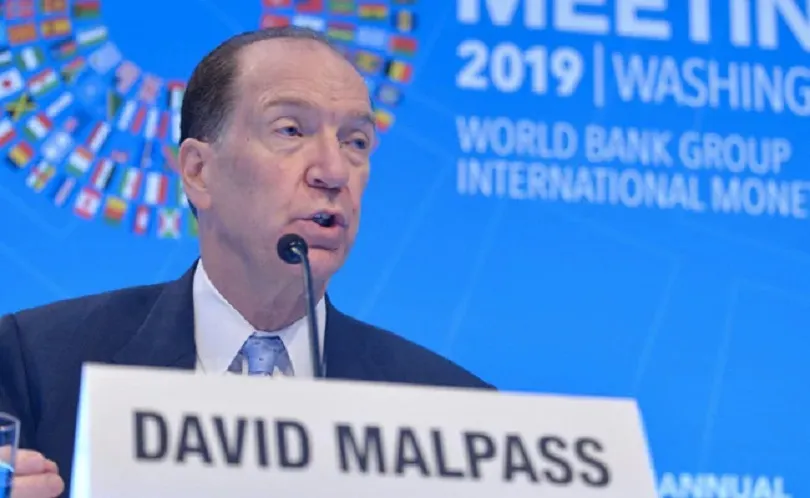
David Malpass, former president of the World Bank, says currency stabilisation, oil sector, and tax reforms could transform Nigeria’s economy.
Malpass, in a new World Bank policy research working paper published on the bank’s website, said the country’s per capita income remains about $1,500, with median income even lower because wealth is concentrated among a small share of the population.
The research paper was based on the Stanley Fischer Memorial Lecture delivered at the World Bank Group’s annual bank conference on development economics.
The former World Bank chief said Nigeria’s long-term growth prospects depend on structural reforms, including currency stabilisation and unification, oil sector reforms, tax reforms, and agricultural liberalisation.
“We identified several ingredients including currency stabilisation and unification, oil sector reforms, tax reform, and agricultural liberalisation including rice. These could transform Nigeria’s economy as much as China’s 1993 reforms launched its sustained 10 percent real growth rate.”
Warning about currency devaluation policies, Malpass said repeated depreciation impoverishes households earning in local currencies while benefiting those with privileged access to foreign exchange.
He advised development institutions to focus on policies that raise median incomes and living standards rather than expanding lending portfolios, noting that “in many ways, this is the problem of multilateral finance as well: the risk of leaving people in developing countries more indebted without improving their living standards”.
‘COLATERALISED DEBT COULD COMPLICATE RESTRUCTURING EFFORTS’
The ex-World Bank executive also raised concerns over the transparency of some debt transactions involving Nigeria, warning that increasingly complex financing arrangements and non-disclosure clauses could complicate future debt restructuring efforts.
In the research paper, titled ‘Public Debt and Central Banks’, Malpass said specialists are still “working in the dark” on many sovereign debt contracts, particularly those linked to China’s lending programmes, because key information remains undisclosed.
He said while many creditors have joined debt reconciliation efforts, “China and some emerging creditors are still not participating”, making a significant portion of developing countries’ debt burdens difficult to reconcile.
“Data sharing is another critical step toward successful debt restructurings,” he said.
“Specialists are still working in the dark on many large debt contracts, especially related to China’s lending programs.
“While many creditors are participating in the debt reconciliation process, China and some emerging creditors are still not participating. This leaves a giant sector of the debt burden non-transparent and hard to reconcile.”
The former World Bank president said recent financing arrangements involving distressed and high-risk sovereigns have become increasingly opaque, with some transactions containing non-disclosure clauses that make it difficult to assess whether they benefit borrowing countries.
“More recently private sector transactions to distressed or high-risk sovereigns have become less transparent, sometimes to the point of including non-disclosure clauses, making their benefits to the people of the country unclear and hard to evaluate.”
Malpass said he had seen such collateralised transactions in Angola, Nigeria and Senegal, warning that they were creating “a new race toward seniority in the capital structure” that could further complicate debt restructuring.
“Sophisticated new collateralized transactions — I saw ones in Angola, Nigeria, and Senegal — are creating a new race toward seniority in the capital structure,” he said.
“This will add further complexity to restructurings as will the expansion of MDB guarantee products. Their sturdiness and value have not been tested in a restructuring context, and I am skeptical they are adding true value.”
He also criticised the current global debt restructuring architecture, saying mechanisms such as the G20 common framework have failed to deliver meaningful debt relief for many developing countries.
Malpass said countries that sought relief under the framework have endured years of negotiations with little improvement in debt sustainability, while new financing has often left them with heavier debt burdens instead of stronger economies.
Source: TheCable
0
0