Kaothaj_
3 months ago
“
A social media post by U.S. President Donald Trump is generating intense reactions online after appearing to suggest a major escalation in tensions with Iran, including potential strikes on Iranian targets and the possibility of taking control of key oil infrastructure.
In the viral post, Trump claims that the United States would launch a severe military response against Iran and references Kharg Island, one of Iran's most important oil export hubs. The message also suggests that the U.S. could assume control over parts of Iran’s oil and gas markets, drawing comparisons to Venezuela.
The statement, if authentic, would represent one of the strongest public declarations yet regarding a direct confrontation between Washington and Tehran. Kharg Island plays a crucial role in Iran’s economy, handling a significant portion of the country's crude oil exports. Any military action involving the facility would likely have far-reaching implications for global energy markets.
The post has quickly attracted widespread attention, with supporters arguing that a strong response is necessary to protect American interests and deter future attacks. Critics, however, have questioned both the tone and the potential consequences of such rhetoric, warning that any move against Iranian energy infrastructure could further destabilize the Middle East.
Security analysts note that tensions in the region have frequently affected oil prices, shipping routes, and international diplomacy. The Strait of Hormuz, located near Iran, remains one of the world's most strategic waterways for global energy supplies.
As discussions continue online, observers are calling for verification of the post and official clarification regarding U.S. policy toward Iran. With geopolitical tensions already high, statements from world leaders—whether official or circulated on social media—can have significant effects on markets, diplomacy, and public opinion.
For now, the viral message has added another layer of uncertainty to an already volatile situation, fueling debate about the future of U.S.-Iran relations and the broader balance of power in the Middle East.
Source: X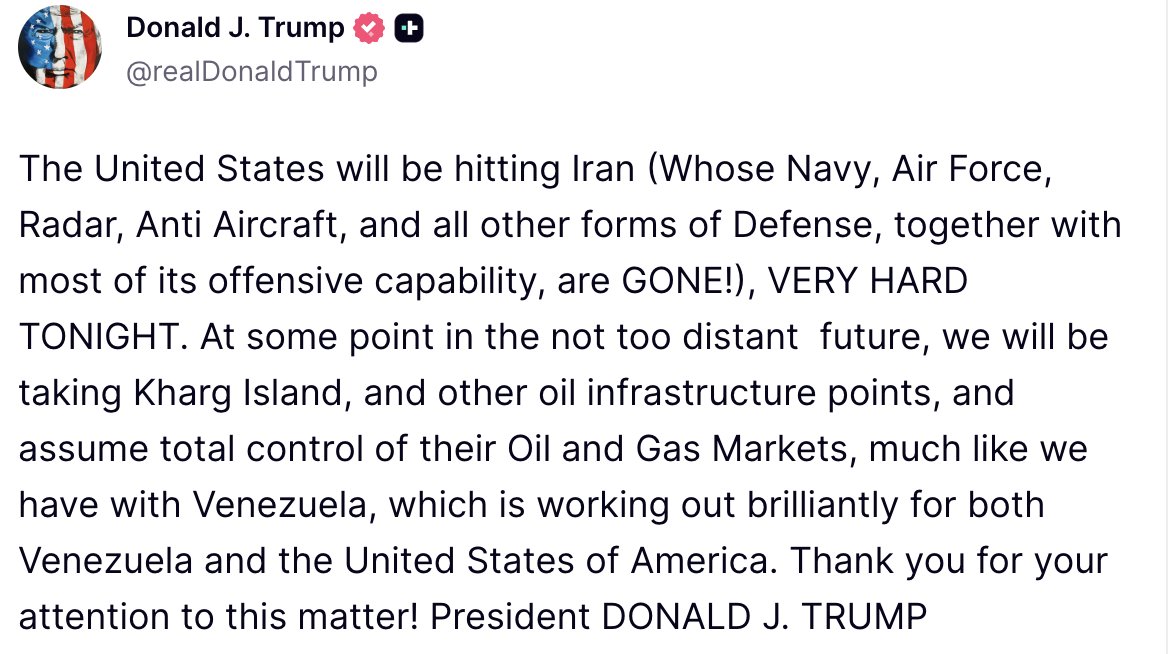
0
0