Learning Nest
Learning has evolved globally. Do not restrict your learning to the walls of the classroom.
1 member • 1 follower

salami
10 months ago
The story of the Niger Expedition of 1841 is one of ambition and tragedy a tale of how noble intentions met the harsh realities of nature, misunderstanding, and disease. It was a mission that began with high hopes of trade, faith, and diplomacy, but ended in heartbreak on the banks of the great River Niger.
In the early 19th century, the River Niger was a mystery to many Europeans. They had long heard of its vast waters that flowed deep through West Africa, connecting countless communities. To the British, it was more than a river it was a potential pathway for commerce, civilization, and Christianity. They believed that if they could navigate it successfully, they could open up legitimate trade and put an end to the slave trade, which had devastated the region for centuries.
Thus, in 1841, under the reign of Queen Victoria, the British government launched what was called the Niger Expedition a grand mission combining exploration, evangelism, and diplomacy. Three steamships the Albert, the Wilberforce, and the Soudan set sail from England, carrying over 150 men, including scientists, missionaries, naval officers, and doctors. Their goal was to travel up the River Niger, establish treaties with local rulers, and introduce Christianity and Western civilization to the heart of Africa.
Among the African coastlines, the expedition was greeted with curiosity and caution. At the time, regions along the Niger, such as Lokoja, Asaba, and Onitsha, were thriving with trade and ruled by powerful chiefs. The British sought to negotiate treaties with these leaders, promising friendship, fair trade, and an end to slavery.
However, the dream quickly turned into a nightmare. As the ships steamed deeper into the humid interior, disease struck with frightening speed. The deadly malaria and yellow fever diseases then unknown to European medicine began to decimate the crew. Within weeks, men who had started the journey full of hope were falling ill and dying.
Of the 150 men who began the expedition, more than 130 died, and the survivors had to retreat down the river, their mission unfinished. Only a few Africans and local guides managed to withstand the fever and continue for a time before turning back.
The failure of the 1841 expedition shocked Britain. It exposed the limits of their understanding of Africa’s environment and the dangers of underestimating its complexity. But it also left behind a legacy a spark that would continue to draw explorers, missionaries, and later colonizers to the Niger.
Decades later, figures like Dr. William Baikie would return to the river better prepared, using quinine as a preventive measure against malaria. His later expedition in the 1850s succeeded where the first had failed, establishing outposts and paving the way for British influence along the river.
For Nigerians, the Niger Expedition marked the beginning of a new kind of relationship with Europe one that began with exploration but soon deepened into colonial control. The treaties signed in good faith became tools of political leverage, and the Niger River once a symbol of connection among African peoples became a corridor of foreign domination.
Still, the story of 1841 remains one of human courage and curiosity of men who set out to do good but were undone by the forces of a land they did not yet understand. The River Niger, serene and mighty, bore silent witness carrying away their ships, their hopes, and their dreams but also carrying forward the long, complex story of Nigeria’s encounter with the wider world.
0
0
salami
10 months ago
In the dense forests of southeastern Nigeria, where mist rolls gently over ancient trees and voices of ancestors seem to echo in the wind, the Aro people once stood as one of the most powerful forces in precolonial Igboland. Their influence stretched far beyond their homeland woven through trade routes, spiritual authority, and a network that reached deep into other ethnic regions.
But in 1901, their centuries-old dominion would be tested in what became known as the Aro Expedition a decisive military campaign by the British that ended one era and began another.
The Aro Confederacy was not just a kingdom; it was a system a web of towns united by commerce, culture, and religion. At its heart stood the sacred shrine of Chukwu at Arochukwu, guarded by priests who served as mediators between the divine and the living. For many communities, the Aro oracle, Ibini Ukpabi, was the highest spiritual authority. People traveled from distant lands seeking its guidance on matters of justice, fertility, and war.
But the Aro’s power was not merely spiritual. They were shrewd traders, controlling major commerce routes linking the Igbo hinterland to the coast. Slaves, palm oil, ivory, and textiles moved under their watchful eye. Their influence extended into places like Abia, Cross River, Ebonyi, and beyond.
When the British began to expand their influence inland in the late 19th century, they saw the Aro system as a threat a rival source of authority standing in the way of colonial control. The British accused the Aro of using the Ibini Ukpabi oracle to justify slavery and human sacrifices claims that, whether exaggerated or not, gave them the moral pretext they needed for conquest.
By November 1901, under the command of Lt. Col. Arthur Forbes Montanaro, a British force of over 2,000 soldiers including West African Frontier troops began marching toward Arochukwu. Their mission: destroy the Aro stronghold and dismantle its network once and for all.
The journey was perilous. The soldiers hacked through thick forests, crossed rivers, and faced ambushes from Aro warriors who fought with fierce determination to defend their land. The fighting was intense, the resistance courageous. But the British, with superior weapons and organized tactics, pressed on.
By December 1901, they reached Arochukwu, and after several days of heavy combat, the sacred city fell. The Ibini Ukpabi shrine was destroyed, and with it, the spiritual foundation of the Aro Confederacy. The British captured and executed several Aro leaders, while others fled into the interior forests.
Though the expedition officially ended in March 1902, its impact was far-reaching. The fall of Arochukwu symbolized the collapse of indigenous autonomy in southeastern Nigeria. It opened the region to British administration, Christianity, and the establishment of colonial rule under the Protectorate of Southern Nigeria.
Yet, even in defeat, the spirit of the Aro people endured. Their legacy remains visible today in the resilience of their descendants, in the surviving stories of bravery, and in the vibrant town of Arochukwu, where history still breathes through the stones of old pathways and the whispers of elders.
The Aro Expedition was more than a military conquest; it was the moment two worlds collided one ancient and spiritual, the other industrial and imperial. And though the smoke of battle has long faded, the echoes of that encounter still shape southeastern Nigeria a reminder that every fall in history carries within it the seeds of renewal.
0
0
salami
10 months ago
Among the many stories that shaped Yoruba history, none stands as defining and dramatic as The Kiriji War. A conflict that lasted over sixteen years and brought an end to centuries of internal strife among the Yoruba people.
The Kiriji War, sometimes called the Ekiti-Parapo War, began in 1877 and ended in 1893. It was more than just a battle over land or power, it was a fight for freedom, identity, and unity among a people divided by years of political tension.
At the heart of it all was Ibadan, a powerful Yoruba city state that had, over time, established military dominance over many other Yoruba towns. This control didn’t sit well with the Ekiti, Ijebu, Ijesha, and other smaller states who wanted autonomy and respect. Tired of Ibadan’s political influence and military intimidation, these towns formed a coalition known as the Ekiti-Parapo Alliance which literally means “the union of the Ekiti people.”
The first shots of the war were fired in Imesi-Ile, a town that later became symbolic in Yoruba history. The booming sound of the cannons used by the warriors echoed through the forests and valleys, producing the sound “kiriji”, which gave the war its name.
It wasn’t a small skirmish. It was a drawn out, fierce conflict involving thousands of warriors from across the Yoruba land. Each side fought bravely, with traditional weapons, deep spiritual belief, and loyalty to their cause. But the longer the war lasted, the more devastating it became. Lives were lost, farmlands were abandoned, and trade routes were destroyed. What began as a struggle for justice gradually turned into a desperate fight for survival.
By the early 1890s, both sides were weary. The endless battles had drained the people and their resources. It was at this point that the British colonial powers, who were beginning to extend their control across the region, stepped in to broker peace. In 1893, a historic peace treaty was signed at Imesi-Ile, officially ending the Kiriji War.
The end of the war marked a turning point. Though the peace came under colonial supervision, it brought about unity and stability among the Yoruba people. For the first time in a long while, the warring towns laid down their arms and began rebuilding what war had destroyed.
Today, the Kiriji War stands as a reminder of both the strength and the struggle of the Yoruba people, a story of division that ended in reconciliation. And in Imesi-Ile, where the war began and ended, there still stands a monument known as the Kiriji War Memorial, honoring the courage of those who fought and the peace they eventually embraced.
0
0
salami
10 months ago
In the wide, sun drenched plains of northern Nigeria, where the call to prayer drifts softly across ancient city walls, the city of Kano once stood as the pride of the Sokoto Caliphate a center of learning, trade, and faith. But beneath its calm prosperity brewed a storm of ambition and rivalry that would erupt into one of the most defining conflicts in Hausa history the Kano Civil War.
The story began in the late 19th century, during a time when the Sokoto Caliphate was still a mighty power, stretching across much of northern Nigeria. Kano, one of its largest emirates, was ruled by Emir Mohammed Bello, a respected leader who had succeeded his father, Emir Abdullahi Maje Karofi. His reign, however, was marked by tension, old rivalries, questions of succession, and power struggles among the ruling Fulani elite.
When Emir Bello died in 1893, two powerful factions emerged, each determined to control Kano’s throne. On one side stood Yusufu, the son of the late emir, who claimed rightful succession. On the other was Tukur, Bello’s cousin, who had the backing of the Caliph of Sokoto. The stage was set for a bitter war that would divide families, armies, and the very soul of Kano.
At first, Tukur’s forces, bolstered by Sokoto’s blessing, took control of the city and he was installed as Emir. But Yusufu, unwilling to surrender his claim, rallied loyalists a mix of warriors, merchants, and local leaders who believed Kano’s leadership should remain within their own hands, not dictated by Sokoto.
From 1893 to 1895, the conflict raged. Villages were burned, trade routes disrupted, and thousands displaced. The once-bustling city that had thrived on commerce and scholarship became a battlefield of brothers. Yusufu’s forces fought fiercely from the outskirts, using their knowledge of the terrain to their advantage, while Tukur’s men defended the emir’s palace with desperate resolve.
In the end, Yusufu’s persistence paid off. By 1895, he and his warriors managed to reclaim the city after a bloody final assault. Emir Tukur was killed, and Yusufu took the throne as the new Emir of Kano. His victory marked not only the end of the war but also a subtle shift in the balance of power within the Sokoto Caliphate.
Yet, the cost was immense. The war had drained Kano’s economy, weakened its unity, and left scars that would take generations to heal. Families who once dined together found themselves divided by old loyalties. Trade, the lifeblood of the city suffered, and the once golden age of Kano’s dominance dimmed for a time.
But Kano, like a phoenix, rose again. The same resilience that built its ancient walls and bustling markets carried it forward. Under Yusufu’s rule, the city began to rebuild. Merchants returned, scholars reopened their schools, and the sound of hammers and prayer once again filled the air.
Today, the story of the Kano Civil War remains more than just a tale of conflict. It is a lesson in the dangers of ambition, the complexity of leadership, and the power of unity after division. It reminds us that every city, no matter how great, must occasionally confront its own storms and that what matters most is how it rises after the fall.
1
2
salami
a year ago
Some landscapes don’t just stand, they perform. Idanre Hills in Ondo State is one of those rare places where nature feels theatrical. Massive granite towers rise dramatically from the earth, layered like ancient staircases reaching toward the clouds. From below, it looks almost unreal, like someone sculpted a kingdom into the sky and forgot to take it back.
But what makes Idanre truly fascinating isn’t just the view, it’s the civilization that once lived on top of those rocks. For over 800 years, people didn’t just climb the hills they built a city on them. Houses. Shrines. Meeting halls. Even a palace. Imagine waking up every day above the world, looking down on misty forests like a king surveying his realm.
The ascent today involves 660 steps, punctuated with rest points carved thoughtfully into the rock (proof that whoever designed it knew people would struggle halfway and reconsider life choices). Along the way, you’ll meet The Ancient Palace, Owa’s Court, Agbooogun Footprint (a mysterious imprint said to reject evil people), and even an old-school prison cell carved into stone. History is scattered casually along the path like breadcrumbs.
At the summit, the reward is silence. Not empty silence but sacred silence. The kind that reminds you how small you are, yet how lucky you are to witness something this vast.
Unlike other tourist sites, Idanre doesn’t rush you. It doesn’t shout “Adventure!” or push zip lines and loud music in your face. It simply stands. Majestic. Old. Unbothered. And it waits for you to rise to meet it.
Climbing Idanre Hills isn’t just an exercise, it’s a pilgrimage. To endurance. To history. To perspective.
If rocks could talk, this one wouldn’t bother with small talk. It would simply ask, “How high can you go?”
Written by The Veiled Writer
0
0
salami
a year ago
Long before passports and checkpoints, cities had their own ways of declaring where civilisation began and ended. In ancient Kano, that boundary was drawn boldly, with walls. Not just symbolic fences, but towering fortifications built over a thousand years ago to encircle one of Africa’s most influential trade and learning centres.
The Kano City Walls weren’t merely defence structures; they were a statement. They whispered to travellers and merchants from across the Sahara. Beyond these gates lies order, prosperity and power. At their peak, the walls stood over 30 feet high, stretching about 14 kilometres in circumference. Eleven grand gates controlled entry, each one a point of ceremony, commerce and authority.
Caravans carrying salt from the Sahara, leather from local tanneries, kola nuts from the south and textiles from distant lands passed through gates like Kofar Mata, Kofar Kabuga and Kofar Ruwa. Scholars arrived with scrolls. Warriors returned with dust. Traders came with news.
These gates didn’t just open and close, they witnessed.
Over time, like many historical structures, parts of the walls were worn down or consumed by urbanisation. Yet several gates remain, weathered but unmistakably proud. Some still function as active entryways into busy streets, blending the ancient with the everyday. A thousand year old gateway beside a busy danfo stop, that’s Nigeria for you.
The beauty of Kano’s heritage is that it refuses to be caged in museums. It stays right where life is happening. The city doesn’t separate its past from its present, it wears them both at once.
Standing before one of those gates, you don’t just see architecture. You see a city that understood its worth and built accordingly.
And maybe that’s the real lesson. When you know who you are, you build walls not to keep the world out, but to remind it who’s inside.
Written by The Veiled Writer
1
3
salami
a year ago
Some monuments were built by men. Others were built by patience, pressure and time and then adopted by men. Olumo Rock belongs to the latter. Rising solid and unbothered in Abeokuta, it looks like something nature placed there intentionally, knowing humans would one day need it.
In the 19th century, when inter-tribal wars swept across Yorubaland, the Egba people fled and settled around this massive rock. It wasn’t just a landmark it became their fortress. They hid in the caves carved naturally into its body, held strategy meetings in its crevices, and used its height as a lookout to detect enemies from miles away. The rock didn’t just shelter them. It gave them an advantage. It became an ally.
Today, it’s one of Nigeria’s most popular historical sites complete with stairways, elevators, guides and vendors selling everything from beads to palm wine. Some purists complain that it’s been “modernised,” but realistically, even rocks need upgrades to stay relevant.
Still, climb past the railings and souvenir stands, and the original spirit remains. There are still ancient shrines tucked into corners, still markings from past inhabitants, still elders who tell stories like they lived them themselves. And when you finally reach the top? Abeokuta stretches beneath you like a living map rooftops glinting, trees swaying, roads winding like quiet thoughts.
What makes Olumo special is not just its history, it’s its posture. It still stands exactly as it always has: firm, patient, watching generations change beneath it. It reminds you that strength doesn’t always roar. Sometimes it simply stays.
If you ever need perspective, literal or emotional, climb Olumo Rock. It has a way of shrinking your worries without diminishing your worth.
Written by The Veiled Writer
0
0
salami
a year ago
Some places don’t just hold history, they swallow it whole. Ogbunike Caves in Anambra State is one of those places. The entrance alone feels like a scene change: long stairways descending into a world where sunlight fades, the air cools, and sound becomes a whisper.
For centuries, the caves served as a refuge. During slave raids and inter-tribal wars, people hid within its network of tunnels and chambers, shielded by darkness and stone. But beyond its role as a hiding place, Ogbunike has always been sacred. Even today, locals approach it with reverence. Visitors are expected to remove their shoes before going in, not because of convenience, but respect. Tradition isn’t optional here.
Inside, flowing streams run beneath your feet, echoing softly against the cavern walls. Some passages are wide enough to walk upright, others force you to bend, crawl or rethink your decisions entirely. It’s not your typical “sightseeing spot.” It tests you. It humbles you.
And yet, that’s where its magic lies. Unlike polished tourist attractions, Ogbunike hasn’t been over sanitised. It still feels raw, like nature hasn’t signed any agreement with civilisation yet. Each chamber holds its own silence, like it’s guarding a story you’re not quite ready to hear.
But it’s not all mystery and solemnity, the surrounding area is alive with tradition. Every year, the community holds the “Ime Ogbe” festival to celebrate the caves and honour their ancestral significance. It’s not just history preserved, it’s history performed.
Visiting Ogbunike isn’t about ticking a travel box. It’s about submitting to a place that existed before you and will exist long after.
You don’t just enter the caves. You let them take you.
Written by The Veiled Writer
0
1
salami
a year ago
Some historical sites feel like museums, frozen, curated, silent. Sukur is nothing like that.
Perched on a hilltop in Adamawa State, this ancient settlement is not just preserved, it’s alive. People still live there, still farm the terraced fields, still follow the same traditional structures that existed centuries ago. It’s one of the rare places where history didn’t just happen,it stayed.
Recognised in 1999 as Nigeria’s first UNESCO World Heritage Site, Sukur stands out for its landscape architecture. Instead of building outward, the people built upward, carving terraces into the mountain slopes like layered steps toward the sky.
These terraces weren’t decorative, they were part of a sophisticated agricultural system, designed to prevent erosion while maximising food production. Sustainable engineering before sustainability became a buzzword.
At the summit sits the Hidi’s Palace, not the kind of sparkling palace you might imagine, but a stone complex that radiates quiet authority. The Hidi (king) is more than a ruler; he’s the spiritual centre of the community. Decisions are not rushed here. Culture is not debated, it is followed.
Even the pathways are paved with stone, thoughtfully laid by hands long gone. You walk on them knowing someone walked there generations before you, maybe on a morning stroll, maybe on the way to a ritual, maybe just to fetch water. Suddenly, time feels less like a straight line and more like a circle.
The beauty of Sukur is that it never tried to modernise to impress anyone. No billboards. No tourist gimmicks. Just dignity, structure and continuity. It quietly exists, and waits for those who are curious enough to climb.
If you ever find yourself longing for a version of Nigeria that still remembers itself, Sukur is where you go.
Written by The Veiled Writer
0
0
salami
a year ago
Long before modern day borders and barbed fences, the ancient Benin Kingdom built something far more impressive, a network of sprawling earthworks that once wrapped around their civilization like a living spine. Today, most people hear “Great Wall” and think of China, but National Geographic once described the Benin City Walls as the world’s largest man-made structure in length. Not bad for a civilisation that didn’t have bulldozers.
The Walls weren’t just one straight structure. They were a complex system of deep moats (locally called Iya) and high ramparts (Oko), dug entirely by hand. Together, they stretched across thousands of kilometres, marking boundaries between communities, channeling movement, and of course, keeping enemies exactly where they belonged; outside.
It was defensive engineering, but also political architecture. The very layout reflected order, hierarchy and control, with the king’s palace at the centre, radiating out like a sun.
But like most African history, the Walls were not just destroyed by time, they were violated by colonisation. In 1897, after the British invasion of Benin, large parts were levelled to make way for new streets and military access routes. Treasures were looted, palaces burned, moats filled. What remains today are fragments, silent but stubborn.
Still, when you walk around the preserved sections in present day Benin City, something stirs. You start to imagine the rhythm of markets that once buzzed along those earthen edges. You picture warriors perched on the ramparts, watching dust clouds rise in the distance. You realise that even in ruins, there’s dignity.
The Benin Walls deserve more than being reduced to historical footnotes. They are proof that Africa built and built big, long before it was forced to start over. If Nigeria ever wants to invest seriously in heritage tourism, this site should be treated like a pilgrimage ground.
Not just for foreigners looking for “ancient wonders”… but for Nigerians who need reminding of what we once were.
Written by The Veiled Writer
0
1
salami
a year ago
When you hear the name Igbo-Ora, one thing likely comes to mind: twins. This quiet town in Oyo State, Nigeria, has earned the title of “The Twin Capital of the World” because of its unusually high rate of twin births. But beyond this fascinating fact, Igbo-Ora carries a rich history and cultural heritage that makes it truly unique.
Origins and Early Settlement
Igbo-Ora’s roots can be traced back to the migration of Yoruba people. Like many Yoruba towns, it began with a small group of settlers who were in search of fertile land and water for farming. The story goes that the people who eventually founded Igbo-Ora were linked to the larger Ibarapa region, a cluster of communities known for farming and strong traditional values.
The name Igbo-Ora itself is believed to have originated from the thick forested area (“Igbo” in Yoruba means forest) where the early settlers lived. Over time, with more people joining the community, it grew into a thriving settlement.
Culture and Way of Life
The people of Igbo-Ora are predominantly Yoruba and, like their neighbors in Oyo State, they have deep respect for culture, tradition, and festivals. Farming has always been at the heart of their livelihood. Yam, cassava, maize, and vegetables are common produce, and markets in Igbo-Ora remain vibrant with trade and cultural exchanges.
But it is their family system that often draws attention. In many ways, the family bond in Igbo-Ora reflects the Yoruba worldview of respect for elders, communal living, and pride in ancestry.
The Twin Phenomenon
Of course, Igbo-Ora cannot be discussed without highlighting its most famous identity “the land of twins”. Families in this town often have more than one set of twins, and in some cases, it’s almost considered normal. Researchers and medical experts have tried to explain this, linking it to genetics or diet. Many locals, however, believe the secret lies in their food, especially the yam and okra leaves commonly eaten in the area.
Whether science fully explains it or not, the twin phenomenon has put Igbo-Ora on the global map. The community even celebrates an annual festival known as the World Twins Festival, where twins from across Nigeria (and even abroad) gather to celebrate their uniqueness.
Modern Igbo-Ora
Today, Igbo-Ora remains a semi-rural but bustling town. It is home to the Oyo State College of Agriculture and Technology, which attracts young people from different parts of the country. While modernization is creeping in, the town still holds on tightly to its cultural roots.
Visitors who come to Igbo-Ora are often struck by how peaceful the town feels. Between the farmlands, the local markets, and the clusters of family homes, Igbo-Ora represents a slice of Yoruba tradition that has survived centuries.
Conclusion
The history of Igbo-Ora is not just about its nickname as the “Twin Capital of the World.” It is the story of migration, settlement, culture, and resilience. From its humble beginnings as a forest settlement to becoming a town recognized globally, Igbo-Ora is a proud reminder of Nigeria’s diversity and cultural richness.
0
0
salami
a year ago
When discussing Nigeria’s history, it is easy to focus on political leaders, independence struggles, and military rule. But one of the most significant resistance movements came not from soldiers or politicians, but from women. Known as the Aba Women’s Riot of 1929, this event remains one of the earliest and largest demonstrations against colonial policies in West Africa.
In the 1920s, the British colonial government in Nigeria expanded its use of indirect rule. Local chiefs, some appointed by the colonial administration, were empowered to collect taxes and enforce British policies. For many communities, this system disrupted traditional governance.
The situation became more tense when rumors spread that women would soon be taxed, just like men. For women who were already contributing to their households through farming, trading, and market activities, this was seen as an unjust burden.
The movement began in November 1929 in Aba (present day Abia State) and quickly spread across Owerri, Calabar, and surrounding areas. Thousands of women mobilized, using traditional methods of protest; singing, dancing, and publicly confronting both the warrant chiefs and colonial officers.
One common method, called “sitting on a man,” involved groups of women gathering outside a chief’s residence, mocking and ridiculing him until their grievances were addressed.
At its peak, an estimated 25,000 women participated in the protests. They attacked colonial offices, cut telegraph wires, and destroyed native courts seen as tools of oppression. While their protests were largely nonviolent in intent, clashes with colonial forces turned deadly.
The colonial government responded with force. Records suggest that about 50 women were killed and many more injured when troops opened fire on demonstrators. Despite this tragic loss, the movement forced the British to reconsider their policies.
The impact of the 1929 Aba Women’s Riot was far reaching:
The colonial administration abandoned plans to tax women directly.
It led to reforms in how chiefs and courts were appointed.
It demonstrated that Nigerian women were active political agents, capable of mobilizing on a large scale.
The Aba Women’s Riot remains a landmark in Nigeria’s history, showing that resistance against oppression did not begin with independence movements in the 1940s and 50s; it had been alive much earlier.
The Aba Women’s Riot of 1929 is more than just a historical footnote; it is a story of courage, unity, and defiance. It reminds us that women have always played a central role in shaping Nigeria’s history, challenging injustice long before independence was won.
0
0
salami
a year ago
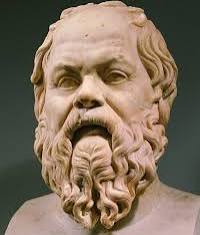
Socrates (469–399 BCE)
Socrates was a classical Greek philosopher from Athens, often regarded as the father of Western philosophy. Unlike many thinkers of his time, he never wrote down his ideas; instead, his teachings were preserved through the works of his students, most notably Plato and Xenophon.
Socrates believed that wisdom begins with recognizing one’s own ignorance. He developed the Socratic Method, a form of dialogue based on asking probing questions to stimulate critical thinking and expose contradictions in reasoning. This method remains a cornerstone of philosophical and educational practice today.
He challenged traditional Athenian beliefs about politics, morality, and religion, which made him both respected and controversial. In 399 BCE, Socrates was put on trial for allegedly corrupting the youth of Athens and impiety against the city’s gods. He was sentenced to death and calmly drank hemlock poison, choosing to die rather than renounce his pursuit of truth.
Socrates’ legacy influenced generations of philosophers, including Plato, Aristotle, and countless others, shaping the foundation of ethics, epistemology, and logic.
0
2
salami
a year ago
"Another petition has been filed against University of Lagos(UNILAG) and Obafemi Awolowo University (OAU) on behalf of the students negativity impacted by their recently conducted POST-UTME" Alex Onyia wrote on X following the widespread complaints of AI glitches and other errors during the recently conducted POST-UTME in UNILAG and OAU.
0
0