
Kaothaj_
25 days ago
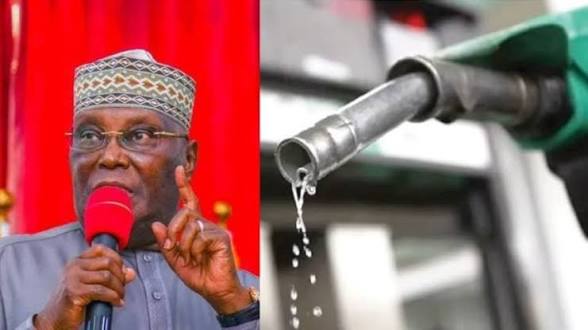
In Naija politics, a presidential candidate is only as credible as the consistency between what he says on Monday and what his campaign says on Tuesday.
When the candidate says restore. His aide says restore and remove. The candidate disowns his aide. Then the candidate's senior spokesman says it was never a restoration of the old regime but a different targeted intervention. And the candidate himself doubles down saying he will restore it fully and his position will not change.
All of this happened in the same week. In real time. On AIT, X, Vanguard, Daily Trust, Tribune, and Channels TV simultaneously.
This is where Atiku Abubakar's subsidy policy stands on August 23, 2026. Not as a coherent economic position. As a campaign in visible internal disagreement with itself, conducted through public media, over the most politically sensitive economic question in Nigeria.
Before we get to the economics, let us first establish exactly what happened.
Three Messages, Three Spokespeople, Zero Coherence
Message One came from Atiku himself in a Hausa-language Facebook Live session on August 19. He said he would restore the fuel subsidy if elected. Clear. Unambiguous. "I will restore it."
Message Two came from his aide Paul Ibe on AIT on Tuesday. Ibe said the proposed measure would be temporary and designed to give Nigerians and businesses room to recover, stimulate economic activity and improve productivity, before being gradually phased out.
Temporary. Phase out. Not the same as restore permanently.
Message Three came from Atiku himself within hours of Ibe's interview.
Atiku said: "Earlier, one of my press aides contradicted me in a policy statement as far as subsidy is concerned. I want to repeat categorically that when I said I would return to subsidy, I will! Nigeria is rich enough to look after the welfare of its citizens. Let it be clearly stated that he was not speaking on my own authority."
He disowned his own spokesman. On X. Publicly.
Then a fourth statement arrived from Senior Special Assistant Phrank Shaibu.
Shaibu said the restoration would not be "a return to Nigeria's discredited import-subsidy regime" but targeted support for domestic production. He described Ibe's comments as "an unauthorised, imprecise and materially misleading characterisation of Atiku's policy position" and warned that no spokesperson has the latitude to "redefine, embellish or improvise on a policy already clearly articulated by the candidate."
Four communications. From the same campaign. In 72 hours. About the same policy.
One says restore permanently. One says restore and phase out. One disowns the phrasing. One says it was never about the old import regime.
Which one should Nigerians believe?
In Naija politics, when a campaign cannot align its own spokespeople on the direction of its flagship economic promise, the voters watching are not confused about the policy. They are confused about the campaign's ability to govern.
What Nigeria Actually Spent on Subsidy: The Data That Should Frame This Debate
Before assessing whether restoration is viable, it is necessary to understand what the subsidy actually cost Nigeria across the years it existed.
The fuel subsidy did not begin in 2023. It has been one of the most persistent features of Nigerian governance since the return to democracy in 1999.
In 1999, Nigeria spent approximately N40 billion on the petroleum subsidy. By 2006, that figure had risen to N193 billion. In 2011, under Jonathan, it hit N1.35 trillion. In 2012, following the short-lived removal attempt that triggered the January protests and was subsequently reversed, the cost reached N2.12 trillion.
Between 2013 and 2022, under both Jonathan and Buhari, the subsidy bill grew from approximately N971 billion to a peak that became the subject of the most audited financial scandal in Nigerian governance history.
In 2021, the NNPC reported subsidy costs of N1.43 trillion. In 2022, the figure climbed to N4.7 trillion. In January and February 2023 alone, before removal in May, the subsidy was costing the federal government approximately N400 billion per month.
The Tinubu administration has stated that between May 2023 and 2025, over N30 trillion was saved from subsidy removal.
From 1999 to May 2023, Nigeria paid an estimated total of between N12 trillion and N15 trillion in accumulated subsidy costs across different administrations, depending on how the calculation accounts for the NNPC's opaque historical deductions.
The 2022 to early 2023 monthly burn rate of N400 billion means that in a full year of 2023 at pre-removal rates, Nigeria would have spent approximately N4.8 trillion on subsidy alone. Against a total federal revenue of approximately N10.4 trillion in 2022.
Nearly half of federal revenue going to keep pump prices lower than market. And that is before accounting for the arbitrage industry that developed around the price differential, the petroleum marketers who exported subsidised Nigerian fuel to neighbouring countries at market prices and reclaimed the subsidy from the government, and the manipulation of import figures that multiple audits have documented.
What Subsidy Removal Has Actually Produced
The removal was painful. That is not in dispute.
The pump price rose from N197 per litre to above N1,400 per litre. Transportation costs tripled. Food prices followed. Inflation hit 35 percent in December 2024, the highest in over three decades.
World Bank data indicates that approximately 25 million additional Nigerians entered poverty between 2023 and 2025 following the compounding effects of subsidy removal, naira devaluation, and electricity tariff increases simultaneously.
These are real human consequences. The man filling his generator every morning feels them. The market woman buying rice feels them. The salary earner whose N100,000 wage has lost 60 percent of its purchasing power feels them.
But the savings side is also measurable.
The CBN, under Cardoso, used the freed fiscal space and tighter monetary policy to reduce headline inflation from over 33 percent in early 2024 to 15.69 percent by April 2026. That is a 17 percentage point reduction in inflation within approximately 18 months.
For context: the N30 trillion savings from subsidy over the Tinubu years represents more than the total federal budgets of several previous administrations combined. If even a fraction of that had been deployed into verified infrastructure, healthcare, and education spending, the developmental impact would be visible.
The problem, as Atiku correctly identified, is that the savings have not been fully accounted for. The off-budget spending flagged by the IMF at N8 trillion raises legitimate questions about where the freed fiscal resources went.
But the answer to unaccounted savings is not to eliminate the savings.
The Economics of Restoration: What Atiku's Plan Actually Requires
Atiku described his proposed policy as targeted, capped, budgeted and independently audited intervention aimed at supporting domestic production. Phrank Shaibu said it would focus on supporting domestic refining rather than restoring the import subsidy regime.
Paul Ibe explained the mechanism: crude oil would be supplied to local refiners at a discounted price to enable them to produce petroleum products at lower costs.
This is actually a different policy from what Atiku said in the Hausa Facebook Live session. What Ibe described is closer to a feedstock support mechanism for local refineries, similar to how some Gulf states operate petroleum pricing, than a traditional import subsidy where the government pays marketers the difference between market and regulated pump prices.
The distinction matters enormously.
A feedstock support model for domestic refining, particularly with the Dangote Refinery now operational and several modular refineries at various stages of production, could in theory reduce pump prices without the same fiscal burden as the import subsidy regime. If Nigeria refines its own crude domestically and government supports the feedstock cost rather than imported refined product, the accountability chain is shorter and the arbitrage opportunities are fewer.
But here is the implementation problem.
Nigeria's crude oil production has averaged between 1.3 and 1.5 million barrels per day, consistently below the government's 1.8 million barrel target. The domestic refining capacity, including Dangote, is still ramping up. The Port Harcourt refinery, once fully operational, adds capacity. But total domestic refining capacity has not yet matched domestic consumption on a sustained basis.
A feedstock support model requires surplus domestic crude available at government's disposal to direct to refineries at subsidised prices. Nigeria does not consistently have that surplus. It still imports finished petroleum products to meet the gap.
Atiku said: "When fuel rises, transport rises. When transport rises, food rises. When food rises, families suffer." He said he would restore targeted subsidy to put purchasing power back in the hands of Nigerians.
The human logic is sound. The fiscal mechanism for delivering it has not been publicly costed, timed, or presented to any economic body for assessment.
The Fundamental Contradiction Nobody In the Campaign Has Resolved
Here is the problem that no amount of spokesman management resolves.
Atiku campaigned in 2023 with a manifesto that called for subsidy removal. He was one of the most consistent voices in Nigerian politics arguing that the subsidy was a drain on resources and a vehicle for corruption. He used the word fraud to describe it in past public statements.
He now wants to restore it.
His aide says restore and phase out. He disowns his aide. His senior spokesman says it was never about the old regime. He says his position will not change.
He said: "On the question of subsidy, my position has not changed and will not change: I will restore it! A nation as blessed as ours has no business abandoning its citizens to hardship."
His position has not changed.
But his position in 2023 was remove it.
Both statements cannot simultaneously be the accurate description of an unchanged position.
Tinubu described the proposal as evidence of "serious ignorance on governance and economy."
That is a partisan attack from a political opponent. It is also not entirely wrong as a characterisation of the communication management, if not the underlying policy logic.
What Nigeria Should Actually Do: The Question Nobody Is Answering
Here is the honest economic position that neither Atiku nor Tinubu has fully articulated.
The subsidy in its 1999 to 2023 form was economically indefensible. It subsidised consumption rather than production. It benefited marketers and the arbitrage industry more than the ordinary Nigerian. It consumed resources that should have funded the infrastructure that would have made fuel prices irrelevant to ordinary transport economics.
The removal in May 2023 was economically correct. The manner of removal, simultaneous with naira devaluation and electricity tariff increases with no social protection buffers, was economically reckless.
The answer to a reckless removal is not a poorly planned restoration. It is a properly sequenced combination of domestic refining support, social protection programmes targeted at the bottom 40 percent of the income distribution, and productivity investments that reduce the transport cost sensitivity of the economy over time.
Norway subsidises neither oil consumption nor general consumption. It taxes oil production and invests the revenues into a sovereign wealth fund that funds public services at world-class quality. Nigeria has the oil. It has no fund. It has the subsidy debate instead.
That is the real economic conversation. Not restore or remove. But how to transition from an economy where the price of a government-determined commodity determines whether families eat.
In Naija politics, that conversation is too long for a Hausa Facebook Live session and too honest for a campaign that needs a simple promise to deliver to voters.
So instead, what Nigerians got was restore. Then restore and phase out. Then disown the aide. Then restore again.
That is not an economic policy.
That is a campaign managing its own confusion.
And in January 2027, the voters of Nigeria will be choosing between the man who removed the subsidy without adequate preparation and the man who wants to restore it without adequate explanation.
This is Naija politics. Where the most consequential economic debate of the election cycle is being conducted in press statements and AIT interviews rather than in documented policy frameworks with costing, timelines, and accountability mechanisms.
The ordinary Nigerian deserves better than this debate.
They deserve the honest conversation about why the savings from N30 trillion cannot be accounted for, how to grow domestic refining to the point where feedstock support makes sense, how to protect the poorest from energy price shocks without rebuilding the corruption infrastructure that made the original subsidy a fraud.
That conversation is not happening.
What is happening instead is a campaign disowning its own spokesman.
On X.
In August 2026.
Five months before an election.
What do you think? Is a targeted domestic production subsidy tied to crude oil refining fundamentally different from the import subsidy that was removed, or is Atiku's proposal, however it is eventually defined, destined to recreate the same fiscal and corruption problems the original removal was meant to end? Drop your thoughts in the comments. Today is August 23, 2026. This is Naija politics and the most confused policy announcement of this campaign season just got another chapter this morning.
0
24