
Kaothaj_
a month ago
In Naija politics, the most revealing thing a candidate does is not what they say when they are winning.
It is what they say when they are running out of time.
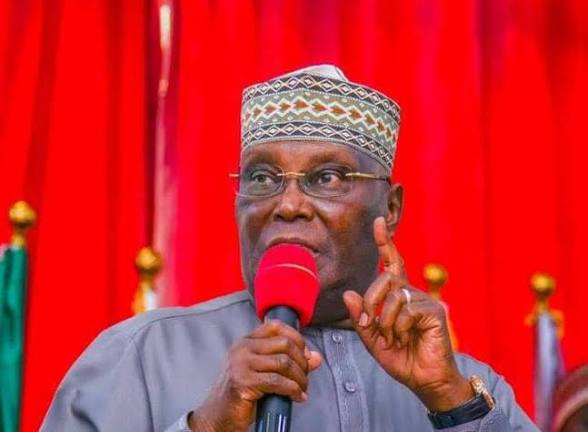
On Wednesday, August 19, 2026, Atiku Abubakar sat before a camera for a Hausa-language Facebook Live session and dropped the most politically explosive promise of this entire election cycle.
He said he would restore Nigeria's fuel subsidy if elected president in 2027.
Four words. Restore. Nigeria's. Fuel. Subsidy.
Coming from this particular man, at this particular moment, those four words are not a policy announcement.
They are a confession. A calculation. And depending on your economic persuasion, either a genuine response to real human suffering or the most blatant populist gambit in the history of Nigerian presidential campaigns.
What He Actually Said, Word for Word
The statement is important enough to quote directly.
Atiku said: "I initially did not oppose the removal of the fuel subsidy. But now that it has been removed, where is the money? Where has the subsidy money gone? Has it been used to improve healthcare, education or security? If I win the presidential election, I will restore the subsidy. And anyone who stole Nigeria's subsidy funds must return the money."
Three things are happening simultaneously in that statement.
He is acknowledging he supported the subsidy removal. He is questioning the use of the savings. And he is promising a reversal if elected.
That combination has enough internal contradiction to power a generator.
Because Atiku Abubakar has spent the better part of two decades being on record as one of the most consistent voices in favour of subsidy removal in Nigerian political discourse.
In 2012 during the January uprising, he did not march with the protesters. He defended the principle of reform.
In 2022, his own presidential manifesto as the PDP candidate called for the removal of the petroleum subsidy, describing it as a drain on national resources that benefited oil traders more than ordinary Nigerians.
He said it himself. In writing. As a campaign promise.
Now the man who wrote "remove the subsidy" in his manifesto is on Facebook Live promising to bring it back.
The Presidency Landed on Him Like a Trailer
Bayo Onanuga did not take the news quietly.
The title of his statement said everything: "Restoring Petrol Subsidies: Atiku's Volte-Face and Desperation for Power."
Onanuga said the Presidency was not surprised by Atiku's position, arguing that he needed to make a promise that, if candidly presented to Nigerians, would not make fiscal sense and would be against the country's interests. He questioned how the subsidy would be funded and whether it was compatible with the legal and structural changes that had taken place in the petroleum sector since its removal.
Presidential spokesman Sunday Dare was even more direct.
He said: "Atiku Abubakar: Your pronouncement that you will bring back fuel subsidy is drenched in hypocrisy and deceit. It is an unpardonable manipulation of the public psyche, designed to hoodwink unsuspecting Nigerians into voting for you."
Hypocrisy and deceit. Drenched in them.
Harsh words from a government that itself has faced questions about where exactly the subsidy savings went. But in political combat, the messenger's credibility and the message's accuracy are two different things. Onanuga has a compromised platform. His point about the manifesto contradiction is not compromised.
Wike Delivered the Cleanest Blow
Then Nyesom Wike stepped forward.
Wike, who served under the PDP governments that maintained the subsidy for sixteen years. Who knows exactly what the subsidy did to Nigeria's finances from the inside. Who has zero incentive to be charitable to either Atiku or the subsidy regime.
He said: "Will Atiku, as President, which he will never be, pay subsidy on fuel produced by Dangote Refinery? Now, in 2026, he says he is not going to remove the fuel subsidy. Is he going back to the fraud which he had alleged that fuel subsidy was?"
Is he going back to the fraud he alleged it was?
That sentence cuts through everything. Because Wike is right about the record. Atiku has not just supported subsidy removal as a matter of economic theory. He has specifically used the word fraud to describe the subsidy regime in past public statements.
And now he wants to restore the fraud.
What the N30 Trillion Savings Claim Actually Tells You
The Tinubu government has repeatedly cited over N30 trillion saved from subsidy removal since May 2023. The finance ministry has used this figure in budget presentations, IMF consultations, and political defences of the policy.
Onanuga used a version of this figure in his response to Atiku, arguing that restoring the subsidy would return Nigeria to a position where it was burning through resources on a policy that economists broadly agree distorted prices, created arbitrage for connected middlemen, and failed to primarily benefit the poorest Nigerians it was supposed to help.
The N30 trillion figure itself has a complication that Atiku was right to point at even if his solution is questionable.
Where is it?
Nigeria's infrastructure has not received N30 trillion worth of visible improvement since 2023. The GenCos were owed N3.3 trillion in legacy debt that was only settled after Peter Obi called it out on television. Capital budget disbursement under Wale Edun recorded zero implementation on N1.15 trillion in approved spending before he was removed. The IMF flagged N8 trillion in off-budget spending. Two Brigadier-Generals were killed in unmaintained armoured vehicles. Communities in Katsina were paying bandit levies because security funding was not reaching field units.
The savings from subsidy removal are real. The accountability for those savings is where Atiku's question lands correctly.
But his answer, bring back the subsidy, does not resolve the accountability problem. It eliminates the savings that made the accounting question possible in the first place.
You cannot fix the misappropriation of N30 trillion by stopping the generation of the N30 trillion.
The Economic Case Against the Promise
Let us be precise about what subsidy restoration would actually require in 2026.
The petroleum sector has undergone structural transformation since May 2023. The Petroleum Industry Act has been implemented. The Dangote Refinery is now operational and producing significant volumes of refined petroleum products. The price-setting framework has moved toward market-determined pricing. International oil companies and their retail affiliates have restructured their Nigerian operations based on the assumption of a deregulated downstream sector.
Restoring the subsidy means the government pays the difference between the market price and a regulated pump price. On current petrol consumption figures, that difference at today's prices would require the government to spend between N3 trillion and N5 trillion annually, minimum, with the actual figure likely higher given consumption growth.
Where does that money come from?
Nigeria's projected revenue for 2026 is approximately N36.35 trillion. The approved budget is N47.9 trillion. The deficit is already over N11 trillion, which is being funded through borrowing.
Adding N3 to N5 trillion annually in subsidy costs to a government already borrowing to fund its existing deficit is not a policy reversal.
It is a fiscal emergency
Onanuga asked directly: how would Atiku fund the restoration, and whether it was compatible with the legal and structural changes that had taken place in the petroleum sector since its removal.
Atiku has not answered that question. Not in the Hausa interview. Not in subsequent statements.
He has asked where the N30 trillion went. He has not explained where the next N5 trillion a year comes from.
The Political Calculus That Actually Makes Sense of This
Here is the part that Tinubu's spokesmen understand perfectly even as they mock the proposal.
Atiku is not primarily speaking to economists when he makes this promise.
He is speaking to the northern Nigerian voter who fills his motorcycle tank every morning and calculates whether he can afford to do the school run. The market woman in Kano who pays more for every product she buys because transportation costs have tripled. The civil servant in Sokoto whose N80,000 salary cannot stretch to the end of the month because the cost of living has outpaced every previous calculation.
For those voters, the subsidy was not a fiscal policy debate. It was N200 per litre fuel. And now it is N1,400.
The removal is real. The pain is real. The desire for it to be reversed is real.
Atiku is speaking to that desire in the most direct possible language: I will bring it back.
The APC's national publicity secretary Felix Morka said the former vice president's proposal demonstrated what he called a lack of alternative economic ideas and an attempt to use populist promises to gain political support, and that the position could ultimately contribute to what he described as Atiku's final defeat in 2027.
The APC is right about the populism. They are less credible about the final defeat, given that the election has not been held.
The Real Question This Raises About Atiku
Forget the economics for a moment. Ask the political character question.
Atiku ran for president in 2023 with a manifesto that called for subsidy removal. He got 6.98 million votes. He lost to Tinubu whose inauguration announcement of subsidy removal was the most consequential economic policy act of his presidency.
Now Atiku is running against Tinubu on a promise to reverse the exact policy his own 2023 manifesto supported.
If Atiku wins in January 2027 and restores the subsidy, he will have spent his entire political career arguing that the subsidy was bad, written a manifesto saying to remove it, watched its removal happen under a president he opposes, and then reversed it himself upon taking office.
That is three full policy somersaults on the same question.
And in Naija politics, a president who has done three somersaults on his most prominent campaign promise before he even takes office is a president whose other promises arrive with a significant credibility discount.
The subsidised fuel will cost N200 again. Until the money runs out. Then the removal comes again. From the man who just restored it.
Nigeria has been through this cycle before. It is not new. It is not comfortable.
And it is not the bold new governance Atiku is claiming to offer.
The Final Word
Atiku Abubakar's subsidy restoration promise is simultaneously the most politically shrewd thing he has said in this campaign and the most economically incoherent.
It is shrewd because it speaks directly to the pain of 180 million Nigerians facing poverty by name. It gives the northern voter who is suffering the most under N1,400 fuel a simple, clear, tangible promise. It draws a direct policy contrast with Tinubu that every household in Nigeria can understand without a PhD in economics.
It is incoherent because it contradicts his own manifesto, ignores the structural changes in the petroleum sector, provides no funding mechanism for a government already borrowing to fund its deficit, and does not answer the question he himself correctly identified: where did the N30 trillion go?
Asking where the money went is the right question. Promising to stop generating the money as the answer is not a response to that question.
It is a campaign promise.
And in Naija politics, there is a significant difference between those two things.
The voters of the North who heard the Hausa interview know the difference between a promise and a plan.
The question is whether, five months from January 16, they are still willing to trade the plan for the promise.
This is Naija politics. Where the man who called subsidy a fraud is now promising to fund it. And the man who removed it is asking where the savings went without being able to fully account for them either.
The most honest sentence in this entire debate was Atiku's own question.
Where is the money?
Both sides need to answer it.
Only one of them is being asked to.
What do you think? Is Atiku's subsidy restoration promise a genuine response to economic pain or the clearest sign yet that a seven-time presidential candidate has run out of new ideas? And if the savings from subsidy removal cannot be accounted for, does that change your view of whether the removal was the right decision? Drop your thoughts in the comments. Today is August 21, 2026. This is Naija politics and the most consequential economic debate of this election cycle just arrived five months before the vote.
0
28