
SlaiNgwu
2 months ago
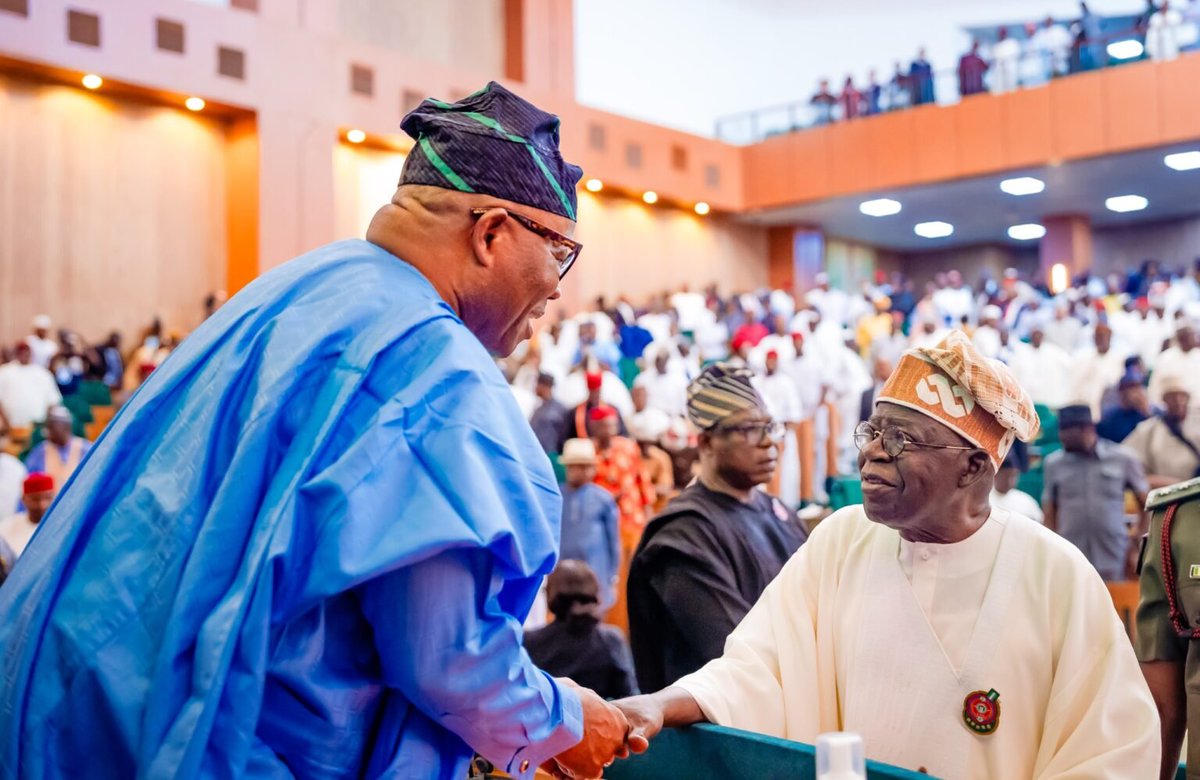
As if responding to the recent assertion made by lawyer Chidi Odinkalu that he has so much respect for rubber stamps that he won’t demean the object by likening the Godswill Akpabio-led Senate to it, the Senate President has declared that the National Assembly will not oppose the President Bola Tinubu-led government for the fun of it.
Stressing that cooperation should not be mistaken for surrender, Akpabio pointed out that the constitutional responsibility of the parliament is to serve Nigerians, not manufacture conflicts with the executive.
Odinkalu, a former chairman of the National Human Rights Commission, had while being featured on the Mic On podcast, said, "I have so much respect for rubber stamps that I really am unable to degrade the rubber stamps by calling the 10th National Assembly one. I tremendously respect rubber stamps to the extent that I'm not willing to defame the rubber stamps. Under Godswill Akpabio as Senate President, we changed our national anthem in one day: no public hearing, no public participation, no public knowledge, nothing. No country with self-respect does that to itself or its people."
But speaking while declaring open the 2026 National Assembly Open Week in Abuja on Tuesday, Akpabio disclosed that the 10th National Assembly had passed more than 100 bills in its first three years, describing the feat as unprecedented at this stage of Nigeria’s democratic journey.
He said the legislature had enacted laws to strengthen national security, return out-of-school children to classrooms, modernise the country’s tax system, approve a new national minimum wage, stimulate investment and establish regional development commissions.
The Senate President then went on to say the following, “Throughout these responsibilities, the National Assembly has worked constructively with President Bola Ahmed Tinubu, GCFR, in pursuit of national progress.
“Constructive partnership should never be mistaken for constitutional surrender. Parliament does not prove its independence by manufacturing conflict, nor its relevance by opposing for opposition’s sake.
“Our constitutional duty is to support what advances the national interest, to question what requires scrutiny, and to correct what demands improvement. That is the balance we have sought to maintain, and history, I believe, will judge it fairly.”
He maintained that the parliament was established to serve Nigerians and should remain accessible to citizens rather than operate as a closed institution.
“These walls were never meant to keep Nigerians out. They were built to welcome them in — not merely as spectators of democracy, but as its rightful owners,” Akpabio said.
The Senate President restated that parliament belongs to the people whose votes created it and not to lawmakers.
According to him, “Parliament belongs not to those elected to sit within it, but to the millions whose hopes and votes brought it into existence.
“Parliament was never built to keep the people out. It was built to bring them in, for democracy flourishes only in the confidence of an informed and engaged citizenry.”
Akpabio noted that public confidence in democratic institutions could only be strengthened through transparency and accountability.
His words, “Public confidence is earned not by asking citizens to trust institutions blindly but by embracing transparency and accountability.
“Parliament should never fear informed criticism. Questions strengthen democracy. Transparency strengthens legitimacy. The more Nigerians understand our work, the stronger our democracy becomes.”
He urged Nigerians to engage more actively with the legislature by attending public hearings, scrutinising its work, and holding lawmakers accountable.
“We invite Nigerians not merely to observe us, but to engage with us; not merely to applaud where they agree, but to challenge us where they believe we can do better.
“A parliament that listens becomes wiser. A democracy that listens becomes stronger,” the Senate President said.
0
4