

Kaothaj_
7 months ago
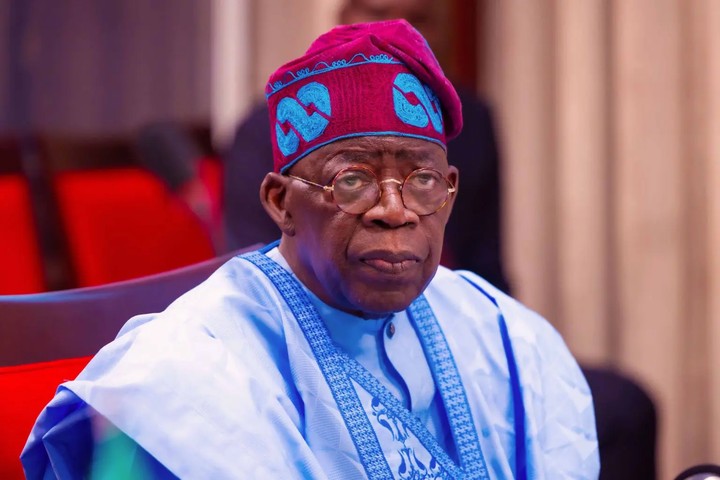
When historians write about the political transformation that reshaped the modern landscape of naija-politics, Friday, February 27, 2026, will be marked as the day Bola Ahmed Tinubu completed what many thought impossible: the near-total domination of Nigerian politics through a combination of federal might, strategic inducements, and what can only be described as the political Midas touch.
Governor Ahmadu Umaru Fintiri of Adamawa State formally defected from the Peoples Democratic Party (PDP) to the ruling All Progressives Congress (APC) in a move that significantly bolsters the party's dominance. The governor made the announcement during a statewide broadcast from Yola, declaring that the move was taken in the best developmental interest of the people of Adamawa State.
But the real shock wasn't just that Fintiri defected. It was the scale of the defection. Accompanying Fintiri in the defection were his entire cabinet, political appointees, elected local government chairmen, and numerous PDP officials across the state. This mass exodus effectively transfers control of Adamawa State's political machinery to the APC.
Thirty-nine special advisers to Governor Ahmadu Fintiri and 14 of the 21 local government chairmen formally defected from the PDP to the APC. This was not a governor switching parties. This was an entire state political structure changing colors wholesale.
And the consequences for PDP are catastrophic. With Fintiri's defection, the APC now controls 30 of Nigeria's 36 states, marking one of the most extensive consolidations of power by a single party in Nigeria's Fourth Republic. The PDP is left with just three states: Bauchi, Oyo, and Zamfara.
Read that again: PDP, which once controlled Nigeria for 16 consecutive years, which once had governors in nearly every state, now controls only three states. Three! Out of thirty-six!
The presidency welcomed the development enthusiastically. Presidential spokesman Bayo Onanuga described it as transforming the APC into a "juggernaut" in Adamawa and dealing a "major blow" to former Vice President Atiku Abubakar, a prominent PDP figure and native of the state.
And that "major blow" to Atiku cannot be overstated. Atiku is from Adamawa. He was governor of Adamawa. Adamawa is his political base, his home territory, his stronghold. And now the sitting governor of that state has not just left PDP, but delivered the entire state structure to Tinubu's APC.
That is not just political defeat. That is political humiliation of the highest order.
But here's where Tinubu's boomerang effect becomes truly extraordinary: Fintiri is just the latest. He's not even the only recent defection. Throughout 2025 and into 2026, Tinubu has been systematically stripping PDP of its governors one by one.
Fintiri is one of the four governors who were left in the PDP, following the defection of Governor Sheriff Oborevwori, Umo Eno, Agbu Kefas, Siminalayi Fubara, and Peter Mbah of Delta, Akwa Ibom, Taraba, Rivers and Enugu states, respectively.
That's six governors from PDP to APC in less than two years. Six entire states flipped. And now, Fintiri's exit leaves the PDP with only three remaining governors: Bala Mohammed (Bauchi), Seyi Makinde (Oyo), and Dauda Lawal (Zamfara).
And here's where it gets even more interesting in the constantly evolving strategies of naija-politics: those three remaining PDP governors are already weighing their options.
Just hours after Fintiri announced his defection, Bauchi State Governor Bala Mohammed was sighted at the State House, Abuja, meeting with President Tinubu. Speaking with journalists after the meeting, Mohammed dismissed speculation that his visit was to perfect a defection to the APC, saying "I have always said that I am a PDP man... I'm not coming here for defection; I'm coming here for governance, for partnership".
But that defensive statement, that need to publicly deny defection rumors immediately after his colleague defected, tells you everything. Bala Mohammed is under pressure. The whispers are real. And while he says he's staying in PDP, the fact that he felt compelled to meet with Tinubu hours after Fintiri's defection speaks volumes.
As for Dauda Lawal of Zamfara, rumors were rife across the state that the governor was planning to defect to APC, though the Zamfara APC chapter denied receiving any letter from him . However, analysts note that Governor Lawal has shown a willingness to swim against the current and remains determined to hold the line rather than decamp to the APC .
So what's so special about Tinubu? How is he achieving this unprecedented consolidation of power? Does he really have a Midas touch that turns everything he touches into political gold?
The answer is multifaceted and brilliant:
First, federal resource control. Tinubu controls allocations, federal projects, infrastructure funding, security deployments, and everything governors need to succeed. Being in the opposition means constantly begging for what APC governors get automatically.
Second, strategic inducements. Fintiri highlighted ongoing federal interventions in agriculture, security, education, and infrastructure, noting that stronger ties with the APC would enable more effective collaboration and resource mobilization for Adamawa's priorities. Translation: Tinubu promised him things he couldn't get as PDP governor.
Third, the destruction of PDP from within. With Wike sabotaging PDP while enjoying federal protection, with INEC recognizing Wike's faction as legitimate PDP leadership, the party has become ungovernable and unattractive.
Fourth, 2027 calculation. One political source noted: "One of the remaining governors would soon dump the party for a viable platform. He needs a new platform to survive" . Governors know that being in the opposition in 2027 means facing the full might of federal incumbency without protection.
Is Tinubu about to dominate naija-politics more than the late Buhari ever did? The evidence overwhelmingly says yes.
Buhari at his peak controlled maybe 22-24 states. Tinubu now controls 30. Buhari never managed to flip opposition governors wholesale. Tinubu has flipped six in less than two years. Buhari lost his own Aso Rock polling unit. Wike just delivered FCT Area Council elections for Tinubu 5-1.
Tinubu is not just dominating. He's creating a political monopoly that Nigeria has never seen in its democratic era. And the scary part? He's doing it legally, through defections rather than coups, through inducements rather than force.
But this raises profound questions about the health of Nigerian democracy operating within the complex framework of naija-politics. Critics argue that these shifts weaken multi-party competition and opposition oversight, while supporters view them as pragmatic steps toward national stability and development .
When one party controls 30 out of 36 states, when the opposition is reduced to three governors who are themselves under pressure to defect, when PDP governors publicly deny defection rumors because the rumors are credible enough to require denial, what does that say about democratic competition?
The Midas touch is real. Tinubu's boomerang effect of winning opposition governors is unprecedented. But whether this is good for Nigeria or dangerous for democracy is a question that historians will still be debating long after 2027.
What do you think? Is Tinubu's consolidation of power brilliant politics or dangerous for democracy? Can PDP survive with only three governors? And will Bala Mohammed and Dauda Lawal hold the line, or is it only a matter of time before they too join the APC juggernaut? Drop your thoughts in the comments section!
0
72