
Kaothaj_
8 months ago
Three years later, Peter Obi is still drawing crowds that make politicians nervous.
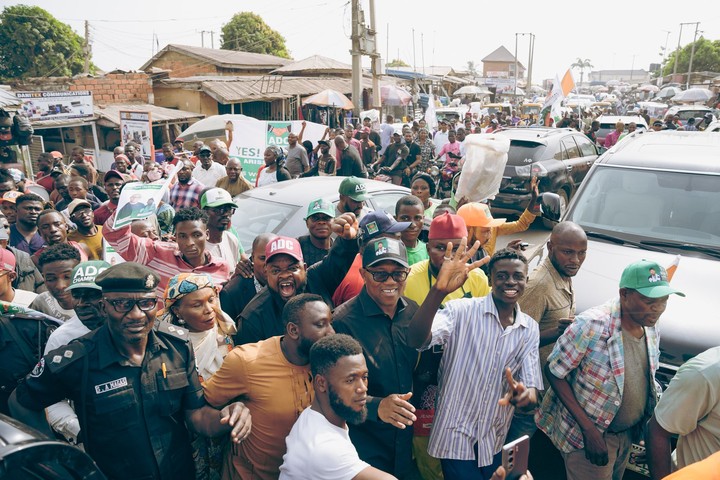
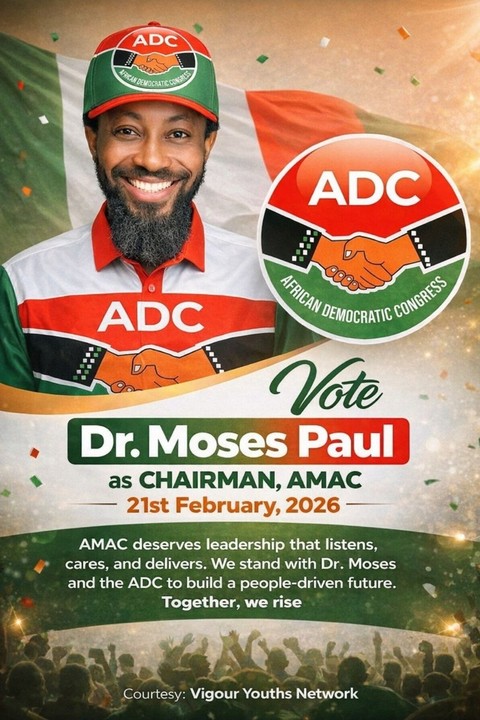
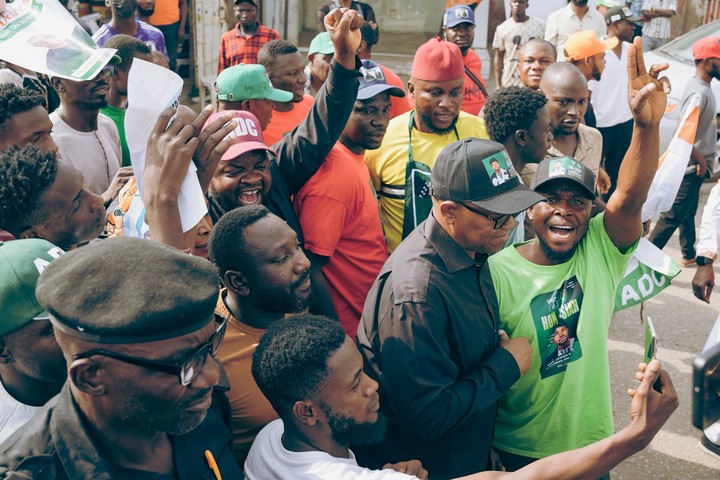
When Peter Obi stepped into Bwari, Abuja Municipal, on a campaign trail for Moses Paul—the African Democratic Congress candidate for the upcoming February 21st AMAC Chairmanship election—something familiar happened.
The streets jammed. People poured out. The crowd swelled until movement became impossible.
It's a scene that has played out countless times since 2023. And it's exactly what his critics said would never happen again.
**The Prediction That Aged Poorly**
Remember the chorus after the 2023 presidential election? "He'll fade." "His supporters will move on." "It was just social media hype." "Give it six months."
We're approaching three years now.
The crowds haven't thinned. If anything, they've grown bolder—showing up not just for Peter Obi's own ambitions, but for candidates he endorses, for causes he champions, for movements he lends his voice to.
Moses Paul isn't running for governor or president. He's running for council chairman. Yet Obi's presence turned a local campaign event into what looked like a presidential rally.
That's not normal. That's not supposed to happen. And that's precisely why it matters.
**What They Got Wrong About the Obidient Movement**
The establishment made a critical miscalculation. They assumed the 2023 movement was about an election. Win or lose, elections end. Movements, when they're real, don't.
What Obi tapped into wasn't just a desire to vote differently. It was a deep, churning frustration that had been building for decades, a generation of Nigerians who felt unseen, unheard, and utterly dismissed by a political class that treated governance like a family business.
These weren't people who showed up because of campaign logistics or ward mobilization. They showed up because something in them recognized something in him.
That kind of connection doesn't expire.
**The Threat He Represents**
Here's what makes Peter Obi genuinely dangerous to Nigeria's political establishment: he proved it could be done differently.
No godfather. No inherited political structure. No billion-naira war chest from questionable sources. Just a message, a track record, and an army of ordinary Nigerians who spread that message with their own data, their own time, their own voices.
He came third officially. But everyone—including his opponents—knows he rewrote the rules of Nigerian politics. He made "structure" look less like an unbeatable fortress and more like an excuse.
Now every time he shows up anywhere and the crowds still come, he reminds them that the threat hasn't passed. The idea hasn't died. The people haven't forgotten.
**Beyond His Own Ambition**
What happened in Bwari reveals something crucial about where Obi stands today: his influence has become transferable.
He's not just a candidate people will vote for. He's become a symbol people will show up for—even when their name isn't on the ballot.
For Moses Paul, having Obi campaign alongside him isn't just an endorsement. It's a statement. It says: "This movement is bigger than one man, one election, one office."
Whether Paul wins or loses, the message was sent. The Obidient phenomenon has legs. It's walking into local elections now.
**The Nationwide Pull**
From Lagos to Kano, Port Harcourt to Maiduguri, Obi draws crowds. Not manufactured crowds bused in with branded T-shirts and promised payments. Real crowds. Curious crowds. Hopeful crowds.
He's done what Nigerian politicians typically cannot—crossed ethnic and regional lines without diluting his message or playing the tribal card. A southeastern Igbo man who pulls genuine support in the North, the Southwest, and the South-South isn't supposed to exist in Nigerian political calculations.
Yet here he is.
**What Comes Next?**
Nobody knows what Peter Obi's next move is—perhaps not even Obi himself. But what's clear is that he has options. And those options scare people in power.
He could run again in 2027. He could kingmake. He could build a coalition that reshapes opposition politics. He could simply keep doing what he's doing—showing up, drawing crowds, and reminding Nigerians that they once believed change was possible.
Whatever he chooses, he won't be doing it alone. Bwari proved that much.
**The Bottom Line**
They said Peter Obi would lose relevance after 2023. They said his supporters would scatter. They said the movement was a moment.
Three years on, he walked into a municipal council campaign and the place couldn't contain the crowd.
The man they wanted to forget refuses to be forgotten. The movement they dismissed refuses to die.
And somewhere, in offices of power across Nigeria, that reality is causing sleepless nights.
0
153