Kaothaj_
7 months ago
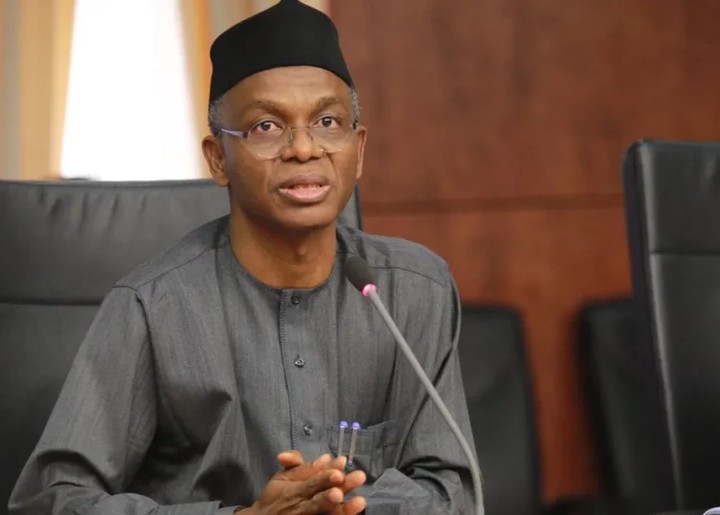
Few moments in the turbulent and unforgiving world of naija-politics have been as dramatic as what is currently unfolding around Nasir El-Rufai. The man who has spent his entire political career claiming persecution is now facing the real thing. And this time, it might not be political theater. This time, it might be his actual downfall.
Three separate cases. Three different agencies. Three sets of potentially devastating charges. All converging on one man at the same time. And the timing is so perfect, so coordinated, so overwhelming that even El-Rufai's considerable political skills might not be enough to save him.
Let's break down exactly what El-Rufai is facing, because the magnitude of his problems cannot be overstated:
Case One: The Wiretapping Charges
The Department of State Services (DSS) has filed a three-count criminal charge against former Governor Nasir El-Rufai of Kaduna State bordering on cybercrime offenses. The DSS instituted the charge at the Federal High Court in Abuja, following the alleged involvement of the ex-governor in wiretapping the telephone lines of the National Security Adviser, Mallam Nuhu Ribadu. The charge, filed by the DSS on Monday, is marked FHC/ABJ/CR/99/2026.
The three counts are devastatingly specific:
Count One: El-Rufai was alleged to have, on February 13, while appearing as a guest on Arise TV station's Prime Time Programme in Abuja, admitted during the interview that he and his cohorts unlawfully intercepted the phone communications of the NSA, Nuhu Ribadu [Punch](https://punchng.com/tinubu-shettimas-frequent-foreign-trips-raise-eyebrows/) .
Count Two: The former governor was accused of stating during the same interview that he knew and maintained a relationship with an individual who unlawfully intercepted Ribadu's phone communications, but failed to report the individual to relevant security agencies. This, according to the DSS, violates Section 27(b) of the Cybercrimes Amendment Act, 2024.
Count Three: El-Rufai and others said to be at large were accused of using technical equipment or systems in 2026 within Abuja to compromise public safety and national security by unlawfully intercepting the NSA's communications. The DSS alleged that the action instilled reasonable apprehension of insecurity among Nigerians, contrary to Section 131(2) of the Nigerian Communications Act, 2003 [Punch](https://punchng.com/opposition-fumes-as-tinubu-makes-15th-foreign-trip-in-2025/) .
This is not a minor charge. This is national security territory. Wiretapping the NSA is potentially treasonable. And the evidence? El-Rufai's own mouth, recorded on national television, watched by millions.
Case Two: The Corruption Charges
Former Kaduna State Governor, Nasir El-Rufai, spent Monday night in the custody of the Economic and Financial Crimes Commission (EFCC) in Abuja after being interrogated over an alleged N432 billion corruption scandal.
Four hundred and thirty-two billion naira! That is not a typographical error. The Kaduna State House of Assembly has accused El-Rufai's administration of misappropriating N432 billion during his eight years as governor.
The Kaduna State House of Assembly report alleged that approximately N423 billion was misappropriated, with additional disputed transactions totaling over N1.5 billion, including funds meant for a light rail project. The Speaker of the House, Yusuf Dahiru Leman, alleged that about N423 billion was siphoned under the El-Rufai administration, leaving Kaduna State with heavy financial liabilities and a rising debt profile.
The committee recommended the investigation and prosecution of the former governor and several members of his cabinet over alleged abuse of office, award of contracts without due process, diversion of public funds, money laundering and reckless borrowing.
A senior EFCC official told reporters: "The commission has been investigating him for about a year. Suspects are only invited after substantial investigation. He is still in custody and will not be released today".
This is not a preliminary investigation. The EFCC has been building this case for a full year. They only invite suspects after substantial investigation. And they kept him overnight in detention, which suggests they have enough to potentially arraign him.
Case Three: The Thallium Sulphate Allegation
In a letter dated January 30, 2026, and addressed to the National Security Adviser in Abuja, El-Rufai said he was seeking clarification and reassurance over reports that the office planned to obtain thallium sulphate from abroad. He wrote: "I am writing as a concerned citizen to seek clarification and reassurance regarding information available to the political opposition leadership about a procurement of approximately 10 kilograms of Thallium Sulphate by the Office of the National Security Adviser, reportedly from a supplier in Poland".
ONSA, in a response dated February 13, 2026 and signed by Brigadier General O.M. Adesuyi on behalf of the NSA, denied procuring or initiating any purchase of thallium sulphate, and referred the allegation to the Department of State Services for investigation.
So not only did the NSA deny the allegation, they referred El-Rufai himself to the DSS for investigation. Why? Because making false allegations against the NSA involving deadly poisons is itself potentially criminal.
The presidency challenged El-Rufai to release the NSA's response to his letter, with Senior Special Assistant to the President on Media, Temitope Ajayi, accusing El-Rufai of being "mischievous" by releasing only his own letter to the public while withholding the NSA's response.
Ajayi said: "Mallam Nasir El-Rufai is playing games and, in his typical fashion, also playing to the gallery. He knew there was no government procurement or importation of Thallium sulphate into Nigeria from Poland through the office of the National Security Adviser. El-Rufai certainly got a reply to his letter from the NSA's office, and he should be honourable enough to release it just as he mischievously released his own letter".
So El-Rufai made a sensational allegation, released his own letter to create public panic, but refused to release the NSA's denial. That is classic political blackmail and misinformation.
Now, here's what makes this moment in the shifting tides of naija-politics so significant: all three cases are happening simultaneously.
On Monday, February 16, 2026, El-Rufai's birthday, he walked into the EFCC headquarters at 10 AM for corruption interrogation. While he was being questioned about N432 billion, the DSS was filing cybercrime charges against him in Federal High Court. And hanging over everything is the thallium sulphate investigation by DSS.
The convergence of EFCC detention, fresh criminal charges, DSS investigations and street protests underscores the high stakes. Whether the cases ultimately amount to lawful prosecution grounded in evidence or political persecution, as his allies allege, will likely be tested in the courtroom.
Is this El-Rufai's Waterloo? The evidence is overwhelming that it might be.
First, these are not political charges. These are criminal charges with substantial evidence. The wiretapping case has video proof. The corruption case has a full year of EFCC investigation behind it. The thallium case has El-Rufai's own letter as evidence of making potentially false allegations against the NSA.
Second, El-Rufai has lost all political protection. The presidential aide noted that El-Rufai had lost the support of virtually every critical stakeholder in the state he governed for eight years, including his successor, Governor Uba Sani, whom El-Rufai had supported to become a Senator and later governor. All 28 members of the Kaduna State House of Assembly unanimously endorsed a petition to both the ICPC and the EFCC to probe El-Rufai over N432 billion corruption allegations.
When every single member of your state's assembly, including members of your own party, unanimously call for your prosecution, you have no political base left to protect you.
Third, even his own family is distancing themselves. As we discussed earlier, his son Bello publicly respects Tinubu over his father. His son Bashir's desperate tweets trying to walk back the wiretapping confession only highlighted how indefensible the confession was.
Fourth, the Presidency is actively supporting the prosecution. President Bola Tinubu publicly praised Ribadu during a visit to Adamawa State, describing him as "honest, bold, courageous and committed." The President's remarks came days after El-Rufai's allegations.
That public endorsement of Ribadu is a signal to the security agencies: you have presidential backing to prosecute El-Rufai fully.
The presidency maintained that El-Rufai's recent actions were driven by two clear motives: to create political tension and damage the government through deliberate misinformation, and to divert attention from his domestic problems in Kaduna State where he is facing massive corruption allegations.
Can El-Rufai survive this? Mathematically, the odds are against him.
He's facing potential imprisonment on three separate fronts. The wiretapping charge alone could put him away for years. The corruption charges involve N432 billion, which if even partially proven could mean decades in prison. The false allegation charge, while less severe, still adds to his legal jeopardy.
His legal defense will be expensive and prolonged. His political capital is exhausted. His allies have abandoned him. His own state wants him prosecuted. The Presidency wants him prosecuted. And most devastatingly, he handed them the evidence himself by confessing on national television.
The developments triggered protests in Abuja and Kaduna. At the EFCC headquarters, hundreds of demonstrators under the aegis of the Mega National Movement for Good Governance stormed the commission's premises, demanding a thorough probe into the alleged N432 billion corruption case. Carrying placards with inscriptions such as "Answer the charges El-Rufai" and "El-Rufai not above the law," the protesters attempted to march into the commission's premises but were stopped by security operatives.
Even public opinion has turned against him. People are protesting not for his release, but demanding his prosecution.
This is El-Rufai's Waterloo. The man who survived Yar'Adua and Jonathan may not survive Tinubu, not because Tinubu is more powerful than his predecessors, but because El-Rufai finally made a mistake he cannot talk his way out of.
He confessed on camera. He admitted to knowledge of illegal wiretapping. He made false allegations he cannot prove. He left behind a paper trail of N432 billion in alleged corruption. And he did it all while having no political protection left.
In the unforgiving and evidence-based world of criminal prosecution that naija-politics has suddenly become for El-Rufai, this might truly be the end. Not because he's being persecuted, but because he's finally facing consequences for actions that any objective legal system would prosecute.
What do you think? Is this really El-Rufai's Waterloo? Can he survive three simultaneous criminal cases? Or has the man who always knew too much finally learned that knowing too much means nothing when you confess your crimes on national television? Drop your thoughts in the comments section!
0
78