Kaothaj_
4 months ago
In Naija politics, the most dangerous man in any room is never the one making the loudest noise.
It is the one who has already decided how the room ends while everyone else is still arguing about where to sit.
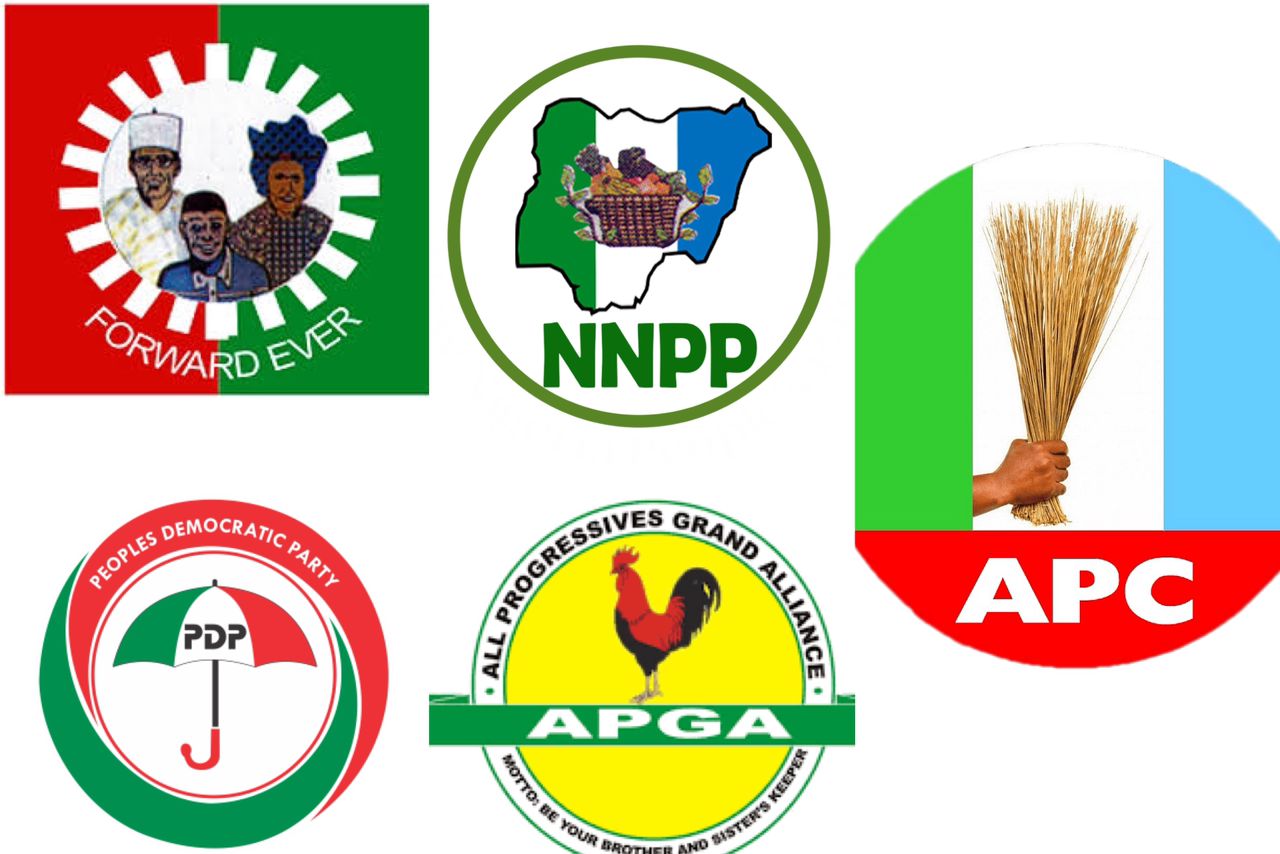
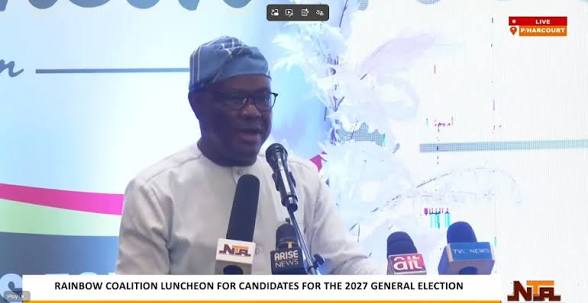
On Saturday May 30, 2026, at a luncheon in Port Harcourt aired on the Nigerian Television Authority, Nyesom Wike stood before members of the Peoples Democratic Party, the All Progressives Congress, the Labour Party, and the Action Alliance, all in the same hall, all on the same side, all answering to one convener.
A PDP minister. Hosting APC, LP, AA, and PDP candidates together. In the same room. In the same state. On the same evening.
He called it the Rainbow Coalition.
In Naija politics, that is not a coalition. That is a kingdom. And the man wearing the crown is not the governor. He is not even in elected office. He is the minister who just finished dismantling a governor's career and is now building the architecture for whatever comes next.
Let us talk about what that architecture actually looks like. And what it is really designed for.
How The Rainbow Was Built: From Two Chairmen to Four Parties
This did not start on May 30. It started months earlier with a move so audacious that most political observers dismissed it as theatre.
Earlier this year, Wike hosted both the PDP state chairman and the APC state chairman in Rivers State at the same event. He challenged any politician in Nigeria to replicate what he had done. Bring your party's chairman and your main opponent's party chairman to the same stage. At the same time. Without any of them fighting.
Nobody took the challenge. Because nobody else had the political weight, the financial resources, and the personal relationships required to make that happen.
Then the experiment expanded.
Two chairmen became four parties. PDP, APC, LP, AA, all brought under the Rainbow Coalition umbrella, all attending a luncheon, all eating at the same table, all agreeing to the same basic proposition: we will collectively choose one governorship candidate for Rivers State in 2027.
Wike declared at the luncheon: "The Rainbow Coalition, we have not chosen who will be the governor of Rivers State. But we have party candidates who have emerged under the Rainbow Coalition. The only decision we have taken is that we are going to support President Bola Ahmed Tinubu."
One decision confirmed. Tinubu support. Everything else, meaning who becomes governor, remains in Wike's hand to dispense at the appropriate moment.
He said: "You must come here. Everybody here, whether you are APC, whether you are PDP, whether you are in Labour, whether you are AA, you are all okay for the state."
You are all okay for the state. Translation: nobody has been chosen yet. Which means everyone still needs to remain loyal to the man holding the selection authority. Which means the queue is still open. Which means Wike's leverage over every single aspirant in that room is intact.
That is not diplomacy. That is management. And it is brilliant.
The Olive Branch to Fubara's Camp: Forgiveness as a Power Move
One of the most revealing moments of the May 30 luncheon was what Wike said about his defeated political godson.
He extended what he described as forgiveness to the Fubara camp and stated that anyone seeking a political future in Rivers State must join the Rainbow Coalition.
Read that sentence twice.
Not that Fubara's supporters are welcome if they choose to come. Not that the door is open should they want to reconcile.
Anyone seeking a political post in Rivers State must join the Rainbow team.
Must. Not should. Not can. Must.
Wike did not destroy Fubara and then offer mercy from a position of generosity. He destroyed Fubara and then offered the terms of surrender to those who remain. The distinction matters enormously.
The forgiveness is real. The power structure it is delivered from is also real. And the message to Fubara's remaining allies is as clear as a press release without any of the diplomatic language that usually wraps these things.
Your choices are: join, or be irrelevant in the only state that matters to your political career.
That is a man who does not just win political battles. He rewrites the conditions of the political terrain after winning them.
The ADC and NDC Warning: You Are New Here
Wike took a specific swipe at fringe parties, singling out the ADC, arguing that political noise and defections are no substitute for genuine electoral structure, and that only the PDP, APC, and Labour Party have demonstrated the operational depth to prosecute statewide and national elections across Nigeria.
He did not mention NDC by name. He did not need to. When he said only PDP, APC, and Labour Party have the structure to win real elections, he was telling Obi's NDC, Atiku's ADC, and every other party that arrived in Rivers with presidential ambitions and no ward structure, exactly where they stand in his state.
You are new here. You have no ward executives. No polling unit agents. No local government networks. No relationships with the traditional rulers who move votes in Ogoni, Ijaw, Ikwerre, Kalabari, and the other nationalities that make up Rivers State's complex electoral geography.
Wike has all of that. And he just consolidated it across four parties.
In Naija politics, ADC and NDC can announce presidential candidates until January 14. But if their polling unit agents are not present at every collation point in Rivers State, the votes disappear between the ballot box and the announced result.
Wike just told them he controls those collation points.
The Court of Appeal Complication: Even Wike Has Paperwork Problems
However, before we fully crown the Rainbow King, Naija politics demands accuracy.
A recent Court of Appeal judgment in Port Harcourt sacked Chief Tony Okocha, a key Wike ally, as APC chairman in Rivers State, declaring decisions taken under his leadership invalid.
That judgment creates a problem. If Okocha's decisions as APC chairman are invalid, then the APC screening results that disqualified Fubara's loyalists and cleared Wike's candidates may be legally vulnerable. Chinda's primary victory, conducted under Okocha's watch, carries a legal asterisk that Fubara's camp and their lawyers are almost certainly already exploiting.
The Rainbow Coalition's most important component is the APC. If the APC's Rivers State structure is ruled legally invalid, the Rainbow loses its most powerful colour.
This is the complication that Wike did not address at the May 30 luncheon. He spoke about unity, forgiveness, structure, and Tinubu support. He did not speak about the Court of Appeal ruling that stripped his APC chairman of legal authority.
In Naija politics, the man who builds the most impressive structure in the room still has to make sure the foundation is legal. That is the unresolved question sitting underneath all the Rainbow luncheon optimism.
What Wike Is Really Building: The 2031 VP Calculation
Now for the real conversation. The one that Wike's actions point toward far more clearly than anything he has said publicly.
2027 is Tinubu's re-election year. Wike is backing Tinubu. Enthusiastically. Structurally. With a four-party coalition in the most resource-rich state in the South-South.
2031 is where the calculation gets interesting.
If Tinubu wins 2027 and serves until 2031, the power rotation agreement that has governed APC succession points the presidency northward. A southern candidate would need to wait until 2031 at the earliest, unless the APC breaks its own rotation logic.
But Vice President Shettima's term also ends in 2031. And the vice presidential slot for a Tinubu second term that runs to 2031 is either Shettima continuing in that role or someone replacing him.
Wike is a South-South politician. The South-South has produced two vice presidents since 1999, Jonathan and Osinbajo. It is a region accustomed to negotiating for federal positions through structural leverage rather than popular mandate.
What Wike is doing in Rivers State right now is building the largest, most consolidated, most cross-party political structure in the Niger Delta. A four-party coalition that backs the president, controls governorship selection, manages senatorial and House of Representatives candidates, and forges the kind of unity that says to Aso Rock: when you need South-South, there is one address.
That address is Wike's.
If Tinubu wins in 2027 and begins building his 2031 succession legacy, the man who delivered the South-South cleanly and enthusiastically, with a four-party Rainbow Coalition behind him, who supported the Renewed Hope Agenda loudly and publicly, who served faithfully as FCT minister for four years, is a very strong candidate for whatever position Tinubu decides to reward.
Including vice president.
Wike has never publicly confirmed 2031 VP ambitions. He does not need to. In Naija politics, the smartest ambitions are always the ones being pursued through behaviour rather than announced through speeches.
Can This Strategy Work?
The honest assessment requires looking at three things simultaneously.
First, the legal challenge from the Court of Appeal judgment on Okocha is real and must be resolved before the Rainbow Coalition's APC component has full operational legitimacy. If the APC Rivers structure is legally undermined, Wike loses the most powerful structural tool he has in the coalition.
Second, the forgiveness offer to Fubara's camp, while politically elegant, has a practical problem. Fubara still has the loyalty of a significant portion of the Ijaw political network, which represents the single largest ethnic nationality in Rivers State. The Ijaw are not people you politically neutralise easily. They have historical memory of political marginalisation and they vote in large, coordinated blocks when they feel their interests are threatened.
If Fubara emerges as the de facto candidate of Ijaw political identity in 2027, the Rainbow Coalition's governorship candidate, whoever Wike eventually selects, faces a harder race than the current optics suggest.
Third, the Tinubu alignment is both the coalition's greatest strength and its greatest political risk. Rivers State has historically voted for outcomes that serve Rivers interests rather than national party loyalty. A blanket endorsement of Tinubu in a state suffering from the same economic hardship that every other Nigerian state is experiencing requires Wike to deliver tangible Tinubu dividends before 2027.
Wike himself addressed this partly when he said: "God said no, we must come together as a people, irrespective of our political leanings. What is important is that we must talk about the development of our state. We must talk about the unity of our state.
Development. Unity. These are the two things Rivers State people will hold the Rainbow Coalition accountable for. If they materialise, the coalition wins. If they remain speeches and luncheons, the Fubara camp finds its opening.
The Final Verdict
In Naija politics, the most remarkable thing Nyesom Wike has done with the Rainbow Coalition is not the partisan boundary crossing. Many Nigerian politicians have hosted multi-party events.
The remarkable thing is the direction of the authority.
Every other multi-party gathering in Nigeria's recent history has been oppositional. Parties coming together to challenge a ruling force. The Ibadan Declaration. The 2013 APC merger. The G-5 governors.
Wike's Rainbow Coalition is not oppositional. It is consolidatory. It is four parties joining together not to challenge power but to align with it. To support the president. To jointly produce a governorship candidate. To end the external exploitation of Rivers State's instability.
He took the model of opposition coalition-building and turned it toward the incumbent.
That is either genius or the most sophisticated reduction of democratic competition that Naija politics has produced in years.
Perhaps both.
The Rainbow is beautiful to look at. In nature, it appears after the storm has passed.
In Rivers State, the storm was Fubara. Wike ended it.
The Rainbow is now being displayed.
And from its colours, the minister who holds no elected office is deciding who governs the key of the country, the state at the heart of the nation, the place where the oil money flows from.
Whether that power is used for Rivers or primarily for Wike's own national ambitions is the question that May 30's luncheon raised without answering.
In Naija politics, the answer usually arrives four years after the question. Right on the edge of the next election.
What do you think? Is Wike's Rainbow Coalition a genuine attempt to end Rivers State's political instability and deliver development, or is it the most ambitious personal positioning exercise for a VP slot that Nigerian politics has seen since Tinubu built Lagos? And can a four-party coalition that includes both PDP and APC candidates survive long enough to actually select one governorship candidate without imploding? Drop your thoughts in the comments section. This Naija politics story from the key of the country is far from over and every development from here shapes Nigeria's power map well beyond 2027.
0
117