

Kaothaj_
5 months ago
In Naija politics, the real trouble never starts from the noise you can see. It starts from the cracks at the top—and by the time it reaches the states, it is already out of control.
That is exactly where ADC finds itself now.
Because what looks like scattered incidents across Enugu, Adamawa, and Kogi is actually one coordinated signal: the centre is no longer holding.
The Supreme Court Move That Changed Everything
Start from the top. The faction led by has now taken the party’s leadership dispute to the Supreme Court.
Pause there.
This is the same political camp that previously argued that courts should stay out of internal party matters.
Now they are asking the highest court in the land to decide who is legitimate.
In Naija politics, that kind of reversal is not just contradiction—it is desperation.
Because once a party hands over its internal dispute to the courts, it is no longer in control of its own timeline.
Racing INEC and the Courts at the Same Time
And that brings us to the gamble.
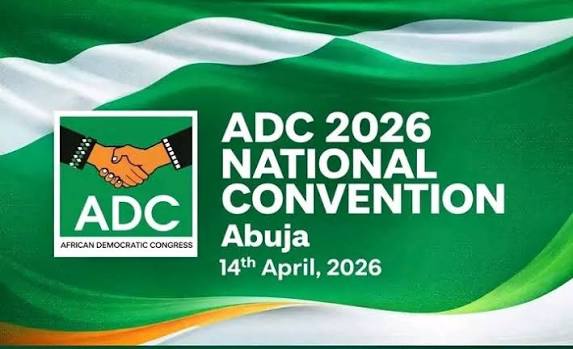
There are strong indications the party is considering holding its national congress around the same time the court is expected to rule on the legitimacy of the factions.
So the question becomes unavoidable:
Can you outrun both the courts and? Experience says no. Because in Naija politics, legitimacy is not about who acts first—it is about who is recognised.
You can organise a congress.
You can produce leaders.
You can even announce candidates.
But if INEC does not recognise it, and the court does not validate it, it is as good as political theatre.
Peter Obi Draws His Line—But Not a Plan
Then enters. He has made it clear: if the party’s primary becomes transactional, he will walk away.
On paper, that sounds like principle.
But in the middle of a structural crisis, it raises a harder question. Is walking away a solution?
Because in Naija politics, moments like this are when leaders are expected to stabilise the system—not set conditions for exit.
And this is where critics are drawing parallels with past comments from , who has long questioned Obi’s ability to control political machinery rather than just inspire followership.
Fair or not, this moment feeds that narrative.
Adamawa: When the Power Base Rebels
Now to the states—starting with the most symbolic one. In Adamawa, the home state of , a factional chairman moved to suspend Atiku himself, alongside and others.
This is not a minor dispute. This is a direct challenge to authority at its strongest supposed base. Because in Naija politics, if your own state structure can move against you, then your influence is no longer dominant—it is contested.
Enugu: One State, Three Power Centres
Then comes Enugu. Three different state chairmen emerged from the congresses. Each backed by different political heavyweights. Not confusion. Not error. Alignment. That means the battle lines are already drawn internally.
Because once multiple leaders claim legitimacy in the same state, what follows is inevitable:
Parallel structures.
Parallel loyalties.
Parallel commands.
And one party that cannot speak with one voice.
Kogi: When Order Completely Breaks Down
Finally, Kogi. The state convention reportedly descended into chaos. No clear outcome. No accepted leadership. Just disorder.
At this stage, it is no longer about factions—it is about the absence of control.
The Real Problem: Competition Without Authority
Put everything together and a pattern emerges.
The top is in court
The centre is racing INEC
The leaders are divided on direction
The states are producing parallel structures
This is not just crisis.
This is competition without a referee.
And in Naija politics, when there is no referee, everyone claims victory—and nobody truly wins.
Do They Still Stand a Chance?
ADC still has big names. It still has national visibility. It still has ambition. But power is not built on ambition alone. It is built on:
Structure
Discipline
Recognised authority
Right now, all three are under pressure.
The Bottom Line: Naija Politics Punishes Disunity Ruthlessly
In Naija politics, a divided party does not gradually lose relevance—it collapses at the exact moment it needs to look strongest.
ADC wanted to present itself as the most credible alternative to the ruling party.
But today, it is fighting:
Itself in the courts
Itself at the congresses
And itself in the public space
Until that changes, the bigger question is no longer whether they can win power.
It is whether they can even organise themselves well enough to contest it.
What do you think?
Can ADC still fix this before it’s too late, or has the damage already gone too deep?
2
59