

Kaothaj_
3 months ago
In Naija politics, every candidate eventually has to answer for the army they raised.
Not for the enemies who oppose them. Not for the institutions that challenge them. Not even for the running mates who complicate their messaging.
For the loyalists. The true believers. The ones who marched in the rain, donated their data, screamed down journalists on Twitter, and decided that their candidate was not just a politician but a cause worth dismantling every other political structure in Nigeria to protect.
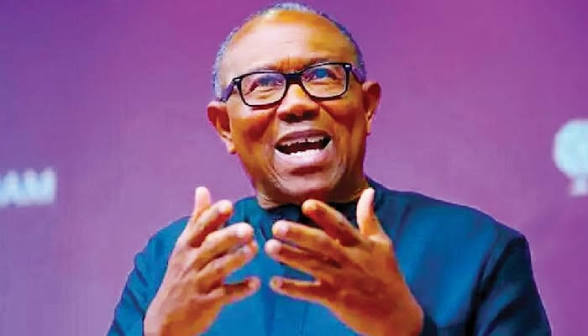
Peter Obi raised the most passionate army in Nigerian electoral politics since the NADECO era. He called them by their own name. He inspired them with his frugality. He gave them a tagline that became a philosophy. "We no dey give shishi." And they gave him something no Nigerian presidential candidate had received in a long time.
Genuine mass ideological loyalty.
But armies, in Naija politics as in every theatre of human conflict, are only assets when they follow strategic command. When they start commanding the general, they become something else entirely.
And right now, in June 2026, the Obidients are becoming something else entirely.
How The Movement Was Born: The Phenomenon That Shocked Nigeria
Let us trace the origin properly before delivering the warning.
In 2022, Peter Obi left the PDP. He cited what he described as irregularities and transactional conduct in the presidential primary. He chose the Labour Party, a party that most Nigerian political analysts described as a vehicle with four flat tires and no engine.
What followed was one of the most extraordinary political mobilisations in Nigerian history.
Young Nigerians, urban professionals, first-time voters, diaspora Nigerians registering from abroad, students, market traders who had never voted before, all united around a single message: this man is different. He kept Anambra's money. He lived simply. He did not buy votes. He did not spray naira notes at parties. He said "we no dey give shishi" and an entire generation of Nigerians who were tired of seeing their leaders steal with both hands adopted that phrase as their manifesto.
The Ooni of Ife, the Ooni of Ife, called him a Tsunami. Not a politician. A natural phenomenon.
In the 2023 general election, Obi came third. On a Labour Party platform with no governors, no federal structure, no collation agents in large portions of the country, and no traditional party machinery. He got 6.1 million votes. He won Lagos, the commercial capital, in ways that defied every established political prediction. He won the FCT. He performed strongly in states the opposition had written off.
That was the movement at its peak. Passionate. Organised through social media in ways Nigerian politics had never seen. Genuinely threatening to the establishment.
How The Movement Became An Entitlement Machine
The problem with movements built on purity is what happens when the purity meets the impurity of real political processes.
In the ADC, the Obidients decided that Atiku Abubakar was the enemy. Not Tinubu. Atiku. The man in the same opposition coalition. The man who had pledged to support whoever won the ADC primary. The man whose northern structure and delegate numbers were the coalition's strongest structural asset.
They began insulting Atiku and his camp on social media with the same energy they had used against the APC in 2023. They demanded Obi-Kwankwaso as non-negotiable. They called Atiku a bluff. They said the primary would be rigged if Atiku emerged. They made the ADC coalition's internal management a daily social media crisis.
Dele Momodu, Atiku's most eloquent defender, eventually came out publicly and said what needed to be said directly.
He declared: "Atiku will not be bullied into stepping down. Elections don't run on emotion. It is a shame that people don't read. We just go on the internet and shout: once we have Obi and Kwankwaso, it is over. Nothing is over."
Nothing is over.
That sentence was aimed at Twitter, at Instagram, at the WhatsApp groups where Obidients held court and voted on whether Atiku was worthy of consideration. It was a reminder that the primary system does not run on trending hashtags. It runs on registered delegates in accredited halls.
The Obidients could not organise enough delegates to give Obi the ADC ticket. They could organise enough noise to make Atiku's primary management more difficult. And they maximised that noise until Obi himself decided the environment was too toxic and left for NDC.
The movement's aggression contributed to the fragmentation that set Obi back.
Now In NDC: The Pattern Is Repeating Itself
If the ADC experience was a warning, the NDC experience is a full diagnosis.
Aisha Yesufu, the co-founder of the BringBackOurGirls and EndSARS movements, is one of the most recognisable faces of the Obidient activism. She declared her intention to contest the FCT senatorial seat on the NDC platform. She toured area councils. She shared legislative blueprints. She mobilised supporters on social media.
Then reports emerged that the NDC had a preferred candidate for the FCT senatorial seat. A woman named Barrister Amanda Pam. A party chieftain who had been with NDC before Yesufu arrived. A woman with actual grassroots network, delegate relationships, and party loyalty built over years rather than months.
Yesufu revealed that NDC cancelled the primary election for the FCT Senate seat. She called it a breach of the Electoral Act. She said the process was structured to frustrate challengers and subverted. She deliberately chose not to litigate, saying the grievance process was designed to wear people down.
The primary was eventually held and Amanda Pam won. Yesufu lost. The woman who defeated her had deep grassroots networks and long-standing party loyalty that Yesufu's social media following could not replace at the delegate level.
The verdict from social media was immediate and merciless.
One comment read: "Where are her Twitter and Facebook fans?" Another said: "Politics is local, not social media and TV ranting. She has the structure and Aisha has the Twitter likes and Instagram comments, and elections are not won on social media."
That comment deserves a pause.
Yesufu built her reputation on social media. She mobilised millions of Nigerians on Twitter during EndSARS. She was one of the most followed political voices on Nigerian social media platforms for years.
Amanda Pam has the delegates.
In Naija politics, delegates are the currency that actually purchases nominations. Twitter followers purchase trending topics. They are not the same thing.
Dickson Draws The Line. And Says The Quiet Part.
The clash between Yesufu and NDC's leadership produced a moment of extraordinary candour from Senator Seriake Dickson.
When the Obidients began applying pressure on NDC's leadership over the FCT senatorial crisis and other perceived injustices, Dickson responded with a statement that must have landed like cold water on everyone listening.
He reportedly told the aggrieved members: if it is easy to form a party, they should go ahead and form one.
That is not the statement of a man who is grateful for his new members. That is the statement of a man reminding new arrivals that they joined his party, not the other way around.
One observer captured the power dynamic with a statement that should be required reading for every Obidient: "See the way you're calm and humble. You know you dare not bully the leadership of NDC like you did in LP and even your Lord Peter Obi, dem no no born am well to flex muscle with Dickson."
Dem no no born am well to flex muscle with Dickson.
Dickson is not David Mark. He is not Uche Secondus. He is not Datti Baba-Ahmed's Labour Party leadership that bent to Obidient pressure repeatedly between 2023 and 2024. He is a former Bayelsa governor with his own independent political base, financial resources, and institutional confidence that does not require Obidient validation to survive.
When Dickson says form your own party if NDC's rules offend you, he means it. He has enough political standing to let Obi leave NDC and still have a functioning party.
That power asymmetry is new for the Obidient movement. And they are not handling it well.
The Theo Abu Agada Situation and the Deputy Spokesman War
The escalation did not stop at the Yesufu senatorial situation.
Obidients began demanding the resignation of Theo Abu Agada, a recently appointed NDC media team official, over perceived ideological misalignment and questions about his commitment to the Obi presidential project.
They also clashed with the NDC deputy spokesman over how the party was marketing Obi's candidacy and whether the NDC's communications machinery was giving Obi adequate promotional support.
These are not small protests. These are structural demands. Obidients are not just asking for fair primary processes. They are demanding personnel decisions inside a party they joined months ago. They are telling a party's leadership who should be in its media team. They are evaluating the party's spokesman and deciding he is inadequate.
That is not supporter activism. That is a takeover bid from people who did not build the house they are trying to rearrange.
And the danger is not just to NDC's internal stability. The danger is to Obi's candidacy itself.
The Warning Obi Must Hear
Here is the honest political warning that this entire pattern produces.
Peter Obi's greatest strength has always been his image of discipline, structural rigour, and intolerance for recklessness. As Anambra governor, he built that reputation over eleven years. He counted his state's money publicly. He refused to borrow. He lived modestly. He earned the frugality brand because his behaviour was consistent with it.
But the movement that formed around that brand has spent the last three years behaving in ways that are the exact opposite of its founder's personal brand.
Obidients bully party officials who disagree with them. They demand personnel decisions in institutions they just joined. They call for primaries when it suits them and call primaries rigged when the results do not favour their candidate. They insulted Atiku while Obi was in Atiku's coalition. They are now insulting NDC officials while Obi is in NDC's coalition.
Every time the Obidients go to war with an institutional structure that Obi needs for his presidential project, they create a political problem that Obi must resolve while also trying to run a national campaign against an incumbent with thirty-one governors.
The Ooni called Obi a Tsunami. Tsunamis are powerful because they are singular, directional, and focused. They do not dissipate into smaller waves fighting each other over who should be the senate candidate in the FCT.
The Obidient movement, at its best, is a force multiplier for Obi's candidacy.
At its worst, it is a liability that alienates institutional partners Obi cannot win without.
Dickson is one of those partners.
NDC's party structure is one of those assets.
And the northern vote that Kwankwaso's Kwankwasiyya movement is supposed to deliver is dependent on Kwankwaso maintaining his dignity inside an alliance whose social media wing regularly treats every disagreement as a conspiracy against the cause.
In Naija politics, the candidate is only as disciplined as the movement around them allows them to be.
Right now, the movement is not allowing Obi to be as disciplined as his personal brand requires.
The Final Verdict
Peter Obi is a genuinely capable candidate with a documented governance record that most 2027 presidential aspirants cannot match.
But the Obidient movement has a pattern. It follows Obi into every party. It demands structural control it has not earned. It bullies leadership it did not build. It calls every unfavourable outcome rigged. And it eventually creates an environment so toxic that either Obi leaves the party or the party expels the energy that came with him.
Labour Party. ADC. And now the opening salvos in NDC.
The difference this time is Dickson. Who has already said the quiet part.
If the Obidients continue demanding resignations, claiming predetermined primaries, and clashing with NDC's established officials, they will either fracture Obi's last viable platform before the 2027 election or they will force NDC to prioritise its own institutional survival over its presidential candidate's comfort.
Neither outcome helps Obi beat 10.9 million Tinubu party votes.
The movement that made Peter Obi a Tsunami must decide whether it wants to be the water that carries him to shore or the rocks that sink him before he arrives.
Right now, it is doing a little of both.
And in Naija politics, a candidate running out of parties has very little room for an army that burns bridges faster than he can build them.
What do you think? Are the Obidients a net asset or net liability for Obi's 2027 presidential ambition at this point? And has the FCT senatorial drama exposed the movement's fundamental inability to function within institutional rules rather than around them? Drop your thoughts in the comments section. This Naija politics self-examination is one every Obi supporter should be having right now, before January 14, 2027 arrives and the movement's discipline determines whether the candidate succeeds or fails.
0
81