Kaothaj_
6 months ago
In Naija politics, there is a moment in every era where you look around the room and realise the room has only one person in it.
That moment is happening right now.
And the man standing alone in that room, looking at a political landscape he has methodically emptied of every serious rival, is Bola Ahmed Tinubu.
What is happening in Nigeria ahead of 2027 has never happened before. Not under Obasanjo. Not under Jonathan. Not even under the most dominant political machines this country has ever produced.
Thirty-one governors out of thirty-six are under APC. The opposition parties are either defecting, fracturing, or endorsing the man they were supposed to be fighting. And this week, in two separate events that happened within twenty-four hours of each other, two governors from outside APC stood up in public and told their people: back Tinubu.
This is not Naija politics anymore. This is a coronation.
How It Started: One Governor, Then Another, Then Another
It did not happen overnight. Nothing this complete ever does.
It started quietly. One governor defecting here. One endorsement there. One party chairman crossing the floor. One senator collecting a ministerial appointment. Each move looked small on its own. Each move made sense in isolation. But now, standing back and looking at the full picture, what Tinubu has built is the most consolidated political structure any sitting Nigerian president has ever commanded heading into a re-election campaign.
Thirty-one governors. From North to South. From states that were PDP strongholds to states that once had soldiers on the streets opposing federal authority. All under one roof. All signed on. All working the machinery.
The remaining five governors who are technically not APC? Three of them have already publicly endorsed Tinubu's second term.
Let that sink in.
Adeleke: The Opposition Governor Who Said "He Is Our Leader"
Yesterday, in Osogbo, Governor Ademola Adeleke of Osun State stood before his cabinet members, his special advisers, his deputy governor, his House Speaker, and the top officials of his government, and reaffirmed what he had been saying since July 2025.
"We have no problem with President Tinubu. He is our leader. He represents the South West. I restate our endorsement of Mr President for re-election in the best interest of the South West."
That is an opposition governor. Technically. On paper.
In reality? Adeleke is not opposing anybody. Adeleke is a man playing a very careful game of political survival, and he is playing it with full clarity about what the stakes are.
His situation is not complicated. Osun State is facing an August 2026 gubernatorial election. He needs to win that election to survive politically. He has two things working against him at the same time. First, a vicious local government crisis with APC that has already claimed lives and is sitting in court. Second, a fragile alliance with the Accord Party that gives him no federal infrastructure to stand on.
The only man who can make those problems manageable is Tinubu. The only man who can call off the federal dogs, ease the local government pressure, and give Adeleke a fighting chance in August is the man sitting in Aso Rock.
Adeleke said the lingering crisis over the control of local government areas in Osun State would not affect his earlier endorsement of Tinubu.
Of course it wouldn't. Because the endorsement is precisely the price of making that crisis manageable.
This is Naija politics. Every endorsement has a receipt. And Adeleke's receipt is written in Osun's local government chairmanship dispute.
Soludo: The Igbo Professor Who Told His People Not to Waste Their Votes
And then, twenty-four hours later, something even more stunning happened.
In Awka, at Dr Alex Ekwueme Square, Professor Chukwuma Soludo was sworn in for his second term as Governor of Anambra State. Former presidents Obasanjo and Jonathan were in the crowd. The Ooni of Ife was there. Vice President Shettima represented Tinubu personally.
And in that inaugural speech, on the biggest political stage of his career, Soludo did something that nobody in the South-East political space has ever done at that level.
Soludo said the South-East should not "waste" its votes on alternative candidates in the next presidential election, adding that the region should instead back Tinubu.
He went further.
"President Tinubu is a cerebral, courageous, and patriotic Nigerian. We trust him to make a major difference for Nigeria and the South-East," Soludo stated.
The calculation behind this is straightforward. Soludo is not an ideological man. He is a technocrat with a professor's mind and a politician's instincts. He has looked at the board and made his assessment.
The Igbo have been crying about marginalisation for twenty years. They voted Peter Obi massively in 2023 and Obi came third. They have zero senators in Senate leadership. They have no VP. They have no president. The protest votes have not worked.
Soludo noted that the political future of the Igbo remains important but suggested that the timing for producing a president of South-East extraction is not immediate.
In other words: stop fighting the man who is giving you roads, rail, and the dredging of the River Niger. Back him now. Collect what you can. Position for 2031.
That is not surrender. That is strategy dressed in pragmatism. Whether it is the right strategy for the South-East is a different argument. But as a political move? It is cold, calculated, and devastating to anyone who thought the South-East would be part of a unified opposition bloc in 2027.
Soludo called on Ndigbo not to waste their votes on anyone else.
Peter Obi heard that sentence from Awka. Atiku heard it from Adamawa. Every opposition figure who was counting on South-East votes heard it.
And none of them have a good answer.
Never Before. Not Once. In This Country's History.
Let us be clear about what is happening because the scale of it deserves to be stated plainly.
No sitting Nigerian president has ever entered a re-election campaign with thirty-one of thirty-six state governors on his side.
No sitting president has ever had opposition governors publicly endorsing him while their own party structures have not yet dissolved.
No sitting president has ever had a governor from a different geopolitical zone, speaking at his own inauguration, tell his own people not to waste their votes on anybody else and to back the incumbent instead.
This has never happened before. Not in this combination. Not at this scale.
The closest comparison in Nigerian history is Obasanjo's consolidation after 2003. But even Obasanjo had a functioning PDP opposition at the state level. Even in his peak years of dominance, the opposition still had structures, still had governors, still had a reason to show up.
Today? The opposition does not just lack governors. It lacks a message, a leader, a structure, and increasingly, a reason for existence.
What Does This Mean For Opposition in 2027?
Let's be brutally honest.
The ADC currently lacks the electoral muscle to independently pose a serious threat to Tinubu's re-election bid. The party has no serving governors, controls no state assemblies, and has limited representation in the National Assembly.
PDP is down to one governor, Seyi Makinde in Oyo, who is himself fighting for political survival in 2027 and cannot spend all his energy on a presidential race.
Labour Party has no governor. No structure. And its 2023 presidential candidate is now in ADC, a party that is simultaneously factionalised, with two factions issuing two different convention dates and calling each other illegitimate.
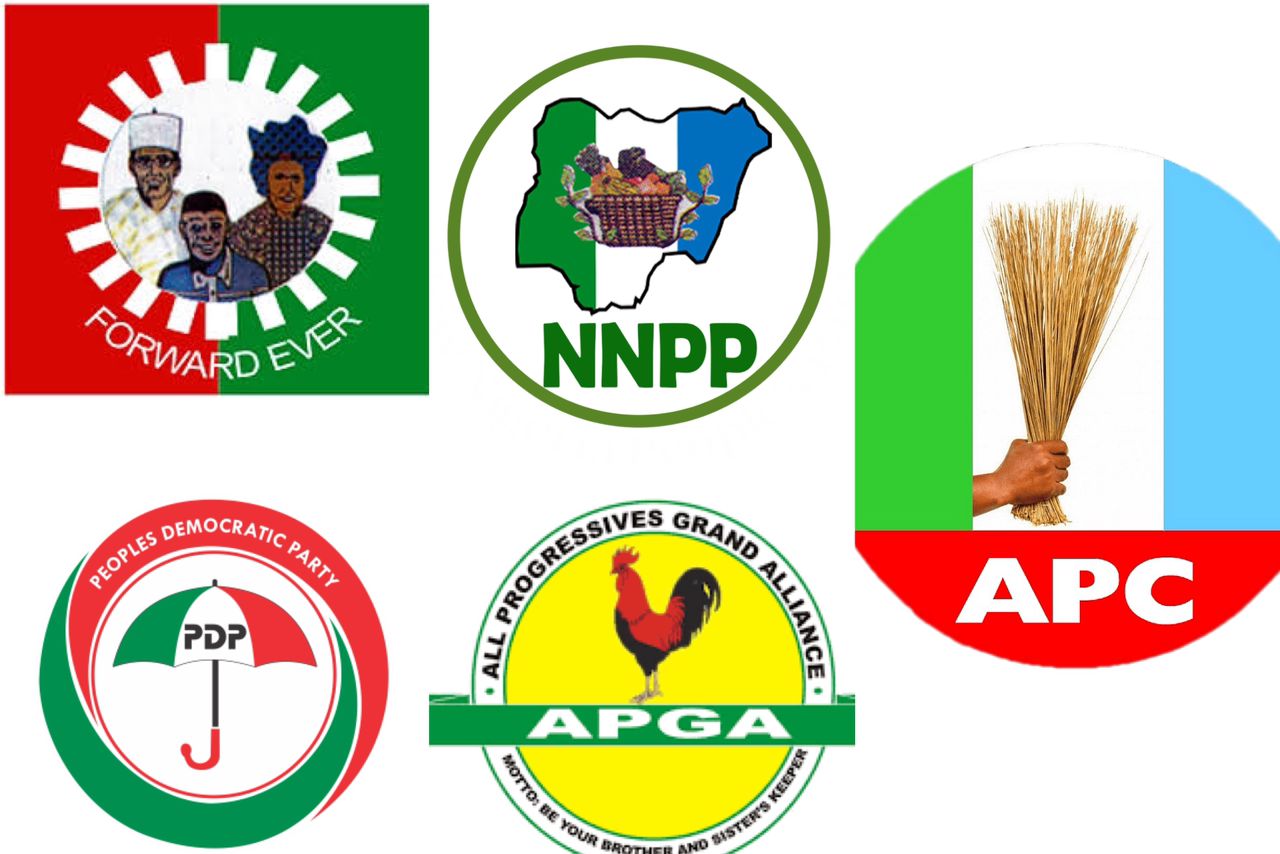
Kwankwaso's NNPP lost its own governor in Kano to APC defection talks.
The maths is not complicated. The opposition going into 2027 has no governors, no money that can match federal resources, no unified candidate, no coalition agreement, and no state executive machinery to drive voter mobilisation.
Against a man with thirty-one governors, federal palliatives, ministerial campaigns across every geo-political zone, and now endorsements from the opposition's own.
This is what a one-party state looks like before the paperwork is done.
The Bottom Line: Tinubu Did Not Just Win The Battle. He Won The Field.
In Naija politics, the election is not decided on election day. It is decided in the two years before. In the alliances built. The governors secured. The opponents neutralised. The structures erected ward by ward, local government by local government.
And by that measure, this election is almost over before it has started.
But almost is not completely. And history has its own sense of humour.
Jonathan had structure too. He had money. He had governors. He had an APC that was barely two years old and untested. And he lost. Because the people were hungry and scared. Because the economy had become unbearable. Because a coalition found a way to speak to pain that governors and money could not drown out.
The question for 2027 is whether that kind of pain, fuel at N1,400, darkness across the country, blood on northern roads, will find a voice loud enough to be heard above the machinery.
Right now? No such voice exists.
And that is the scariest thing about the state of Naija politics today.
Not that Tinubu is strong. But that nobody is strong enough to even make it interesting.
What do you think? Is the 2027 election already over, or can the opposition still find a way to make it a real contest? And with Soludo telling the South-East not to waste their votes and Adeleke endorsing the man he was supposed to oppose, is there any genuine opposition left in Nigeria? Drop your thoughts in the comments section!
0
66