
Kaothaj_
8 months ago
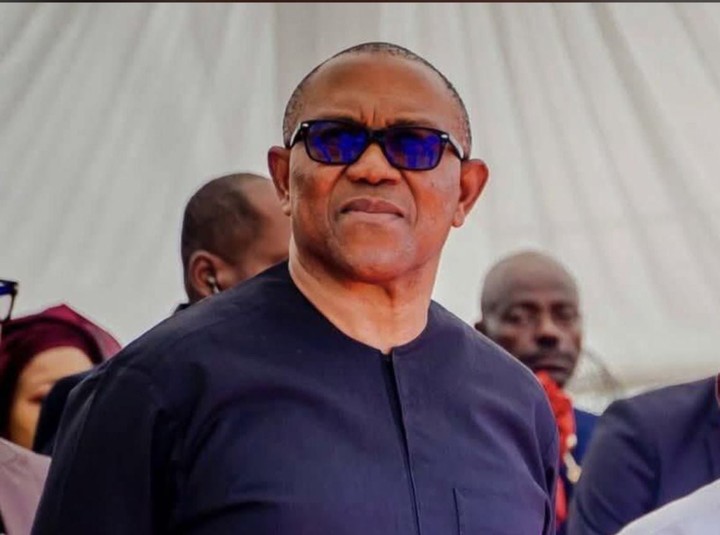
In the constantly shifting calculations of naija-politics, Peter Obi represents something that terrifies the political establishment: genuine grassroots support that money cannot buy and structures cannot contain. His recent statement calling out President Tinubu's broken promise on electricity—"If I do not provide steady electricity in my first four years, do not vote for me for a second term"—has resonated powerfully with Nigerians suffering through endless power cuts.
Obi recalled a statement credited to Tinubu during the 2022 campaign, in which he said Nigerians should not vote him for a second term if he failed to deliver steady electricity within four years. According to Obi, recent developments show a sharp contradiction between that promise and present realities, noting that the national grid collapsed twice in January 2026 alone.
The timing of Obi's message is perfect. Nigerians are frustrated, angry, and tired of broken promises. And Obi is positioning himself as the alternative—the man who keeps receipts, who reminds leaders of their promises, and who isn't afraid to hold them accountable.
But the real question dominating political discourse is: What are Peter Obi's chances of emerging as the ADC presidential candidate for 2027?
The answer is complicated, but increasingly promising.
What happened recently in Abuja during the ADC campaign for the Area Council elections tells you everything you need to know about Obi's appeal with younger Nigerians and urban voters.
Chieftain of the African Democratic Congress (ADC) and former Labour Party presidential candidate, Mr. Peter Obi, on Wednesday led a major campaign tour in the Federal Capital Territory (FCT) to boost the party's chairmanship candidates ahead of the February 21, 2026 Area Council elections, with his presence drawing large crowds and energising supporters across communities visited by the campaign train.
The crowds came out in mass. Not because they were paid. Not because they were mobilized by party machines. But because they genuinely believe in Obi's message of competence, accountability, and change.
Former Labour Party presidential candidate, Mr. Peter Obi, on Tuesday took his campaign for the African Democratic Congress (ADC) chairmanship candidates to the streets of Abuja, engaging residents across several area councils in the Federal Capital Territory (FCT). He visited markets, met with traditional rulers, spoke with traders—the kind of ground-level engagement that builds real political capital.
This is Obi's greatest strength: his ability to mobilize people without traditional party structures. The Obidient movement that powered his 2023 campaign is still very much alive, and it's now channeling its energy into ADC.
But Obi faces a significant obstacle: Atiku Abubakar.
The former Vice President joined ADC before Obi did, and he has traditional political advantages—money, nationwide structures, experience, and the expectation among Northern politicians that after Tinubu's four years, power should return North.
Baba-Ahmed assessed Obi's chances and compared them with those of former Vice President Atiku Abubakar in the coalition-backed primary of the African Democratic Congress (ADC).
And the assessment wasn't entirely optimistic for Obi. Baba-Ahmed, however, argued that Obi's current strategy may not be sufficient in a competitive coalition environment dominated by seasoned political actors in the ADC.
Political analysts are divided. Some believe "whether it's Alhaji Atiku Abubakar or Peter Obi that wins the ADC Ticket, it's just a waste of time and resources, because President Bola Ahmed Tinubu second term is a reality".
But others see it differently. Former Ekiti Governor Ayo Fayose—who is close to Tinubu—made a revealing statement that exposes just how worried the ruling party is about Obi specifically.
Fayose said the ADC would lose relevance ahead of the 2027 general elections without Obi as its presidential flagbearer. He said the 2023 Labour Party (LP) presidential candidate is the central force and main source of attraction within the ADC .
Think about that. A Tinubu ally is publicly saying that ADC needs to make Obi their candidate. Why? Because Tinubu's camp knows that Obi is the bigger threat, not Atiku.
"Peter Obi is the life in ADC. I didn't say there are no other human beings in ADC, but others are largely spent forces," Fayose stated.
That's not a compliment to Obi—that's fear dressed up as analysis.
Obi's team is confident. The National Coordinator of the Obedient Movement Worldwide, Dr. Yunusa Tanko, expressed strong confidence in Obi's chances of clinching the ADC presidential ticket, rating them "ten over ten," and insisted that Obi's viability is rooted in credibility and electability.
And they have reason to be confident. "No corruption has been found against him. His credentials have been scrutinised. His data-driven arguments have largely been validated, and the international community sees him as a credible driver of economic reform," Tanko said.
But there's also realism about the challenge ahead. The brutal truth operating within the framework of naija-politics is that party primaries in Nigeria are rarely decided by grassroots popularity—they're decided by delegates who can be influenced, bought, or pressured.
This is where Atiku has an advantage. He understands how to work the system. He knows how to negotiate with power brokers. He has the resources to influence delegates.
But Obi has something Atiku doesn't: the ability to threaten to leave if he doesn't get the ticket, and take millions of energized voters with him.
Political analyst Jide Ojo noted that Peter Obi is likely to leave the ADC if he fails to secure the party's presidential ticket for the 2027 elections.
That's Obi's nuclear option. And ADC leadership knows it. The ADC's current momentum is largely tied to Obi's presence. If he leaves, the party collapses back into irrelevance.
So the question isn't really "Can Obi win the primary?" It's "Can ADC afford to deny him the ticket?"
The biggest wildcard is zoning. After Tinubu's four years (and potentially eight if he wins in 2027), conventional political wisdom says power should return to the North.
After eight years of the Buhari/Northern Presidency, the Southern partners in the emerging coalition would naturally insist that to replace Mr Tinubu, who would have spent four years in 2027, the remaining four years must naturally go to a presidential candidate of Southern extraction .
This favors Obi, who is Southern (Southeast specifically). And Obi has even offered a compromise: "If elected in 2027, Peter Obi will complete the remaining four years for the South and return power to the North".
It's a smart political move that addresses Northern concerns while asserting his candidacy.
But all of this internal ADC drama is secondary to the main question: Can Obi actually defeat Tinubu in 2027?
The establishment says no. Daniel Bwala, special adviser to President Bola Tinubu on policy communication, predicted that Peter Obi will not emerge as either the presidential or vice-presidential candidate of the African Democratic Congress (ADC).
Bwala went further, making claims that "He will not be the presidential candidate, he will not be the vice-presidential candidate. Peter Obi is going to run on a platform other than Labour and other than ADC".
This is wishful thinking from a worried presidency. They're trying to manifest Obi's failure by predicting it confidently.
But the reality on the ground tells a different story. Obi's recent campaign activities in Abuja showed massive turnout and genuine enthusiasm. His message about Tinubu's broken electricity promise resonated powerfully. His criticism of government failures lands because Nigerians are living those failures every day.
Within the dangerous and unpredictable terrain of naija-politics, here's the honest assessment:
Chances of getting ADC ticket: 60-70%
- Obi has grassroots support that Atiku lacks
- ADC knows they need him more than he needs them
- Southern zoning argument favors him
- His threat to leave if denied gives him leverage
- Fayose's (Tinubu ally) admission that "Obi is the life of ADC" shows even opponents recognize his value
Chances of defeating Tinubu in 2027: 35-45%
- Incumbency advantage is massive in Nigeria
- Tinubu controls federal resources and machinery
- INEC is under executive influence
- Security agencies report to the President
- Money and intimidation still win elections in Nigeria
But—and this is important—35-45% is not zero. In fact, it's significantly higher than most opposition candidates have had against sitting presidents in recent Nigerian history.
Obi's greatest asset is timing. By 2027, Nigerians will have endured four years of Tinubu's economic policies. If things don't dramatically improve—and there's little indication they will—voter anger will be at its peak.
And unlike 2023 when the opposition vote was split between Obi, Atiku, and Kwankwaso, a united ADC with Obi as the candidate could consolidate the opposition vote.
That's Tinubu's nightmare scenario. And judging by how aggressively his aides are trying to predict Obi's failure, it's a scenario they're taking very seriously.
Peter Obi's chances of emerging as ADC's presidential candidate are strong and improving. His recent campaign activities in FCT demonstrate that his appeal hasn't dimmed—if anything, it's grown stronger as Tinubu's failures become more apparent.
The party knows he's their best shot. The grassroots want him. Even Tinubu's allies are grudgingly admitting he's the real threat.
The battle within ADC will be intense. Atiku won't go quietly. The zoning argument will cause friction. Traditional politicians will try to use their advantages of money and structure.
But Obi has something they don't: millions of Nigerians who genuinely believe he represents their best hope for change. And in modern Nigerian politics, where social media amplifies grassroots movements, that's a powerful weapon that traditional politicians are still learning to counter.
Will he win the ADC ticket? Probably yes.
Will he defeat Tinubu in 2027? Maybe—and that "maybe" is what terrifies Aso Rock.
Because in the volatile, unpredictable world of naija-politics where frustration with the status quo is building daily, where the national grid collapses twice in one month, where promises of steady electricity turn into broken dreams, "maybe" is enough to spark hope.
And hope, as any politician knows, is the most dangerous thing an opposition candidate can inspire in an angry electorate.
What do you think? Does Peter Obi have what it takes to win the ADC ticket and challenge Tinubu effectively? Can grassroots support overcome traditional political machinery? Or is this just another false dawn for Naija opposition politics? Drop your thoughts in the comments section!
0
85