
Kaothaj_
5 months ago
In Naija politics, the most useful thing an opposition politician can do is not win an election.
It is make the government uncomfortable enough to govern better.
And this week, Peter Obi gave a masterclass in exactly that.
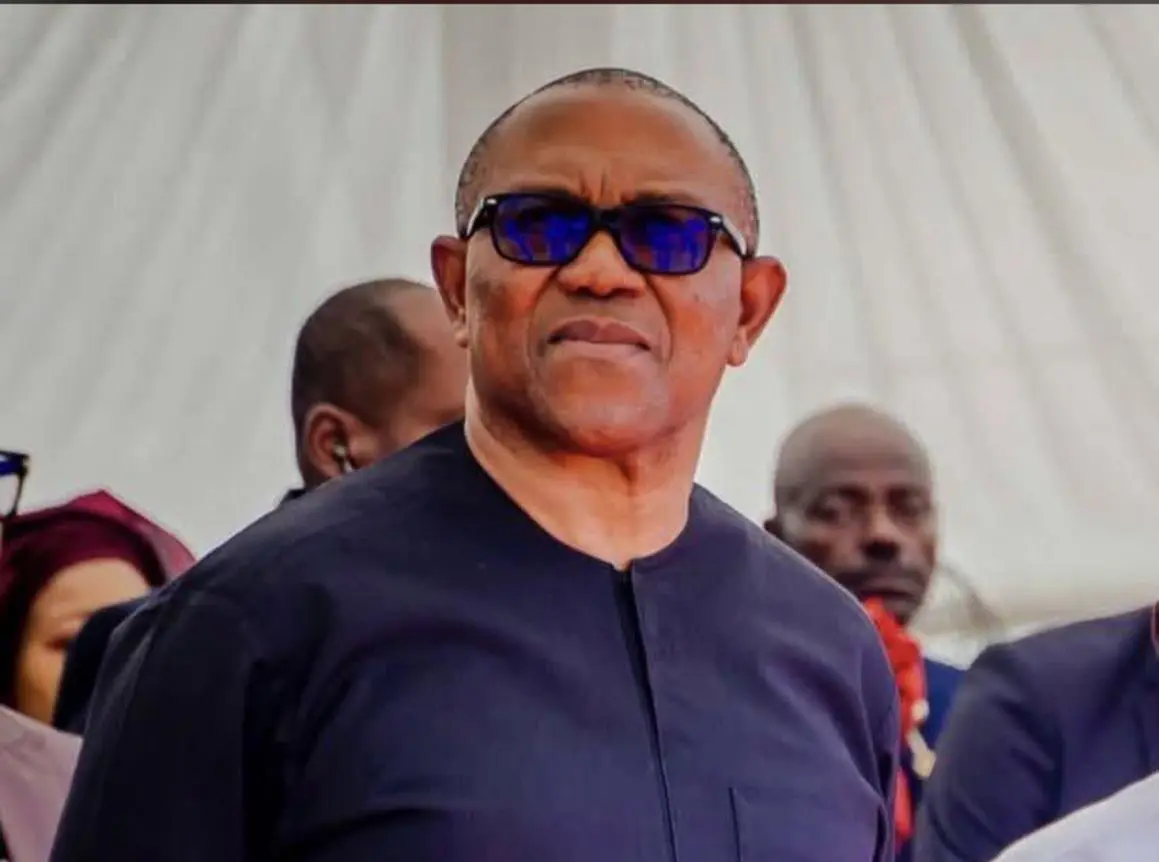
On Thursday, Obi stood before cameras and called out President Bola Tinubu over the state of Nigeria's power sector. He didn't manufacture new information. He didn't fabricate a crisis. He simply pointed at Tinubu's own words from December 2022 and asked the question every Nigerian was already asking: you promised this. Where is the light?
Daily Post confirmed that after Obi's criticism on Thursday, President Tinubu on Sunday announced the approval of a plan to offset the N3.3 trillion power sector legacy debt owed to generation companies.
Less than 48 hours between the criticism and the announcement.
In Naija politics, that is not coincidence. That is cause and effect wearing thin disguise.
The Debt That Existed for a Decade Before Obi's Mouth Moved
Let's understand the significance of this, because the government would prefer you didn't.
Presidential spokesman Bayo Onanuga said the debt repayment plan followed the final review of legacy debts that have beset the power sector for more than a decade. The long-standing debts accumulated between February 2015 and March 2025. Following verification, N3.3 trillion was agreed as a full and final settlement, ensuring a fair and transparent resolution. Implementation has begun, with 15 power plants signing settlement agreements totalling N2.3 trillion.
From February 2015 to March 2025. Ten full years.
This debt did not appear on Thursday when Obi mentioned it. It was there when Tinubu was sworn in. It was there in 2024. It was there in 2025. Gas suppliers had been warning about cutting off supply since February 2026. Joy Ogaji, CEO of the Association of Power Generation Companies, said in February 2026 that in July the previous year, Tinubu had promised to clear the N4 trillion debt at that time and failed to deliver.
The president made a promise in July 2025. Did not keep it. The debt grew. Gas suppliers threatened to stop supply. Nigerians sat in darkness across the country. Lagos youth marched in the streets. Fuel hit N1,400 per litre as generators drank everything in sight.
And the government did nothing publicly decisive until Peter Obi stood up and pointed at the president's own words from 2022: "If I don't keep the promise and I come back for second term, don't vote for me."
That sentence, replayed by Obi, applied pressure that no court order, no civil society statement, and no newspaper editorial had applied in months.
The announcement came on Sunday. Obi spoke on Thursday.
The mathematics of opposition pressure has never been clearer.
This Is Why a Functioning Opposition Matters
We wrote about this in an earlier Naija politics post. The argument was simple and it has now been proven.
If Tinubu's own words about electricity were the opposition's campaign theme, consistently deployed, relentlessly repeated, specifically at every political event and every media appearance, the government would not have been allowed to relax on its oars for three years.
The promise of 24 hours electricity. The collapse of the grid twelve times in 2024. The gas debt that was already N4 trillion when he promised to clear it in July 2025. The electricity tariff hike of 240 percent with worse supply. The N10 billion solar panels at Aso Rock while Nigerians sat in darkness.
Each of these is a political grenade sitting on a table. All any serious opposition needed to do was pick them up.
But the opposition spent most of its energy fighting over who would be the candidate, which faction owned which party structure, which convention was legal and which was not.
The government took that silence as permission to govern lazily.
Obi broke the silence. The government moved within 48 hours.
That is the power of a vocal opposition in Naija politics. Not just to win elections. But to force a government to actually govern.
If every opposition voice had been as consistent as Obi's Thursday statement, the GenCos would not have been threatening to cut gas supply in 2026. The grid would not have collapsed twelve times. Nigerians would have had more hours of light.
Because a government that knows it will be held accountable governs differently from a government that assumes nobody is watching.
Atiku's Declaration: The Coast Has Never Been Clearer for Obi
And then, on Saturday, something happened that changes the entire calculus of the ADC primary.
Former Vice President Atiku Abubakar said in an interview with DW Hausa: "We will support and endorse whoever emerges as the flagbearer. How many are we presidential aspirants, three or four? In the PDP, more than ten of us contested." When asked whether he would support a young presidential candidate if the party presents one, Atiku responded: "Yes, why not?"
Yes, why not.
That sentence, from that man, at this moment, is the most important statement in Nigerian opposition politics since the ADC coalition began.
Atiku is the man who registered over 100,000 members in Adamawa State alone. The man whose northern delegate numbers gave him a structural advantage in any direct primary. The man who has contested for the presidency five times and understands delegate arithmetic better than anyone in the building.
And that man just said, on record, in a published interview, that he will support whoever emerges.
Even if the person is young. Even if the person is not him.
Atiku confirmed there is an existing agreement within the ADC faction: "We agreed that whoever wins the ticket, we will all support that person." He noted that the number of aspirants is far smaller than past PDP contests.
The agreement is confirmed. The ticket is open. And the man with the northern structure has pledged to get behind the winner.
This is not a small development. This is potentially the thing that makes Obi-Kwankwaso a serious presidential threat rather than an interesting political hypothesis.
Think about what the combined arithmetic now looks like.
Obi wins the ADC presidential ticket with Kwankwaso as his running mate. Atiku, with his northern network, his Adamawa base, and his nationally registered ADC supporters, throws his full weight behind the ticket. Makinde, the last standing PDP governor, uses whatever remains of his South-West influence to drive votes in Oyo and its surroundings.
South-East votes solidly behind Obi. North-West Kano votes come in through Kwankwaso. North-East and North-West ADC members, mobilised by Atiku's machine, add a northern layer that Obi could never have built alone.
That combination, on paper, crosses thirty states in terms of penetration.
And the only thing standing between that combination and Aso Rock is the one obstacle that has nothing to do with voters, strategy, messaging, or political talent.
The Only Remaining Problem: The Party Itself
Here is where we must be honest, because Naija politics never rewards wishful thinking.
Atiku himself addressed INEC's action, dismissing concerns and alleging that powerful interests were behind the challenges facing the ADC, attributing the situation to the party's rising popularity.
He is right that the popularity is real. He may also be right about the powerful interests.
But dismissing INEC's action does not undo its legal and practical effect. The David Mark-led NWC has been removed from INEC's portal. The convention the party wants to hold has no INEC recognition until the Federal High Court rules. The primary deadline INEC has set is May 30. If the court does not rule before May 30, the ADC cannot legally conduct a primary. Cannot nominate a presidential candidate.
Abdullahi said the party will proceed with its conventions regardless, but the party itself acknowledged it was reviewing its options following INEC's derecognition.
They can hold the convention. But without INEC recognition, that convention has no legal weight for electoral purposes.
The only path through this is the Federal High Court moving quickly, ruling in favour of the Mark-led NWC's legitimacy, and clearing the way for a legally recognised primary before May 30.
That is a tight timeline. But it is not an impossible one.
And this matters enormously because if the court clears the way, Obi holds the ticket, Kwankwaso is the running mate, Atiku brings his votes and network, and Tinubu faces what 2015 looked like for Jonathan but from a younger, more energetic, more digitally mobilised challenger.
If the court does not clear the way in time, the most dangerous opposition combination Nigeria has assembled since the APC coalition of 2015 dies in a Federal High Court docket.
What Obi's Power Sector Victory Proves About His Presidency Case
Here is the thing that Obi's critics and the general public need to sit with.
In four days this week, Peter Obi demonstrated why a large section of Nigerians believes he should be president.
He saw a policy failure. He identified the specific promise the president had made. He cited the promise publicly, connected it to the visible collapse in service, and forced a response that had been delayed for over a year.
That is not protest. That is governance from the opposition bench.
That is exactly what an executive president does. You identify the problem. You name it precisely. You apply the right pressure. You produce an outcome.
Tinubu's government had the N3.3 trillion settlement figures sitting in a file somewhere in Abuja for months. GenCos had been screaming since April 2025. Gas suppliers had been threatening since February 2026. The debt was documented, verified, quantified.
All it needed was a voice that made ignoring it politically costly.
Obi provided that voice on Thursday.
By Sunday the announcement was made.
If that is what Obi can achieve as an opposition figure holding no office and commanding no government resources, what happens when you give that same man the budget, the cabinet, and the executive authority of the Nigerian presidency?
In Naija politics, that question is starting to answer itself.
The coast is clearing. The legal battles remain. The INEC crisis is real and time is short.
But for the first time in the entire 2027 cycle, there is a route to Aso Rock for the opposition that does not require wishful thinking.
It requires one court ruling, two months, one united primary, and a combination of Obi's credibility, Kwankwaso's Kano numbers, and Atiku's northern network voting together on the same ballot.
If those four things align, Tinubu will know the result before twelve noon on election day.
What do you think? Has Obi proven this week that he is the kind of leader Nigeria needs, and can the opposition get its legal house in order before the May 30 primaries deadline? Drop your thoughts in the comments section. The Naija politics chess match has entered its most critical phase and every move now counts!
0
67