
Kaothaj_
2 months ago
In Naija politics, there is a category of politician that Nigeria has never quite known what to do with.
Not the ones who tried once and quit. Not the ones who made peace with relevance below the presidency. But the ones who came back. And came back again. And again. And one more time after that. Until the country stopped asking whether they would run and started asking whether they were physically capable of stopping.
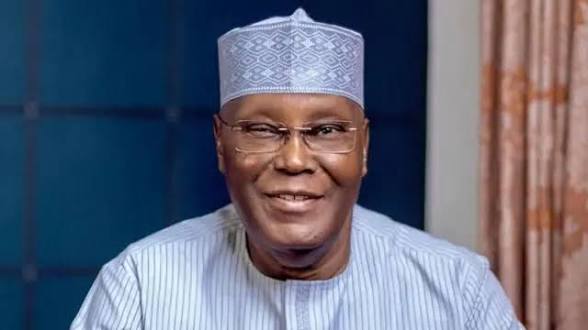
Atiku Abubakar is that politician.
He first contested for president in 1993 under the Social Democratic Party. He has been in every serious presidential conversation since. He contested in 2007. In 2011. In 2015. In 2019. In 2023. And now, having survived three factions, multiple court cases, a Supreme Court appearance, an INEC portal battle, a running mate drama, and a Nafiu Bala Gombe who spent a year trying to undo everything the coalition built, he is on the ballot for 2027.
INEC National Commissioner Mohammed Haruna confirmed to Punch that the commission granted the David Mark-led ADC faction access to the nomination portal following the Supreme Court judgment affirming its leadership, and the faction submitted 471 candidates including Atiku as presidential candidate and Rotimi Amaechi as running mate.
471 candidates. Presidential, 109 senatorial, 360 House of Representatives constituencies.
The party that looked finished in April is now on the ballot in July.
So the question Naija politics has been asking since the APC primary produced 10.9 million votes is back on the table.
Can Atiku actually win this time?
What He Survived to Get Here
Before the analysis, give the man his credit. Because what the ADC went through between July 2025 and July 2026 would have killed most political projects.
Nafiu Bala Gombe. A broken promise from July 5, 2025. One aggrieved deputy chairman who filed one lawsuit. That single suit spawned a cascade that eventually froze the entire party structure, removed the David Mark-led NWC from INEC's portal, produced three rival factions, went through the Federal High Court, the Court of Appeal, and the Supreme Court, survived a Nafiu Bala forgery allegation on the INEC portal as recently as last week, and is still producing legal echoes as a Court of Appeal ruling from Monday restrains INEC from recognising state congresses conducted by the Mark-led caretaker committees.
There is still a live appellate court issue. And INEC says it will wait for the certified true copy before commenting.
Meaning: even with 471 candidates uploaded and INEC's confirmation secured, there is still legal turbulence.
Atiku is running his 2027 campaign from inside a legal battlefield that has not yet been fully cleared.
That is the context. And he is pressing forward anyway.
The Case For Atiku Winning: Read the Numbers Honestly
Here is where supporters of every other political project in Nigeria need to stop scrolling and pay attention.
Atiku's primary produced 1,846,370 votes. In a party that had been stripped from INEC's portal, that had three factions publicly tearing each other apart, that had a Supreme Court reserved judgment with no date attached for several weeks.
From that party, in those conditions, with those distractions, 1.8 million people showed up to cast primary votes for Atiku Abubakar.
The ADC primary votes came overwhelmingly from the North. In Sokoto, 68,823 of 69,871 registered voters cast ballots. In Zamfara, Atiku got 60,500 of 61,137 votes cast. These northern state figures represent near-total mobilisation of party infrastructure in Atiku's strongest territory.
Now bring in the wider picture.
Tinubu won 2023 with 8.79 million votes. His 471 candidates are on the INEC portal for 2027. But over 60 percent of those 2023 votes came from the North. The same North where El-Rufai, Malami, Tambuwal, and the rest of the Buhari gang who built the APC's northern machine now sit in the ADC.
These are not symbolic defectors. These are the men who know which local government chairmen move votes in Kebbi, who the emirate councils listen to in Sokoto, how the security architecture responds to electoral pressure in Zamfara, and which party agents need to be at which collation centres in Borno.
The APC built its 2015 and 2019 northern machine with these men. They are now on the other side.
Amaechi's South-South addition to the ticket matters more than it looks on paper. His emergence followed extensive consultations with party leaders, coalition partners, youth and women groups, and representatives from the six geo-political zones. In 2023, Tinubu got 1,427,584 votes from the South-South with paper-thin margins across the zone. Amaechi governed Rivers State for eight years and retains relationships with critical power brokers across the South-South that even Wike's Rainbow Coalition cannot entirely neutralise.
An Atiku-Amaechi campaign that concentrates its resources on those thin 2023 margins in the South-South and the northern states where Buhari's legacy vote is available for conversion does not need to sweep the country.
It needs to surgically convert 15 to 20 percent of Tinubu's 2023 vote in the right states. That is a far more achievable target than sweeping every region.
The Case Against: The Structural Reality Nobody Wants to Say Out Loud
Here is what the Atiku camp and their most enthusiastic supporters consistently understate.
Thirty-one governors. Not thirty. Thirty-one.
These governors control federal allocation for their states. They have authority over local government chairmen who manage polling unit environments. They appoint the officials who interface with INEC at the state collation level. Their party structures feed into ward executives, polling agents, and result sheets that travel from unit to LGA to state to Abuja.
When INEC's national commissioner says the commission recognised Atiku's candidacy based on the Supreme Court judgment, that is an important but narrow administrative victory. It puts Atiku's name on the ballot.
It does not put ADC's party agents at the polling units of 36 states.
The by-election results from June 20 told that story. ADC uploaded 471 candidates for the 2027 race but in the Enugu North senatorial by-election held the same month, the ADC candidate got 1,676 votes in a district with 727,340 registered voters.
The portal upload and the on-the-ground reality are two different universes.
Six months remain between today and January 16, 2027. Building the kind of polling unit presence that converts Atiku's northern primary numbers into general election numbers requires money, logistics, coordination, and a party structure that can function at ward level across the country.
The ADC's three-faction chaos consumed most of the year that should have been used building that structure. The court cases consumed the resources. The INEC portal battle consumed the attention. And Nafiu Bala Gombe's latest forgery allegation on the portal arrived just last week as the ADC was trying to celebrate its 471 candidate uploads.
The war is not over. And the campaign has not yet been properly started.
The Atiku Factor: Is This Time Different?
In every previous Atiku presidential run, the argument against him has included one constant. He has never found the combination that fills his structural and coalition gaps simultaneously.
In 2007, he had the PDP ticket but lost to Yar'Adua under documented electoral manipulation.
In 2011, he lost the PDP primary to Jonathan.
In 2015, he lost the APC primary to Buhari.
In 2019, he had the PDP ticket and lost to Buhari in a straight fight with the full PDP machinery behind him.
In 2023, he had PDP but the vote split three ways and Tinubu won with 36 percent.
The 2027 situation is different in one specific way. The coalition assembled in his ADC is the closest equivalent to the 2013 APC coalition that removed Jonathan in 2015. It has the Buhari-era northern operators. It has a South-South running mate who commands real institutional relationships. It has the experience of having already survived the kind of legal assault that killed political projects in every previous electoral cycle.
But it is also different in one way that cuts against him. Atiku has now tried six times. The seventh-time argument works emotionally. It lands less convincingly with a voter calculating whether to trek two kilometres to a polling unit on January 16 for a man they have heard make presidential promises since before some of them were born.
The Final Honest Assessment
Atiku Abubakar reaching the 2027 ballot with 471 candidates recognised by INEC, a credible South-South running mate, the northern political machine of the Buhari era behind him, and a formal INEC portal presence after surviving a year of legal warfare is a better position than anyone gave the ADC six months ago.
That is real. Do not dismiss it.
But Tinubu has 10.9 million primary votes, 31 governors, a recognisable economic reform narrative through Cardoso, a security win through the Oriire rescue, and six more months to deploy federal resources in the states where the ADC is trying to build.
The upset scenario exists. It requires Atiku's northern machine to convert the anger about N1,400 petrol, collapsed grids, dead soldiers, and ghost agencies into organised polling unit presence across enough states to shift the 2023 margins.
If they do, January 16 becomes interesting.
If they do not, the scoreboard looks like June 20's by-elections.
In Naija politics, the man who has been knocking since 1993 has finally knocked his way onto the ballot after the most chaotic political journey any opposition candidate has survived in the Fourth Republic.
Whether the door opens this time depends on six months of work that has barely started.
And a government that built 10.9 million party votes does not make it easy to knock that door down.
What do you think? Does Atiku's survival of a year of legal warfare and his eventual INEC recognition represent the kind of political resilience that translates into general election momentum, or is the ADC's structural deficit against 31 APC governors simply too large to overcome by January 16, 2027? Drop your thoughts in the comments. This Naija politics final act has been thirty years in the making and it is playing out right now in real time.
0
143