Kaothaj_
6 months ago
In Naija politics, the most dangerous words a politician can ever speak are his own.
Not what his enemies say about him. Not what the newspapers write. Not what social media fabricates.
His own words. On camera. On record. In front of witnesses.
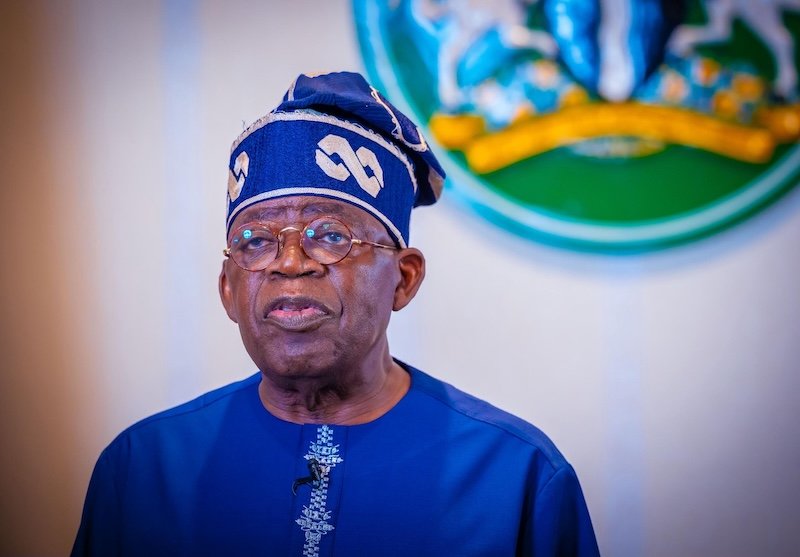
And right now, President Bola Ahmed Tinubu is being hunted by six words he spoke at the Lunch With Tinubu Business Summit in December 2022. Six words he delivered with the full confidence of a man who had not yet felt the weight of the office he was chasing.
"If I don't keep the promise and I come back for second term, don't vote for me."
That was Tinubu. His voice. His microphone. His chest.
He did not say maybe. He did not say I will try. He did not say God willing.
He said don't vote for me.
Full stop.
The Promise Was Not Small
Let's understand the size of what was promised that December evening.
Tinubu did not promise to improve the power sector. He did not promise incremental gains or phased milestones. He stood up in front of a business summit audience, looked into the cameras, and promised Nigerians 24 hours of constant electricity. He promised they would not pay estimated bills anymore. He called it "by all means necessary." He staked his second term bid on it personally.
"A promise made will be a promise kept. If I don't keep this promise and I come back for second term, don't vote for me. Unless I give you adequate reasons why I couldn't deliver."
That last sentence is the get-out clause he is now desperately clinging to.
Adequate reasons.
Well, the reasons have arrived. And the opposition should make sure Nigerians hear exactly what those reasons are, who caused them, and whose government has been in charge while they piled up.
The State of Darkness: What Is Actually Happening Right Now
Nigeria's power sector is not struggling. It is not underperforming.
It is in full cardiac arrest.
As of early March 2026, gas supply to thermal power plants stood at approximately 652 million standard cubic feet per day. The amount needed to run those plants at full capacity? 1,629 million standard cubic feet per day.
Do that calculation slowly.
Nigeria's thermal plants are receiving less than 43 percent of the gas they need to function. Less than half. And thermal plants account for roughly 70 percent of all electricity generation on the national grid. Which means the entire country is running on fumes of fumes.
Generation dropped to 2,898 megawatts on some days this week. For a country of 220 million people with a peak demand of over 20,000 megawatts, that number is not just embarrassing. It is a national emergency dressed in bureaucratic language.
Several power plants have shut down completely. The Transmission Company of Nigeria has been implementing load shedding, rationing whatever scraps of electricity remain among the distribution companies. And the DisCos have been posting notices to their customers, explaining, almost apologetically, that gas shortage is the reason your house has had no light for three days.
On March 12, Lagos youths took to the streets in protest. The streets. Over electricity. In 2026. Three years into a presidency that promised 24 hours of power.
Reno Omokri, a man who was Tinubu's fiercest critic before apparently receiving an ambassadorial nomination, went on Channels Television and tried to deny the promise existed. When the host Seun Okinbaloye pressed him, he changed tack and said Tinubu made that statement out of ignorance because he didn't fully understand the sector at the time.
Out of ignorance.
That is now the official defence. The president made a promise to 220 million Nigerians out of ignorance.
Nigeria, take note.
The Gas Debt Nobody Wants To Own
Here is the part that must be explained clearly, because the government will try to make it complicated.
Gas suppliers have told the Generation Companies, the GenCos, that they will no longer supply gas without payment upfront. The GenCos are owed N6.8 trillion by the Nigerian Bulk Electricity Trading Plc, NBET, the government body that buys power from GenCos and sells to distributors. That debt has been accumulating since 2013. Every single month of 2025 added another N200 billion to the pile. By February 2026, the total had reached N6.8 trillion, with N3.3 trillion of that owed specifically to gas producers.
The GenCo chief, Joy Ogaji, put it plainly and on record: "Yes, it is 120 per cent correct to say that the debt is the reason why we are in darkness."
Not a rumour. Not an opposition accusation. The industry's own CEO. On record.
And the man whose ministry is supposed to be fighting this fire? Minister of Power Bayo Adelabu. A man reportedly spending more time thinking about Oyo State's 2027 governorship than about the N6.8 trillion debt killing the national grid.
Daily Post noted it pointedly: Adelabu "is occupied with his governorship ambition in Oyo State" while Nigerians sit in darkness.
This is Naija politics. The minister of power is running for governor while the lights go off.
How The Opposition Must Use This
If the opposition is serious, and that remains a very loud if, this electricity crisis is not just ammunition. It is a loaded gun with Tinubu's own fingerprints already on the trigger.
The strategy is simple. Three steps.
Step one: Play the video. Everywhere. On every screen. At every rally. In every market. A three-second clip. Tinubu. December 2022. "If I don't keep the promise and I come back for second term, don't vote for me."
Then go silent. Let the crowd react.
Step two: Put the data next to the promise. The grid collapsed 12 times in 2024 alone. In 2023, it collapsed three times. In 2025, more than twice. Generation is at less than 3,000 megawatts for a country that needs 20,000. Gas supply is at 43 percent of required volume. Electricity tariffs have jumped by 240 percent since 2023, but actual supply has gotten worse, not better. Over 90 million Nigerians still have no access to electricity. The families who do get power receive between 4 to 6 hours a day.
You raised our bills by 240 percent and gave us less light.
Say that sentence at every bus stop from Lagos to Maiduguri.
Step three: Make it personal. Do not argue about NBET debt structures or NISO operational data. Go to a welder in Aba whose shop runs three hours a day. Go to a pharmacy in Kano whose refrigerated medication is spoiling because the generator fuel costs have tripled. Go to a woman in Ibadan who registered her small business during COVID and has been running on candlelight since. Ask them one question.
"Is this the 24 hours electricity he promised you?"
Peter Obi has already started. He reminded Nigerians publicly that Tinubu's own words demand accountability. He pointed out that while Nigerians suffer blackouts, the 2025 budget allocated N10 billion for solar panels at Aso Rock. And the 2026 budget repeated the same exercise. The President's residence is getting solar power. Your house is getting darkness.
ADC has come out swinging too, reminding Nigerians formally and publicly that Tinubu promised 24/7 power, all by himself, and has delivered repeated grid collapses instead.
This is the campaign. It is already writing itself. The opposition just needs the discipline to stick to it.
The Aso Rock Solar Panel Problem
This is where Tinubu's government handed the opposition a gift they did not even need to unwrap.
While Nigerians have no light, the Presidential Villa is preparing to disconnect entirely from the national grid and run on solar power. N10 billion in the 2025 budget. More money in the 2026 budget for upgrades and maintenance.
Peter Obi said it best: "You cannot tell the people to fast while feasting yourself. Securing yourself while Nigerians remain unsecured."
The imagery is devastating. The president disconnects his house from the grid he cannot fix, while telling Nigerians to be patient with the darkness.
In Naija politics, imagery beats argument every time. And this image, the president going solar while citizens sit in darkness, is the kind that lodges in a voter's memory and stays there until election day.
The Bottom Line: He Set His Own Trap
Tinubu's handlers can try to walk this back. They can say he didn't mean 24 hours literally. They can say the sector was privatised and his hands are tied. They can say global factors are responsible. They can nominate more ambassadors to speak on his behalf.
But the video exists. The words are clear. The promise was unconditional.
"By all means necessary."
Not by most means. Not by some means. Not by the means available after privatisation complications. By all means necessary.
The man set his own trap. He built it himself, in December 2022, with cameras rolling and a crowd cheering.
And three years later, Nigeria is generating less than 3,000 megawatts for 220 million people. Gas suppliers are cutting off the Gencos. Plants are shutting down. Lights are going off. Bills are going up. And Lagos youth are on the streets.
This is Naija politics at its most unforgiving. The politician who makes a reckless promise during campaign season will always meet that promise again during election season. Always.
The opposition does not need to be creative. They do not need a brilliant manifesto or a compelling new vision.
They just need a phone. With that video saved to it.
Press play. Let Tinubu speak. Then ask Nigerians to look out their windows at the darkness and decide for themselves.
What do you think? Has Tinubu's electricity promise completely buried his 2027 chances or can APC still recover? And with darkness across the country and gas suppliers cutting off the Gencos, who should be held responsible? Drop your thoughts in the comments section. This Naija politics electricity drama is far from over!
1
71