
Kaothaj_
6 months ago
In Naija politics, elections are not won on promises.
They are won on memory. On pain. On what a man felt in his pocket and his stomach the last four years.
And right now, two things are burning in the memory of the average Nigerian voter like acid. Two things that no APC rally, no presidential motorcade, no federal palliative distribution, and no campaign jingle can easily wash away.
Fuel. And blood.
If the opposition is serious about 2027, and that is a very big if given how scattered they currently are, these are their two most powerful weapons. Not manifesto. Not policy paper. Not television debate.
Just two questions, asked simply and repeatedly until election day.
"How much did you pay for fuel today?"
"Is your village still safe?"
That's the entire campaign. Everything else is noise.
The Fuel Story: A Number That Haunts Tinubu
Let's go back to May 29, 2023. The day Tinubu was sworn in. The day he walked to that podium, looked Nigerians in the eye, and said four words that nobody who was alive will ever forget.
"Subsidy is gone."
On that day, Nigerians were paying around N184 per litre for petrol.
Today, as of this second week of March 2026, Nigerians are paying between N1,200 and N1,400 per litre in Lagos and Abuja. Some filling stations hit N1,500. Diesel has crossed N1,620. And industry insiders are already warning that if nothing changes, fuel could surge to N2,000 or even N3,000 per litre.
Read that again.
N184 in May 2023. N1,400 in March 2026. In less than three years.
That is not an economic adjustment. That is not a reform. To the man who wakes up at 4am to join a fuel queue before driving a danfo to feed his family, that is a disaster with a name and an address: Aso Rock.
Now to be fair, the most recent spike is partly tied to the US-Israel war on Iran, which has rattled global crude prices. Dangote Refinery raised its gantry price three times in one week alone as Brent crude surged past $98 per barrel. These are global forces. Nigeria did not start that war.
But here is what the opposition will say, and they will be right to say it.
You cannot deregulate fuel in one of Africa's most fragile economies, with zero social cushion, zero functioning mass transit, zero alternative energy infrastructure for ordinary people, and then point at Iran when the consequences arrive.
You built a system with no shock absorbers. When the global shock came, Nigerians had nothing to absorb it with.
And what was Tinubu's response in the first days of the crisis? Silence. His presidential spokesman did not reply to press enquiries. The presidency said nothing while filling stations changed their price boards three times in a week and transport fares doubled overnight in Lagos, Abuja, and across the country.
The opposition does not need to explain economic theory. They just need to show voters a receipt. A fuel receipt from May 2023 and a fuel receipt from today. Put them side by side. Say nothing else.
That is Naija politics. Receipts beat speeches every time.
The Blood Story: A Country Bleeding Itself Dry
If fuel is the economic wound, insecurity is the existential one.
Nigeria's security situation in 2025 and 2026 has been described in terms that would make any sitting government's spin doctors lose sleep. According to the National Human Rights Commission, at least 2,266 people were killed by bandits or insurgents in just the first half of 2025. That number surpassed the entire death toll from such attacks in all of 2024.
Think about that. One half of one year. More deaths than the whole of the previous year.
Borno and Zamfara are bleeding. Boko Haram and ISWAP have escalated attacks. Banditry across the North-West has become so normalised that farmers are abandoning their fields. Not because they want to. Because they do not want to die harvesting maize. A new group called Lakurawa has established itself along the Nigeria-Niger border. Plateau and Benue remain theatres of communal violence. The Nigerian military is stretched across two-thirds of the country's states simultaneously.
This is Naija politics with bullets.
A prominent Northern elder, Dabo Sambo, put it plainly: "If President Tinubu refuses to wipe out the security challenges, he will definitely not win the election. Even the rigging structures and processes will fail." He went further and drew the most devastating comparison available in Nigerian political history. Goodluck Jonathan. An incumbent president. With "huge amounts in Naira and dollars." Lost in 2015.
Why?
Because people were scared and hungry. Because Boko Haram had captured territory. Because the North felt abandoned.
The parallel to today is not comfortable for APC.
How the Opposition Uses These Two Weapons
The opposition's playbook writes itself, if they are smart enough to follow it.
On fuel, the strategy is simple: make it personal. Do not argue about deregulation economics or global crude markets. Talk to the woman who sells akara by the roadside whose vegetable oil cost has tripled because everything transported by fuel-powered vehicles now costs more. Talk to the civil servant who spends a third of his salary on transportation. Talk to the student who dropped out because her parents cannot afford school fees after transport costs ate everything.
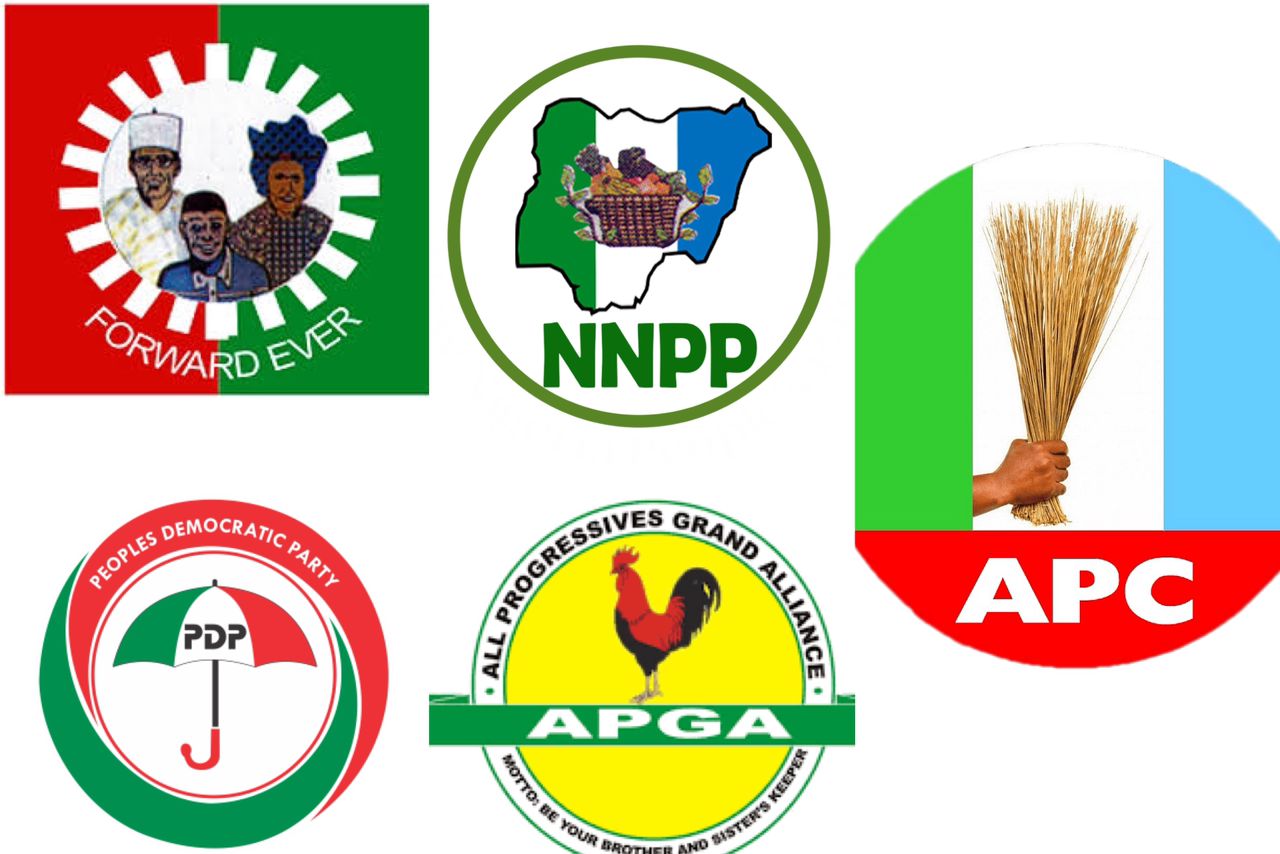
Atiku has been saying fuel must come down for years. Peter Obi built his entire 2023 brand around economic pain. If either of them, or whoever emerges as the opposition's standard bearer, can stand in a Northern market, at a Lagos bus stop, or in a Plateau village and simply say "I will not destroy your life with fuel price," they have planted a seed.
That seed is called anger. And anger, properly watered, becomes votes.
On insecurity, the strategy is even simpler. Go to Zamfara. Go to Borno. Go to the IDP camps. Sit with the displaced farmers. Sit with the widow whose husband was killed on his own farm. You do not need a policy speech. You need a photograph and a microphone.
"This man has been president for three years. Is your farm safe? Is your road safe? Are your children safe?"
Let the silence answer.
The Arewa Youth Consultative Forum has already said it publicly: Tinubu's 2027 fate depends on security and economy. This is not opposition propaganda. This is Tinubu's own constituency warning him.
The opposition's job is to amplify that warning until it becomes the defining question of the campaign.
Tinubu's Response: CNG Kits and Silence
To be fair, Tinubu has not done nothing.
On fuel, after days of silence, he ordered the deployment of 100,000 Compressed Natural Gas conversion kits nationwide. His officials said he is "keenly monitoring global developments." Dangote Refinery even dropped its gantry price by N100 per litre after Brent crude began sliding back.
But here is the problem with that response. You cannot hand a man whose transport costs have doubled a CNG conversion kit as a solution. The infrastructure for CNG in Nigeria is nowhere near sufficient to serve the masses. The filling stations that dispense CNG are concentrated in a few urban centres. The man in Gusau does not have a CNG station near him.
It is a gesture. Gestures do not feed families.
On insecurity, the military has recorded genuine wins. Airstrikes in Zamfara. Operations against bandit camps. The Army is active. No serious person disputes that. But the scoreboard says over 2,000 deaths in six months of 2025. The scoreboard says farmers are still fleeing. The scoreboard says ISWAP is still expanding.
When the scoreboard says that, the credit for military operations only travels so far.
The Bottom Line: APC Is Not Unbeatable in 2027
Here is what Naija politics history teaches us about incumbency and pain.
Jonathan had structure. Jonathan had money. Jonathan had governors. Jonathan had an APC that was barely two years old.
And Jonathan lost.
Because people were scared, hungry, and angry. Because those three emotions, combined, are more powerful than any political machinery ever built.
Tinubu is not Jonathan. The opposition today is not the APC of 2015. And we are still more than a year away from 2027.
But the trajectory matters. When fuel crosses N1,400 per litre. When over two thousand people die from insecurity in six months. When farmers flee their own land. When a taxi driver raises his fares and a passenger cannot afford them. When a family sits down to eat and the table is lighter than it was three years ago.
These are not statistics. These are votes. Votes filled with memory and pain, waiting for the right moment to be cast.
The opposition does not need to be brilliant in 2027. They just need to be present, be consistent, and keep pointing at those two grenades in Tinubu's pocket.
Fuel and blood.
Both are already burning.
And this is Naija politics, where the voter may suffer in silence for four years, but in that booth, alone with that ballot, he remembers everything.
What do you think? Is insecurity and fuel price enough to end Tinubu's second term ambition or will APC's political machinery override the voters' pain? Drop your thoughts in the comments section!
0
66