
Kaothaj_
2 months ago
In Naija politics, the opposition's one job is to make the government uncomfortable enough that governing badly becomes politically expensive.
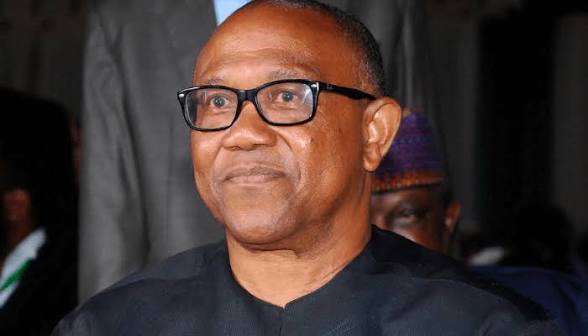
Peter Obi has been doing that job with unusual consistency this year.
In May, he called out Tinubu's electricity promises and the government moved on the GenCo debt within 48 hours. In June, he called for Tinubu's resignation over governance failure. Yesterday, July 4, 2026, he called for it again. This time armed with an IMF report, a ghost agency with a billion-naira budget allocation, and a Chief of Staff whose name keeps appearing in sentences nobody in Aso Rock wants to finish.
Two resignation calls in under two months. And the second one landed with heavier ammunition than the first.
The IMF Report That Tinubu Cannot Dismiss With A Press Release
Obi's latest resignation demand did not come from sentiment. It came from data.
He cited an International Monetary Fund report revealing what he described as N8 trillion in off-budget spending by the Tinubu administration, money that bypassed National Assembly appropriation and public disclosure. He said the report confirmed a pattern of governance that makes accountability impossible and corruption inevitable.
He stated in his July 4 statement: "A president who presides over N8 trillion in off-budget spending while Nigerians queue for petrol and schools collapse cannot continue in office. The evidence is now documented by the IMF itself. This is not opposition rhetoric. This is an international institution telling Nigeria what is happening to its money."
The Tinubu government responded on July 5 through Bayo Onanuga, breaking its silence on the IMF claim. The response was procedural, disputing the framing rather than the numbers, and reminding Nigerians that the IMF report was contextualised differently than Obi's characterisation suggested.
What that response could not do was make the question disappear.
How does N8 trillion in government expenditure move outside the appropriation framework that the National Assembly approved? Who authorised it? Where did it go? Which agencies benefited? Which contractors received it?
These questions do not resolve with a press statement. They resolve with an audit. A public one. With results.
Until that audit happens, the IMF figure sits in every opposition campaign message between now and January 14, 2027.
The PFIPC Scandal: When Impunity Leaves Fingerprints
Then there is the ghost agency with the government address.
The Presidential Foreign Intervention Promotion Council. N1.3 billion in the 2026 budget. A recruitment waiver for 300 civil servants approved by the Office of the Head of the Civil Service. Office space inside the federal secretariat. A CBN account. Thirty-four bank accounts total. A website at pfipc.gov.ng. Photographs with the EFCC chairman. Meetings with foreign ambassadors.
All of this for an agency that Femi Gbajabiamila, Chief of Staff to the President, says does not exist.
Adeniyi Adeyemi, the man charged with running this non-existent agency, held a press conference on June 25 and said Gbajabiamila received N400 million through a proxy to facilitate his appointment, with N200 million still outstanding. He said Gbajabiamila then demanded 48 percent of a N27.4 billion take-off grant. When Adeyemi refused, the disclaimer came. The arrest followed. The trial is scheduled for July 27.
The Presidency says Gbajabiamila cannot give appointments. That the agency is fictitious. That Adeyemi is a fraudster.
That may all be true.
But someone put a N1.3 billion budget line for this fictitious agency into the 2026 Appropriation Act that the President signed. Someone in the Head of Civil Service's office approved recruitment of 300 staff for it on August 7, 2025. Someone gave it a federal secretariat office. Someone opened a CBN account for it. The CBN, EFCC, NIPC, Ministry of Foreign Affairs, and the National Assembly all interfaced with this non-existent institution at various points.
The Committee for the Defence of Human Rights called on Gbajabiamila to voluntarily step aside as Chief of Staff pending the outcome of an independent investigation, arguing it would preserve the credibility and integrity of any probe and reinforce public confidence in the government's commitment to transparency and accountability.
Atiku said it plainly. The Tinubu presidency cannot continue to be judges in cases involving themselves or their cronies. The EFCC appears increasingly consumed with pursuing opposition figures while exhibiting remarkable hesitation whenever allegations point towards the corridors of power.
That last sentence is the one that stings most. The same EFCC photographed with Adeyemi at his own desk has not visibly moved against any of the institutional actors who signed off on this ghost agency for over a year.
Why Obi's Repeated Resignation Calls Are Not What Critics Think They Are
Obi's opponents, particularly Onanuga and the APC communications machinery, have treated his resignation calls as desperation tactics from a candidate whose party has been deregistered by a Kogi court and whose INEC access code remains in dispute.
That reading misses the strategic function of what Obi is doing.
He is not calling for resignation because he believes Tinubu will actually resign. He is building a documented record of governance indictment in public, on date-stamped statements, backed by named institutions like the IMF and documented scandals like the PFIPC.
By the time the 2027 election campaign officially opens, Obi will have a catalogue of moments where he said "this is wrong" and the government either confirmed the wrongness by its response or ignored it entirely.
The electricity GenCo debt call became policy within 48 hours. That is in the catalogue.
The resignation calls over governance failure are in the catalogue.
The IMF off-budget claim is in the catalogue.
The Gbajabiamila PFIPC demand is in the catalogue.
In Naija politics, election campaigns are not won in September 2026. They are built from January 2026 forward, one documented position at a time. Obi is building his case brick by brick while the government's men are busy defending why a N1.3 billion budget line exists for an agency that does not exist.
That is not desperate opposition politics.
That is patient, systematic accountability work.
The Thing Aso Rock Should Actually Be Worried About
Here is the number nobody is talking about alongside the Gbajabiamila scandal.
Tinubu's party primary produced 10.9 million votes from registered party members. That is a structural advantage no opposition ticket can match on its own.
But 10.9 million registered APC votes does not produce a landslide if the undecided voter, the person who did not vote in 2023, the petrol-buying, NEPA-cursing, petty trader who never registered, is activated against the incumbent by a consistent, evidence-based campaign of accountability.
Every time Obi puts a number on the government's failures, N8 trillion off-budget, N1.3 billion for a ghost agency, N400 million in alleged appointment fees, he is not talking to the APC base.
He is talking to the 68 million registered Nigerians who did not vote in 2023.
And those voters are not reading APC press releases.
They are reading the petrol pump price. The electricity bill that arrived with no light. The story of a dead man named Babatunde Tanimola, allegedly an intermediary in the PFIPC deal, whose death Adeyemi is now asking the government to explain.
A man is dead. A billion-naira budget allocation exists for a non-existent agency. A Chief of Staff is named in bribery allegations he has not answered in any form other than a press statement.
In Naija politics, that combination of documented facts, living in the public domain through July, August, September, October, November, December, and into January, is the thing that moves undecided votes.
Not tweets. Not press conferences.
Facts that refuse to leave.
What Tinubu Must Do and Probably Will Not
The cleanest resolution to this scandal is also the politically scariest one for the Presidency.
Suspend Gbajabiamila pending an independent, civil-society-included, forensically grounded investigation. Publish the findings. Let the facts go where they go.
If Gbajabiamila is innocent, the investigation clears him and the opposition loses its best campaign material.
If the investigation finds institutional failure, accountability happens and Nigerians see a government willing to police itself.
Both outcomes are better for Tinubu's 2027 prospects than the current one, where the scandal remains open, the questions remain unanswered, and every new development gives Obi another press statement and another resignation call.
But suspending your Chief of Staff requires a kind of political courage that does not come naturally to any incumbent eight months from an election.
So the scandal will likely stay open. The government will keep issuing statements. Adeyemi's trial on July 27 will produce new details. The NDC and ADC will issue fresh statements. Atiku will ask the same questions again through Phrank Shaibu. Falana will restate his position on independent investigation.
And Obi will probably make a third resignation call.
In Naija politics, the opposition calling for a president's resignation rarely produces a resignation.
But it can produce a question that follows the president into the voting booth.
And right now, the PFIPC scandal, the IMF report, and Peter Obi's willingness to hold his ground on accountability, is building exactly that kind of question.
One that N1.3 billion in ghost agency budgets cannot buy an answer to.
What do you think? Is Peter Obi's sustained resignation campaign the most effective opposition strategy Nigeria has seen since 2015, or is it noise from a candidate whose own party is fighting court battles and INEC access code denials? And does the Gbajabiamila scandal cross a line that forces Tinubu to act, or will Aso Rock manage it with press releases until January 14? Drop your thoughts in the comments section. Today is July 6, 2026. Naija politics has never had a cleaner example of an incumbent administration and an opposition candidate fighting on exactly the terms that matter most to ordinary Nigerians.
0
111