
Nigerian social media gist across all social media platforms: TitTok, Instagram, Twitter, Facebook etc
12 members • 17 followers
Kaothaj_
a month ago
BY HABEEB OLOKOOBA
Usman Adam, a 24-year-old man, had dreamt of donning a wig and a robe as a lad. He wanted to be a lawyer to fight injustice and advocate for change, but was unaware that there was a price to be paid for his dream.
The Fulani-born Adam was travelling to Sokoto state in August 2021, where he was schooling, when he got news that Fulani people (his tribe) were being allegedly attacked around a city in Oyo state. Before that day, there had been a lingering clash between the Yorubas and Fulani pastoralists in some parts of Oyo.
“It was before the Igboho saga escalated. From Abeokuta, our motor was to take the Oyo/Ibadan route. Before my transit, I was informed that no Fulani person would be allowed entrance into a particular city in Oyo because of the farmers/herders issue,” Adam told this reporter with a wry smile.
For several minutes, the Kebbi-born student was left in a confused state. He didn’t know what to do next. Relief came when their driver decided to travel through the Benin Republic.
That was just the beginning of Adam questioning his ethnicity.
That incident was only the first ripple in what would become a much larger storm, as Adam found himself increasingly untangling the complicated threads of his ethnicity.
To Adam, it’s okay to have biases, but it becomes a problem when it starts to threaten the very existence of other innocent people.
At school, he was called many names: ‘Bandit’, ‘Omo Malu’ (loosely translated as “son of a cow “), just because he belonged to the Fulani ethnicity.
“These made me question my ethnicity,” Adam lamented.
“When I was writing my final year exam, in September 2025, a lecturer addressed me as ‘Bandit’ and ‘Turji’s Brother’ in an exam hall. And instead of focusing on my paper, I found myself taking time to worry about why he might have done that, for whatever reason, but it’s not welcoming, just because of my identity.
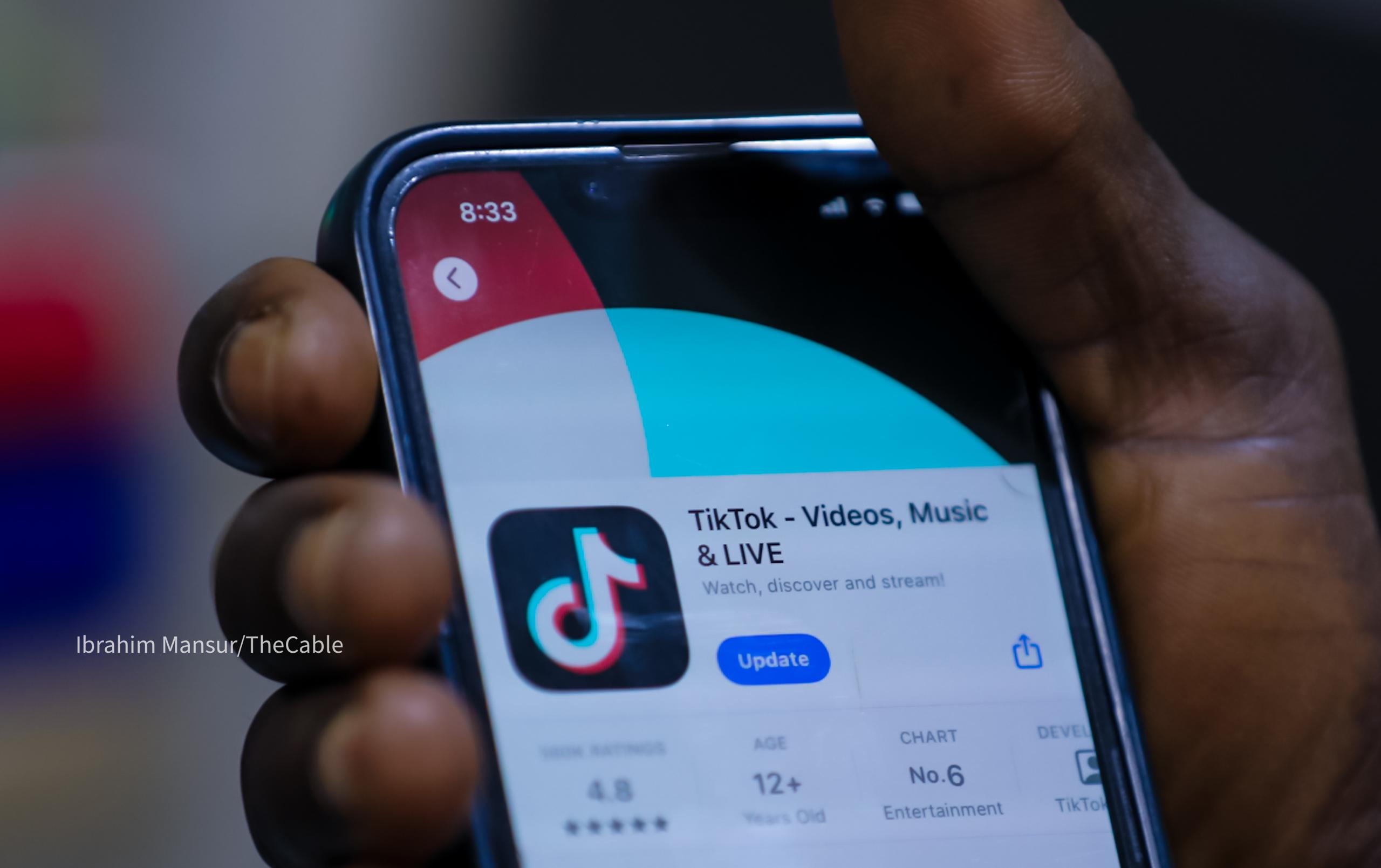
“But you see, the profiling that happens online, especially on TikTok, is even more alarming. It is as if there is no hiding place for you as a Fulani man in Nigeria. You open the app to rest your head, but you might end up getting depressed because one content creator portrayed your tribe as terrorists.”
He recounted an event that happened in the past: “In the same year, 2021, my sister was almost burnt alive because of her identity. When I heard the news, I was both emotionally and psychologically depressed. But now, I’m okay.”
AUTOMATIC VILLAINS
Meanwhile, Adam’s plight is not an isolated one. Shehu Usman, a 400-level student of Usmanu Danfodiyo University, Sokoto, is another Fulani man who now sees the app as a place that triggers depression.
Advertisement
 Shehu Uthman, a victim of digital ethnic profiling
“TikTok used to be my go-to app after a very long day at school. But my confidence in the app totally reduced,” Shehu told this reporter in April.
He added that he now prefers to read books rather than open the app.
Advertisement
“You can barely watch three videos before you come across a video that names us as bandits,” Shehu said.
“And as a Fulani man, these contents get to me; I just have to stop using the app.”
Advertisement
Even offline, he wasn’t spared.
When Shehu speaks, peers watch the tactfulness of his speech with admiration, but according to him, they never truly consider him as one of them. He could read the disgust in their faces whenever they saw him.
Advertisement
“Someone even confronted me one day by saying they knew there would be problems if I graduated. I knew the statement came from a place of judgement. Because I’m Fulani,” Shehu said.
THE DEADLY TRENDS
This reporter decided to comb TikTok for possible ethnic profiling videos. The investigation revealed that between November 2025 and May 2026, thousands of videos were churned out by Nigerian TikTokers attacking the Fulani tribe.
For instance, on November 26, 2025, a verified TikTok user, Seun Pizzle, posted a video under this sound with the caption, “My name is Garuba”. Generally, the video looked harmless, but subsequent videos under the same trend reveal a dangerous picture.
In the same month, another TikTok user, simply identified as London Boy, posted a video on his page with the caption, “Hausa are not bandits abeg na Fulani.” The video generated over 16,000 likes and 600 comments.
While some users in the comment section glorified his video, some displeased Fulani users clarified that they were Fulanis but not bandits. A user, Lil cee said, “Bros ama Fulani from Gambia we ain’t bandits.”

London boy posted on his TikTok naming Fulani as bandits — Screenshot: Habeeb Olokooba“Fulani have been bandits since Dan Fodio,(sic),” minister, another TikTok user, fired back at Lil cee.
“After hearing that bandit is around, na once I turn to Fulani,” another user, Idowest wire, wrote as a caption to his video under the same trend. Portraying that you will be safe if you are Fulani.
In total, over 16,000 videos were made under the CPC Madara trend. While some videos appear harmless, most target the reputation of the Fulani tribe.
HOW FULANI BECAME A WORD TO FEAR
Historically, the Fulani people are said to be descendants of the Berbers of North Africa and have spread mostly to West and Central Africa. Known for herding goats, sheep, and cattle across the dry grasslands of their habitats, they are classified as the largest pastoral nomadic group in the world. Beginning in the 18th century, they migrated southwards and eastwards from Senegal, through Cameroon, into Nigeria.
The words ‘Fulani’ and ‘armed violence’ first came side by side in 1804 during the Fulani War led by Usman Danfodiyo, establishing the Sokoto Caliphate through political and religious consolidation in Hausaland.
In Nigeria, the Fulanis are not a monolithic community. Some are nomadic pastoralists, others are semi-settled agro-pastoralists, and many are fully urbanised professionals, traders, civil servants, and academics.
However, public discourse often blurs the lines between these distinctions. Criminal acts committed by individuals are frequently framed as evidence of collective guilt. The complexity of farmer–herder conflicts, banditry in the north-west, and insurgency in the north-east is reduced to ethnic shorthand.
The issue of ethnic profiling of the Fulanis did not just begin and is not peculiar to TikTok alone. It has long permeated the Nigerian media landscape, which has helped shape public opinion.
Reporting patterns observed by this reporter show that ethnic identifiers such as “Fulani herdsmen” are frequently used in headlines about crimes in parts of the country.
Conversely, similar offences in other regions are often attributed to “gunmen” or “unknown assailants”, shunning the suspects’ ethnicity.
For example, an August 2 newspaper headline read: “Gunmen attack Enugu church as security operatives intensify rescue of abducted victims”. Enugu is in southeastern Nigeria, predominantly Igbo, but ethnicity was not highlighted.
Meanwhile, other reports have used framing like “Fulani herdsmen kill 10 Christians in eastern Nigeria” when covering attacks in northeastern Nigeria.
In 2016, Nimbo, a town in Enugu state, was rocked by an attack that claimed many lives. Politicians, media outlets, and activists quickly blamed “Fulani terrorists”. Later investigations revealed that criminals from various communities were involved, yet the Fulani label took the fall.
That same year, more than 300 people were killed in Agatu, Benue state. Similarly, Fulani herders were blamed. Despite the lack of conclusive evidence, the tragedy was woven into a growing national narrative of Fulani culpability, erasing the existence or involvement of local militias.
By 2021, the surge in terrorism that marred states like Zamfara, Kaduna, and Katsina fuelled how the Fulani identity became synonymous with violence and terrorism.
In the same year, 2021, Bello Turji, a notorious terror kingpin operating in Sokoto and Zamfara, wrote to authorities expressing displeasure over the maltreatment of the ethnic Fulani.
He later reiterated in March 2022 that his group was fighting in defence of the Fulanis against vigilante groups who attack, maim, and extrajudicially kill people from his tribe.
Murtala Rufai, in his research, “I am a Bandit”, the result of a decade-long research project into banditry in the north-west, explained that one of the narratives for the rise of banditry was “social grievance arising from the perceived deep-rooted injustice against the pastoral communities.”
“The first armed group emerged with the name Kungiyar Gayu in Zamfara towards the end of 2011. Its initial aim, as claimed by some of the founding fathers, was to ensure the unity of the pastoralists and the struggle for social justice,” Rufai wrote.
In 2023, a state high court in Kwara state convicted and sentenced Sarkin Fulani of Kwara (Head of Fulanis in Kwara state) and two others to life imprisonment for conspiracy to kidnap and kidnapping.
Meanwhile, the profiling escalated digitally after a church in Eruku, Kwara state, was attacked last November. Worshippers were killed, injured, and kidnapped for ransom. In the aftermath, online commentary and satire quickly tilted blame toward Fulani communities, reinforcing a long-running narrative that associates the ethnic group with kidnapping and banditry.
What may have appeared as harmless comedy carried deeper consequences. By portraying Fulani identity as synonymous with criminality, the content amplified stereotypes and normalised collective blame. For many innocent Fulani people, like Adam and Shehu, such portrayals contribute to suspicion, stigma, and even violence.
Gobir Habeeb, an Abuja-based tech lawyer, explained that digital ethnic profiling is becoming a serious issue, especially on platforms like TikTok, where harmful content spreads quickly.
“To address it, platforms need to enforce their moderation policies more strictly, and users should actively report discriminatory content,” he said.
“On the legal side, victims can seek remedies such as content takedown, and in some cases, pursue defamation or harassment claims,” Gobir pointed out.
“For regulators, the focus should be on enforcing existing laws and holding platforms accountable, particularly through agencies like the Nigerian Communications Commission and National Information Technology Development Agency.”
Gobir explained further that any solution provided must be balanced to avoid suppressing legitimate expression.
“There will be challenges, especially with enforcement and the global nature of these platforms, but the key point is that digital spaces should not be left unchecked when it comes to discrimination,” he said.
‘DON’T SHOOT ME, I’M YOUR BROTHER’
On November 23, 2025, a TikTok account, Editor Long Life & Prosperity, posted a video urging people in Yorubaland to go learn the Fulfulde of the phrase “Don’t shoot me, I’m your brother.” In the video, he was certain that it was the only thing that could save one from bandits.
Fulfulde is the language of the Fulani people. The video has gained over 108 thousand likes and over 1000 comments.
 A TikTok user urging people to learn Fulfulde to save themselves from bandits — Screenshot: Habeeb Olokooba
Similarly, in another supposedly humorous video, IPUD RHYMEZ, another TikTok user, portrays himself at gunpoint trying to remember the Fulani of the sentence (Don’t shoot me; I’m your brother.)

Upon closer review, it was observed that the user tagged influencers like Donjazzy and Yabaleftonlinemedia, indicating that the post was made for publicity.
Sakeu, another TikTok user, amplified similar content here. From over ten videos perused by this reporter, a single message was passed: when you learn Fulfulde, bandits will spare you.
CONSEQUENCES IN REAL TIME
In April, Bashir Dalhatu Liman, a Fulani man, narrated how he was denied boarding a public bus to Calabar in Lagos after passengers refused to travel with him because he shared “ethnicity with terrorists”.
In the TikTok video, which has since drawn widespread reactions, Liman narrated how he spent the night at the GUO terminal with the hope of getting a bus to Calabar. He was told GUO had no Calabar route and was directed to GIGM.
“After arriving early in the morning, I paid for my ticket. However, when I went to board the vehicle, the other passengers stated they would not travel with a Fulani man,” he said.
He explained further that the transportation company refunded his fare and apologised, but the incident left him shaken.
“This is the tragic situation we Fulani find ourselves in, within our own country. Just trying to board a vehicle, and because your face is that of a Fulani man, passengers refuse to travel with you, while others jeer and label you as ‘herdsmen’,” he added.
However, Liman’s plight reflects the daily woes of some Fulani people in this country.
For Abdulqadir Usman, a Fulani man formerly residing in Shagbe, Ifelodun local government of Kwara state, his situation is that of double jeopardy.
At first, Abdulqadir raised cows, a business he inherited from his father. He had enough cattle to sustain his wife and children. Then insecurity struck.
“When banditry attacks became persistent, I had to transfer my cattle to my friend in Shaare (another part of Kwara) for safekeeping,” Abdulqadir said.
“For instance, in villages like Babanla, I can’t pick passengers with my motorcycle there because the people there do not want to see you as a Fulani man.”
Confirming Abdulqadir’s statement, sources from Babanla who spoke to this reporter narrated that they don’t want any Fulani in their village.
“The reason is simple. We have discovered that the terrorists are using the innocent ones to spy and attack us,” a source told this reporter.
But security experts like Oluwole Ojewale, a senior researcher from the Institute for Security Studies, Dakar, Senegal, would disagree. To him, the act is criminal and can trigger more conflict.
“Blanket stereotyping of all Fulanis as bandits is a dangerous disposition that can escalate conflict,” Ojewale said. “That is the road that leads to atrocities. Communities and people engaging in such action can be tried for crimes against humanity. Thus, the state organs of protection should wade in by creating media awareness and read the riot act to the people who are guilty of such.”
 Babanla, Kwara state
Although there is no comprehensive data on how many lives have been lost to ethnic profiling. However, reports have it that over 55,000 people lost their lives to Nigeria’s ethno-religious crisis from 2019 to 2023.
In March 2025, 16 Hausa hunters travelling to Kano were reportedly accused of being kidnappers and later murdered by a mob. Though the details remain contested, the incident underscored how ethnic labelling and suspicion can escalate into deadly consequences. Ethnic profiling in Nigeria did not begin with social media, but digital platforms have accelerated its reach.
Following the death of a cleric in Baruten Local Government, Kwara State, in May, a mob burnt two men alive and razed ten Fulani buildings in the community.
WHAT DOES THE LAW SAY?
Section 42 of the Nigerian Constitution guarantees every citizen’s freedom from discrimination. It provides that no Nigerian should suffer any disadvantage or receive special treatment simply because of their ethnic group, community, place of origin, sex, religion, or political opinion.
It also protects citizens from being deprived of opportunities or rights because of the circumstances of their birth.
Like Gobir, Hammad Abdulrasheed, another legal practitioner, said the issue of ethnic profiling of innocent Fulani is evil and, either online or offline, is a breach of their fundamental rights guaranteed under sections 42 and 34 of the Nigerian constitution, which protect against discrimination and uphold the dignity of a human person, respectively.
While explaining the limitations of freedom of expression, Hammad noted that although section 39 of the 1999 Nigerian constitution guarantees citizens the right to express themselves freely, such rights are not absolute.
“Additionally, section 34 of the 1999 constitution also protects the dignity of the human person. Although section 39 guarantees the freedom of expression, it is subject to limitation because no one has the right either online or offline to accuse someone of being a terrorist on the basis that some of his ethnic groups are into banditry,” Hammad said.
He added that section 24 of the Cybercrime Act criminalises cyberstalking and intentional transmission of offensive, threatening, insulting, or even hateful messages capable of causing danger or ill-will, which, upon conviction, attracts a fine of not less than 7 million Naira, 3 years’ imprisonment, or both.
When asked about the legal remedy available for the victims of ethnic profiling, Hammad said affected people could seek redress for the enforcement of their fundamental human rights.
“One can write a petition to the law enforcement agency to prosecute any person who has profiled him,” he added.
Speaking on the possible solutions, Hammad stressed the need for public enlightenment. According to him, many people are oblivious to the fact that profiling a whole ethnic group because of some particular group is a crime.
This reporter emailed TikTok’s official email address on May 2 for official comments. But as of the time of filing this report, TikTok has yet to respond to the email sent. Subsequent reminders sent on the 14th and 18th days of May are equally begging for a response.
But as TikTok keeps mum, the profiling continues.
Source: TheCable
0
0