Nigerian News
Breaking news and other interesting news from Nigerian media or social media outlets
10 members • 15 followers

Kaothaj_
17 days ago
One of Nigeria’s top businessmen and investors, Tony Elumelu, could be on the verge of returning to Africa’s billionaire ranks after the value of his indirect stake in Seplat Energy Plc climbed to approximately $1.28 billion.
Tony Elumelu's indirect stake in Seplat Energy Plc has reached an estimated value of $1.28 billion, putting him close to returning to Africa’s billionaire ranks.
Elumelu holds his stake through Heirs Energies Ltd and Heirs Holdings Ltd, following their acquisition of a 20.07% share in Seplat for about $496 million.
He is set to become Seplat's next chairman at the beginning of 2027, further deepening his influence over one of West Africa’s largest oil and gas companies.
Elumelu was previously on Forbes Africa’s 50 Richest list in 2014 but dropped off due to a decline in asset values; the recent surge in Seplat could return him to billionaire status.
Elumelu, chairman of Heirs Group and founder and chairman of Heirs Holdings, owns the stake through Heirs Energies Ltd and Heirs Holdings Ltd.
At Seplat’s closing share price of N12,320.60 on September 1, 2026, his 120.4 million shares were worth about N1.48 trillion, equivalent to roughly $1.28 billion, as reported by Nairametrics.
The calculation is based on the value of the shares alone and does not mean Elumelu’s total net worth is necessarily $1.28 billion.
His broader wealth includes interests across banking, energy, power, hospitality, real estate and other businesses.
Still, the rise in his Seplat holding puts him within striking distance of the threshold used to define a billionaire and could put the Nigerian mogul back among Africa’s dollar billionaires.
Tony Elumelu’s influence on Seplat
In June, it was reported that Seplat named the Nigerian investor as its next chairman, deepening his influence over one of West Africa’s largest independent oil and gas producers following Heirs Energies’ acquisition of a 20.07% stake in the company.
Elumelu-backed Seplat becomes first NGX-listed firm to cross N10,000 per share
Mr. Elumelu is set to formally assume the position at the start of 2027.
His elevation follows Heirs Energies’ purchase of Maurel & Prom’s entire 20.07% stake in Seplat for about $496 million.
The transaction involved 120.4 million shares and made Heirs Energies the largest single shareholder in the oil and gas producer.
The acquisition was executed at 305 pence per share, representing a premium above Seplat’s then-market valuation on the London Stock Exchange
Shareholders later ratified his appointment at the company’s annual general meeting with 99.96% of votes cast in favour.
Founded in 2009, Seplat has grown into one of Nigeria’s leading independent energy producers with listings on both the Nigerian Exchange and the London Stock Exchange.
The company became the first listed firm on the Nigerian Exchange Limited (NGX) to surpass the N10,000 per share mark.
In April, the company’s shares climbed to a high of N10,450, pushing its market capitalisation from N5.73 trillion to N6.27 trillion, according to NGX data.
The stock gained 79.89% year-to-date, up from N5,809 at the end of 2025.
The rally was said to be fuelled by the major ownership shift involving Tony Elumelu.
Shares of Seplat Energy Plc surged sharply after Heirs Energies Limited acquired shares in the company, adding roughly $1.25 billion to the company's market value and energising sentiment on the Nigerian bourse.
Market data in February showed Seplat’s stock jumped 57 percent to about ₦9,099.90, equivalent to roughly $5.69 per share, amid stronger trading volumes and renewed institutional demand.
Since the deal was announced, the company’s share price has gained 56.65 percent, marking one of the most notable rallies for an energy-linked stock on the Nigerian Exchange in recent years.
Per its H1 unaudited result report, “Seplat Energy's production operations improved materially in 2Q 2026, bringing overall production into our guidance range.
The growth is driven by the return of Yoho (onstream 3Q 2026), increased contribution from new well stock (ongoing), ANOH ramp-up and the completion of Oso-BRT phase 1 (now 4Q 2026).”
Tony Elumelu: A billionaire before
Should Tony Elumelu be propelled into billionaire status, this would not be his first stint in the elusive club.
Forbes included him on its 2014 Africa’s 50 Richest list with an estimated fortune of $1 billion.
At the time, Forbes said Elumelu’s wealth was built largely around his controlling interest in Transcorp, the Nigerian conglomerate with interests spanning sectors including power, hospitality, energy and agriculture.
His fortune subsequently fell below the billion-dollar mark.
In 2015, Forbes estimated his net worth at about $700 million, citing a decline in the value of Transcorp, then his largest asset.
That made Elumelu an unusual figure among Africa’s wealthiest businessmen: a mogul who had already crossed the billion-dollar threshold but later dropped out as the value of his listed assets changed.
More than a decade later, the sharp rise in the value of his Seplat holding is giving him another route back.
Source: Business Insider Africa
0
4
Kaothaj_
17 days ago
By Promise Eze

The Rivers state police command says it has dismissed three officers linked to the alleged killing of Anthony Obodo, a resident in Port Harcourt, the state capital.
Olugbenga Adepoju, police commissioner in Rivers, announced the dismissal on Wednesday in Port Harcourt while parading the three officers.
The police identified the victim as a student, but media reports described him as a graduate of the University of Port Harcourt (UNIPORT).
Recounting the circumstances surrounding the victim’s death, Adepoju said on August 27 at about 5:30pm, a patrol team from the Agip division, led by Fabian Banabari, was returning from a special duty at the Yakubu Gowon stadium when the team sighted a black, fully tinted Lexus vehicle.
He said the officers attempted to stop the vehicle, but the driver allegedly sped off, prompting the patrol team to pursue it.
The police commissioner said during the pursuit, Alfred Louis, a corporal attached to the team, allegedly opened fire, hitting the driver.
“The victim was immediately rushed to Palmars hospital, Port Harcourt, where he was attended to and subsequently confirmed dead by the doctor on duty,” Adepoju said.
“The three members of the patrol team were immediately arrested and detained at the state CID, Port Harcourt, where a comprehensive investigation into the case was carried out. Efforts were also intensified to locate and arrest inspector Solomon Nwogu, who reportedly absconded following the incident.
“Following the conclusion of the investigation and the establishment of the complicity of the police involved, they have been tried in an orderly room with the other officer at large and recommended for dismissal from the Nigerian Police Force.
“They will subsequently be charged to court to face the appropriate criminal charges in accordance with the law.”
Adepoju said the command places a high premium on professionalism, accountability, respect for human rights, and the protection of life and property.
He said the command would not protect any officer found to have violated the law, adding that all allegations of misconduct would be investigated fairly and professionally.
Adepoju said the dismissal of the officers demonstrates the police’s commitment to accountability.
“The action taken against these officers demonstrates that the Nigerian Police Force will not shield personnel who abuse the powers entrusted to them or act contrary to the law and professional standards of the force. Let me reiterate that no police officer is above the law. Let me reassure you that the case will be charged to court,” he added.
Source: TheCable
1
6
Kaothaj_
18 days ago
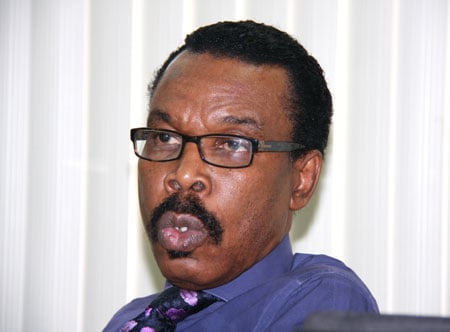
Bismarck Rewane, chief executive officer (CEO) of Financial Derivatives Company (FDC) Limited, says Nigeria’s economy is growing faster than its population, meaning Nigerians should be getting richer as economic output increases.
On August 31, the National Bureau of Statistics (NBS) said Nigeria’s economy grew by 4.43 percent in real terms in the second quarter (Q2) of 2026.
Speaking during an interview on Channels TV on Tuesday, the economist said the figure should be assessed as a measure of economic output rather than revenue.
He said Nigeria’s estimated population growth rate of about 2 percent means the economy is expanding faster than the population.
“Technically, it means that Nigerians should be getting richer because of the increase in output, as far as increasing population,” he said.
Rewane said Nigeria’s growth rate is significantly higher than the global GDP growth rate of about 2.3 to 2.4 percent.
“So, our rate of growth rate is twice the global growth rate. It’s equal to the African growth rate,” he said.
Rewane said the 4.43 percent growth rate was a strong performance compared with Nigeria’s previous position.
“So, I can say clearly that 4.43% is actually very good compared to where we were,” he said.
“If you look at it properly, you’ll find that 4.43% is the real GDP growth rate. The potential GDP growth rate is also about 4%. So, that is good.”
He said oil refining emerged as the fastest-growing sector during the period.
According to Rewane, oil refining growth increased from 15.78 percent in the second quarter (Q2) of 2025 to 43.94 percent in Q2 of 2026.
Rewane attributed the growth in refining to investments in the sector and the operations of modular refineries.
“It is needless to say, we know that the refinery has invested a lot. The modular refineries are also on. So, we have a plus 28 percent increase,” he said.
The economist said the non-oil sector also expanded its contribution to the economy, accounting for 95 percent of GDP, while the contribution of the oil sector declined.
“But note that oil sector is the primary goose that lays the foreign exchange eggs that we use to drive the economy,” he said.
Rewane said the NBS tracks 46 economic activities, of which 30 expanded during the period, 11 slowed and five contracted.
“So, generally speaking, the economy is doing well in terms of activity levels,” he said.
The economist also compared the GDP performance with the purchasing managers’ index (PMI), saying the index had increased over the preceding three months.
Rewane said the improvement in the PMI, which serves as a leading indicator, was reflected in the GDP growth.
Therefore, as a leading indicator, he said the GDP also increased.
Source: TheCable
0
4
Kaothaj_
19 days ago
Minister of State for Defence Bello Matawalle says Nigeria will soon overcome insecurity as government intensifies efforts to restore lasting peace nationwide

Minister of State for Defence, Bello Matawalle, says Nigeria will soon overcome insecurity as the Federal Government intensifies efforts to restore lasting peace across the country.
Matawalle spoke on Monday in Kano during a condolence and assessment visit to the state government following the August 29 bandit attack on Chiroma village in Garun Mallam Local Government Area.
He said the government was adopting a combination of proactive security operations, strategic planning and stronger collaboration with state governments to address the country’s security challenges.
The minister said President Bola Tinubu’s administration remained committed to defeating insecurity and creating a safer environment for Nigerians.
“The president has set up a committee to formulate a five-year defence and security strategy. The plan will provide a framework for addressing security threats across the country over the long term,” he said.
Matawalle said security forces had launched a joint operation following the attack, led by Brigadier General Saka Jimoh, Commander of the 3 Brigade, Kano.
According to him, personnel from the Joint Task Force operating from the Hawan-Kwano and Kwanar Dangora camps participated in the operation, which led to the rescue of several kidnapped victims around the Yan-Kifi Bridge and Marabar Kwari areas of Garun Mallam LGA.
The minister commended the troops for their efforts, saying the Federal Government would continue to strengthen the operational capabilities of the armed forces and other security agencies.
He stressed that defeating insecurity would require sustained cooperation among the federal, state and local governments, as well as active participation by citizens through the provision of credible information to security agencies.
“We will continue to provide every necessary support to our security agencies to keep the country safe. I am confident that insecurity will soon become a thing of the past, allowing Nigerians to live in peace and prosperity,” he said.
Matawalle further pledged additional Federal Government support for Kano State, including fighting vehicles, weapons and other operational equipment to strengthen security operations.
He also held a closed-door meeting with commanders of the 3 Brigade and other security formations in Kano, charging them to sustain ongoing operations and intensify efforts to protect communities.
The minister said the Federal Government would continue to provide the resources and support required to protect lives and property and safeguard the country’s territorial integrity.
Kano State Governor, Abba Yusuf, thanked Matawalle for the visit and reaffirmed the state government’s commitment to working with the Federal Government to improve security across the state.
“We have confidence in your leadership. At the state level, we will continue to take the necessary steps to promote security and maintain stability in Kano,” Yusuf said.
“We have taken note of the President’s commitment to strengthening security in Nigeria, and we will work to ensure that insecurity does not persist in our domain.”
Source: Arise News
0
6
Kaothaj_
19 days ago
By Busola Aro

President Bola Tinubu says Nigeria’s economy is on an “irreversible path” to stronger growth following the latest gross domestic product (GDP) figures released by the National Bureau of Statistics (NBS).
The NBS, on Monday, reported that Nigeria’s real GDP grew by 4.43 percent year-on-year in the second quarter (Q2) of 2026, compared with 4.23 percent recorded in the corresponding period of 2025.
The president, in a statement by Bayo Onanuga, his special adviser on information and strategy, said the figures showed that the economic reforms implemented by his administration were yielding results.
Tinubu said the economy had been stabilised after three years of implementing what he described as “necessary reforms,” adding that the government’s focus would now shift to ensuring that stronger economic performance translates into improved living conditions.
“In the past three years, we tried to do the hard part by implementing the necessary reforms to stabilise the economy. Now the economy is stabilised, and we have laid the foundation for a prosperous nation,” he said.
“The results of the efforts are becoming very clear to all: The Renewed Hope Agenda is working.”
Tinubu also said the government’s reforms had also contributed to stronger external reserves, improved credit ratings, increased oil production and renewed investor interest.
“Because of those tough decisions, today Nigeria has trade surpluses. Our foreign reserves are at their highest in 17 years. Our credit rating has moved up several notches,” the president said.
He also cited investments in roads, railways and other infrastructure, as well as the absence of strikes in universities and the expansion of student loans through the Nigerian Education Loan Fund (NELFUND).
The president said the government would in the coming weeks introduce measures aimed at easing pressure on vulnerable Nigerians, including cheaper transportation, increased food production and other relief programmes.
“We are fully committed to translating consistent, stronger economic performance into better microeconomic outcomes for our citizens,” Tinubu said.
The president said Nigeria must stay vigilant by “ensuring the sustainable progress we are recording remains irreversible”.
Source: TheCable
0
6
Kaothaj_
20 days ago
By Busola Aro

The Nigerian Independent System Operator (NISO) says recent changes in electricity allocations to distribution companies (DisCos) in Lagos, Abuja, and northern Nigeria were caused by transmission line outages and network constraints, rather than a shortage of generation.
The operator spoke in a statement on Sunday, NISO said multiple transmission faults reduced the capacity to move available electricity to the affected areas, forcing it to temporarily cut allocations to DisCos to keep the national grid within safe operating limits.
The clarification comes amid changes in power supply allocations to Eko Electricity Distribution Company (EKEDC), Ikeja Electric Distribution Company (IE) and DisCos serving Abuja and northern states.
NISO said the amount of electricity generated does not automatically determine how much power can be delivered to a particular location.
“The changes in allocations occurred due to multiple transmission line outages that affected available transmission capacity and configuration of the network at different times,” the statement reads.
“Adjustments were made in the course of normal system operations to ensure that the interconnected network remained within secure operating limits.
“The availability of generation does not, by itself, guarantee that the available power can be delivered to a particular load centre.
“Power transfer is dependent on the availability and capacity of transmission infrastructure and the prevailing configuration of the network.”
For Lagos, NISO said the state was affected by outages on the Olorunsogo-Ayede 330kV Line 1, Benin-Egbin 330kV Line 1 and Benin-Omotosho 330kV Line 1.
“The Osogbo-Ikeja West circuit was also unavailable for an extended period,” the operator said.
According to NISO, the combined outages reduced the amount of electricity that could be safely transmitted into Lagos.
The operator said it consequently reviewed and curtailed allocations to EKEDC, Ikeja Electric, and the Sakete international supply.
“The northern corridor was affected by the tripping of the Shiroro-Mararaba 330kV Line 1 between August 24 and 26,” NISO said.
“The outage affected allocations to Abuja and northern parts of the country because the remaining transmission circuit had to carry the load.
“The situation worsened at 6:47am on August 27 when the Shiroro-Mando 330kV Line 2 and Mando-Jos 330kV Line 1 tripped simultaneously.”
NISO said Mando-Jos Line 1 was then the only available transmission circuit serving Jos and the north-east, while the alternative Apir-Lafia 330kV Lines 1 and 2 had been out of service for an extended period because of faults.
The simultaneous outages significantly reduced transmission supply to Jos and the north-east.
NISO said the separation of the bus at the Mando transmission substation further changed the network configuration and restricted power transfer to the affected areas.
The operator said it subsequently revised and curtailed allocations to Kano, Kaduna, Jos, Yola, and other affected northern locations.
For Abuja axis, NISO said there was a temporary transmission constraint on August 29, noting that the Shiroro-Katampe 330kV line 1 and Gwagwalada-Katampe 330kV line 1 tripped simultaneously at 3:55 am.
According to the operator, the two circuits were restored at 7:25 am and 7:20 am, respectively, after which transmission capacity to the Abuja axis was recovered.
‘ALLOCATIONS REDUCED DUE TO NETWORK CONDITIONS, CAPACITY’
NISO said it continuously monitors the national grid and adjusts generation dispatch and DisCo allocations based on available transmission capacity and network conditions.
“Where a transmission fault limits the amount of power that can be safely moved, the system operator may redistribute generation, reduce load or revise allocations to DisCos,” the statement added.
The operator said such measures are necessary to prevent wider disturbances on the interconnected grid.
NISO said the recent changes in allocations should, therefore, be understood as a consequence of transmission constraints and network configuration at the affected times, rather than a lack of available generation.
Source: TheCable
0
2
Kaothaj_
21 days ago
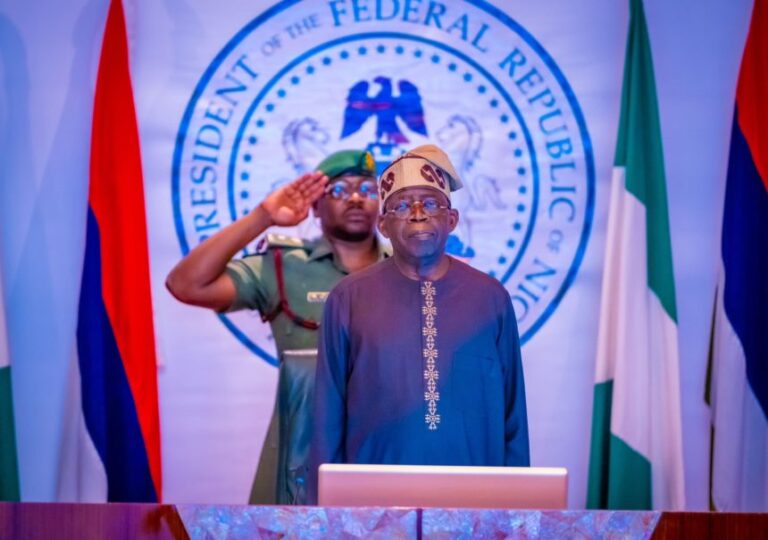
byTheCable
President Bola Tinubu will commence his three-week leave today, Bayo Onanuga, presidential spokesperson, said on Sunday.
The president is expected to depart Abuja later in the day for Europe, where he will spend what has been described as a “working vacation”.
“His first stop will be London, United Kingdom,” the presidential spokesperson said.
“President Tinubu is expected to return home after the working vacation to join the hectic campaign for the January 2027 election.”
The president also had his 2025 annual vacation in September, taking 10 days off.
Equally described as a working vacation, Tinubu was in the United Kingdom and France for the duration.
The president’s 2026 leave comes in the wake of the conclusion of Vice-President Kashim Shettima’s two-week vacation.
Stanley Nkwocha, senior special assistant on media and communications (office of the vice-president), had described the leave as Shettima’s first since assuming office.
The vice-president returned from his leave two days ahead of schedule on August 18.
Source: TheCable
0
1
Kaothaj_
21 days ago
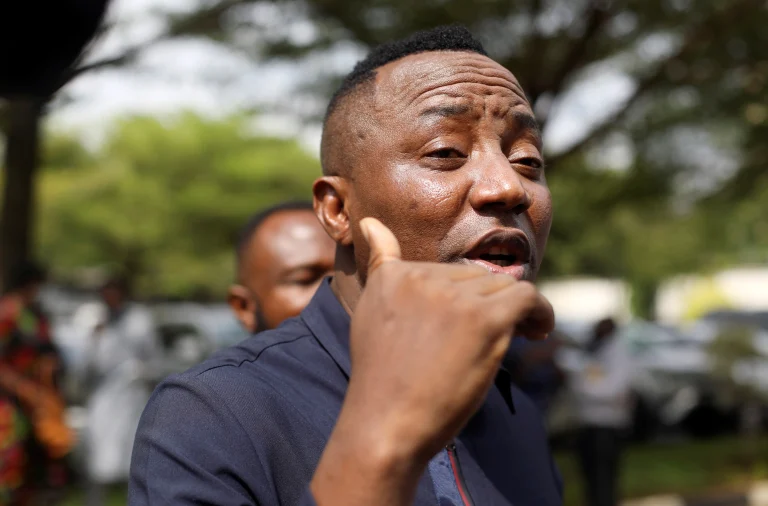
The Department of State Services (DSS) has directed its counsel to seek an adjournment of the cybercrime case against Omoyele Sowore until after the 2027 presidential election.
A DSS source confirmed to TheCable that the decision is to guarantee Sowore’s seamless participation in the polls.
Sowore is the presidential candidate of the African Action Congress (AAC).
The presidential and national assembly elections are scheduled for January 16, 2027, while campaigns for the polls commenced on August 19, 2026, according to the Independent National Electoral Commission (INEC) timetable.
The source said Tosin Ajayi, DSS director-general, met with the agency’s counsel, Akinlolu Kehinde, and the legal directorate officials on August 20 to deliberate on the issue.
“The DSS boss reportedly told the senior advocate and his directorate of legal services that, with the commencement of presidential campaigns, it would only be fair to adjourn the court case in order to enable Sowore fully participate in the upcoming elections without let or hindrance,” the source said.
“He added that, since the matter had been in court for nearly a year, suspending it for another few months wouldn’t make much difference.”
The DSS source said the agency’s position is expected to be formally communicated to the federal high court on September 14.
TheCable understands that other cases involving candidates for elective positions in 2027 are also being reviewed.
WHY THE DSS CHARGED SOWORE TO COURT
The DSS instituted the case against Sowore over posts he made on his X handle and Facebook page on August 25, 2025, in which he referred to President Bola Tinubu as a “criminal”.
The service had asked Sowore to remove the posts within seven days.
After he failed to comply with the directive, the DSS approached the federal high court in Abuja on September 16, 2025, seeking judicial interpretation on whether it was lawful to describe the president or any individual as a criminal.
X Corp and Meta Platforms Inc., operators of X and Facebook respectively, were initially joined as defendants in the case.
Before filing the case, the DSS had written to X demanding the deactivation of Sowore’s verified account, arguing that the post could incite violence and threaten national security.
The service had also written to Meta, saying its mandate to protect the president extends beyond physical threats.
In January 2026, the DSS amended the charge, reducing the counts from five to two and removing X and Meta as defendants, leaving Sowore as the sole defendant.
Sowore subsequently pleaded not guilty to the allegations and secured bail.
Source: TheCable
0
3
Kaothaj_
21 days ago

Osun State Governor, Ademola Adeleke, has issued an Executive Order establishing a Coroner Inquest/Panel of Inquiry into the killings, shootings, injuries and violence reported at Naira and Kobo Junction, Motor Park/Garage Area, Ikire, Irewole Local Government Area, on August 24, 2026.
The panel, headed by Magistrate Ayokunle Shiyanbola, will investigate the circumstances surrounding the incident, determine the identities and number of victims, establish the immediate and remote causes of the violence and examine whether criminal responsibility is connected to the deaths.
The Executive Order, which takes effect on August 31, also mandates the panel to investigate the role of security operatives and determine whether live ammunition or other weapons were used during the incident and whether their use complied with the law, rules of engagement and human rights standards.
The state government disclosed this in a statement on Saturday by the governor’s spokesperson, Olawale Rasheed.
According to the statement, “The panel is mandated to determine the circumstances leading to the shootings and killings, examine the role of security operatives, establish whether live ammunition or other weapons were used and whether their use complied with the law, rules of engagement and human rights standards.”
The panel will also investigate whether the actions or omissions of individuals or groups contributed to the violence.
“It is also empowered to identify any individual, group, security personnel, political actor, transport union member, public official or other person whose action or omission may have contributed to the incident,” the statement said.
The inquiry may recommend prosecution, disciplinary measures, compensation for victims and institutional reforms to prevent a recurrence.
“The panel may recommend prosecution, disciplinary measures, compensation for victims and institutional reforms to prevent recurrence,” the government said.
The panel will also have wide powers to gather evidence and compel witnesses to participate in the inquiry.
“The inquiry will have powers to summon witnesses, demand relevant police and medical records, inspect the scene of the incident and other relevant locations, receive oral and documentary evidence, and recommend protective measures for witnesses and persons at risk of intimidation or retaliation,” the statement said.
Adeleke also ordered the preservation of evidence that could help establish what happened during the violence.
“Governor Adeleke also directed the preservation of firearms, ammunition records, station diaries, communication logs, incident reports, duty rosters, medical records, autopsy reports, photographs, videos and other materials relevant to the inquiry,” the statement said.
The Executive Order further provides for the protection of witnesses and families of those killed, while requiring the government to obtain medical and forensic documentation and maintain peace in Ikire pending the conclusion of the inquiry.
“The Executive Order further calls for appropriate measures to protect witnesses and victims’ families, obtain medical and forensic documentation, and maintain peace in Ikire pending the conclusion of the inquiry,” it said.
As part of the measures surrounding the inquiry, the Inspector-General of Police, Police Service Commission and Osun State Commissioner of Police have been formally asked to take interim administrative steps concerning any police officer whose continued operational command could affect the investigation or public confidence.
“The Inspector-General of Police, Police Service Commission and Osun State Commissioner of Police are formally requested to take appropriate interim administrative steps concerning any police officer whose continued operational command may prejudice the inquiry or affect public confidence,” the statement said.
Magistrate Shiyanbola will chair the panel, while Mr Abiodun Badiora will serve as secretary.
Other members are AIG (Dr) Aderanti C. Kayode, mni (retd.), Mr Dele Akintayo, a representative of the Nigerian Bar Association, Comrade Wale Balogun representing Civil Society Organisations, a community representative from Ikire and Dr Babatunde Afolabi as Medical/Forensic Representative.
The panel is expected to commence sitting within seven days of its inauguration and submit its final report to the Osun State Government within 30 days from the date of its first sitting, subject to any necessary extension approved by the governor.
The government has also invited those with information about the incident to submit evidence to the panel.
“The government has invited victims’ families, eyewitnesses, journalists, transport workers, police officers, medical personnel, civil society organisations, political parties, community leaders, human rights activists and other concerned persons to submit memoranda and evidence to the panel,” the statement said.
Adeleke assured residents of Ikire, families of the deceased, the injured and the wider public that the inquiry would be conducted thoroughly, fairly and transparently.
“The Governor assured the people of Ikire, families of the deceased, the injured and the general public that the incident would be investigated thoroughly, fairly and transparently,” the statement said.
The governor also declared that anyone found culpable would not be protected because of their position, influence or political connections.
“The Executive Order states that no person found culpable shall be shielded from justice, irrespective of status, office, political connection or institutional affiliation,” the statement said.
It, however, stressed that allegations against any individual must be established by credible evidence before the inquiry.
The government said the order “stress[es] that all allegations remain allegations until established by credible evidence before the Coroner Inquest/Panel.”
Source: Punch
0
2
Kaothaj_
22 days ago

President Bola Tinubu has directed Taiwo Oyedele, minister of finance and co-ordinating minister of the economy, to oversee and coordinate a comprehensive forensic audit of federal government systems.
Bayo Onanuga, presidential spokesperson, said in a statement on Friday that the audit will include a review of the Integrated Personnel and Payroll Information System (IPPIS), federal government agencies, and their administration and internal controls.
According to Onanuga, the directive follows the federal executive council’s (FEC) resolution on August 19, 2026, in response to findings by the Independent Corrupt Practices and Other Related Offences Commission (ICPC) on “fake agencies”, ghost workers, and other control failures.
He said the exercise would establish the nature and extent of weaknesses in government’s control system and determine how such loopholes have been exploited.
He added that the review would comprise two interconnected components, with the first focusing on a forensic audit of government systems, particularly IPPIS and related payroll, personnel, pension and financial-management platforms.
“It will examine reported cases of ghost workers and payroll fraud, reconcile the figures identified by the ICPC, trace how fictitious or ineligible persons were enrolled, and review access, identity, biometric and bank-account controls,” the statement reads.
“The exercise will also examine the interfaces between IPPIS and other government platforms, including GIFMIS, Remita, the Treasury Single Account (TSA) and Sub-TSA, to determine whether fraud resulted from system defects, process failures, inadequate segregation of duties or deliberate circumvention.”
Onanuga said the second component of the audit would cover all federal government agencies, departments, commissions, councils, parastatals and other government bodies.
He said the audit would establish a definitive inventory of such bodies and verify their legal basis, while examining how entities obtain official recognition, budgetary consideration, correspondence privileges, office facilities and access to government systems.
The exercise, the presidential spokesperson noted, would also assess governance, procurement, internal audit, and oversight controls across government to close systemic weaknesses that could allow irregular entities or persons to access public resources.
Onanuga said Tinubu directed that the exercise be conducted with the highest standards of independence, professionalism and forensic integrity.
He said the audit team will have access to relevant government systems and records as well as collaborate with the ICPC to ensure that the review complements all ongoing investigations, prosecutions and recoveries.
“President Tinubu expects the exercise to go beyond identifying individual cases of fraud or administrative failure by strengthening the architecture of government, closing systemic loopholes, improving data verification and reconciliation, reinforcing accountability, and ensuring that only duly constituted entities and eligible personnel have access to government resources,” Onanuga said.
He added that the exercise underscores the president’s commitment to strengthening transparency, accountability, fiscal governance and institutional integrity across the federal government.
BACKGROUND
The development comes amid a wider ICPC investigation into the activities of the alleged fake Presidential Foreign Intervention Promotion Council (PFIPC) and other procedural weaknesses in government.
On Friday, Tinubu ordered the suspension of three permanent secretaries following the ICPC’s discovery of another “fake agency” operating within the premises of the office of the secretary to the government of the federation (OSGF).
The president also ordered the arrest of George Nwabueze, the national coordinator of the “fake agency” identified as National Brands Development and Made in Nigeria Special Project Office.
Critics, including Ali Ndume, former senate leader and chieftain of the All Progressives Congress (APC), have cited the ongoing fake agency scandal as evidence of oversight lapses of the current administration.
Source: TheCable
0
2
Kaothaj_
23 days ago
By Deji Elumoye
Taiwo Oyedele says Nigeria’s economy has stabilised, with GDP growth projected above four per cent as NEC moves to lower borrowing costs.

Minister of Finance and Coordinating Minister of the Economy, Taiwo Oyedele, has said Nigeria’s economy has stabilised and projected that Gross Domestic Product growth will exceed four per cent by the end of 2026.
Speaking with journalists after the monthly meeting of the National Economic Council at the State House, Abuja, on Thursday, Oyedele said the country had achieved significant macroeconomic stability but now faced the challenge of translating those gains into shared prosperity.
“Nigeria’s economy has stabilised, and the task ahead of us now is to convert stability to shared prosperity,” he said.
According to the minister, real GDP growth stood at 3.89 per cent in the first quarter of 2026, compared with 3.13 per cent a year earlier, while full-year growth was projected to exceed four per cent.
Oyedele also said headline inflation declined to 15.43 per cent at the end of July from 24.94 per cent a year earlier, although food inflation remained elevated at 20.31 per cent, compared with 26.2 per cent in the corresponding period last year.
He said Nigeria’s external reserves had risen to $51.96 billion, their highest level since January 2009 and 38 per cent higher year-on-year.
The minister added that the naira had appreciated by 13.5 per cent year-on-year by the end of the first half of 2026, with the exchange rate now below N1,400 to the dollar and showing relative stability.
Oyedele said net Federation Account Allocation Committee revenues rose by 44 per cent, from N15.2 trillion in 2024 to N21.9 trillion in 2025, and were projected to increase by at least another 50 per cent in 2026.
He also reported that Nigeria’s trade surplus had nearly doubled from N17.7 trillion in 2025 to N34.7 trillion by the first quarter of 2026.
According to him, total public debt remained below 37 per cent of GDP at N159.28 trillion, while the debt-service-to-revenue ratio had declined from nearly 100 per cent in 2022 to below 60 per cent in 2025.
Oyedele said improvements in the economy had also received international recognition, citing upgrades of Nigeria’s sovereign credit ratings by Fitch, Moody’s and S&P between April 2025 and May 2026.
He described the coordinated upgrades by the three major rating agencies as the first such alignment in more than a decade.
The minister also said Nigeria exited the Financial Action Task Force grey list in October 2025 and the European Union’s Anti-Money Laundering and Countering Financing of Terrorism deficiency list in January 2026, developments he said would reduce the cost and friction associated with cross-border capital flows.
He added that the spread between United States Treasury bonds and Nigeria’s Eurobonds had narrowed to a historic low of less than 200 basis points, while the Nigerian capital market had emerged among the world’s best performers, with market capitalisation almost doubling within one year.
Oyedele described the recent reclassification of Nigeria by FTSE Russell from unclassified status to frontier market status as another major positive development capable of opening the country to a broader pool of global institutional capital.
Explaining the significance, he said many international institutional investors are restricted by investment classifications and cannot deploy capital in countries outside approved categories.
“So when FTSE Russell says they’ve now reclassified Nigeria to frontier markets, that automatically makes us eligible for investment. Or put differently, we become investable to many institutional investors globally,” he said.
Oyedele said the Nigerian capital market had returned more than 60 per cent in dollar terms over the past year, despite a recent correction, adding that the reclassification could attract both foreign portfolio and foreign direct investment.
He also disclosed that NEC had directed the consideration of fiscal and monetary policy measures to moderate high interest rates, particularly for priority sectors of the economy.
The Council, chaired by Vice-President Kashim Shettima, expressed concern that prevailing lending rates remained a major constraint to businesses and the real sector despite improvements in key macroeconomic indicators.
“Council expressed concern about the high rates of interest, particularly for businesses, and directed that we look at fiscal and monetary policy measures to moderate these interest rates,” Oyedele said.
According to him, agriculture, energy, manufacturing, mining and the digital economy were identified as priority sectors requiring greater attention to accelerate economic growth and tackle poverty and inequality.
NEC was particularly concerned about sectors employing the majority of Nigerians, with Oyedele saying 81.4 per cent of the population worked in agriculture and non-tradable services.
The minister said the Council’s position was that faster growth in sectors where most Nigerians earn their livelihoods would have a more direct impact on poverty reduction and narrowing inequality.
Also briefing journalists, Akwa Ibom State Governor Umo Eno disclosed the balances in key Federation accounts as of August 26, 2026.
He put the Excess Crude Account balance at $535,823, the Stabilisation Account at N90.95 billion and the Natural Resources Account at N256.4 billion.
Eno said the figures presented by the Finance Minister showed an improvement over the corresponding period last year and reinforced NEC’s assessment that the economy was stabilising, although more work remained.
Borno State Governor Babagana Zulum said NEC also considered a presentation by the Minister of Industry, Trade and Investment on the forthcoming Creative Africa Nexus Weekend, CANEX WKND 2026, and the Intra-African Trade Fair scheduled for Lagos in November.
According to him, the Council endorsed the Federal Government’s request for active participation by all state governments, agreeing that participation should be mandatory because the events would provide a platform to showcase Made-in-Nigeria products and the country’s growing local production capacity.
Zulum said Nigeria had recorded considerable growth in local content and domestic production over the years but had not sufficiently showcased those gains to international markets.
Ondo State Governor Lucky Aiyedatiwa also disclosed that NEC received an update on the rehabilitation of 13 police training institutions across the country.
He said contracts had been awarded for the rehabilitation works, with about 80 per cent of contractors already receiving their award letters.
According to him, the rehabilitation was expected to be completed within three weeks to prepare the institutions for the commencement of police training programmes, while efforts were being intensified to secure the release of funds for contractors to mobilise to site.
Aiyedatiwa said NEC considered improved police training critical to the fight against insecurity, irrespective of ongoing discussions around state policing.
Source: Arise News
0
4
Kaothaj_
24 days ago

The governor’s directive followed allegations that some members of staff of the hospital sold items donated to the facility by Sa’ad Abdullahi, a member of the Nasarawa State House of Assembly representing Umaisha/Ugya Constituency.
The Nasarawa State Governor, Abdullahi Sule, has ordered the immediate dismissal and prosecution of staff of Umaisha General Hospital in Toto Local Government Area over the alleged sale of medical equipment and other items donated to the facility.
Mr Sule gave the directive on Wednesday while speaking at the commissioning of ACReSAL heavy-duty equipment in Lafia, the state capital.
The governor’s directive followed allegations that some members of staff of the hospital sold items donated to the facility by Sa’ad Abdullahi, a member of the Nasarawa State House of Assembly representing Umaisha/Ugya Constituency.
The allegations came to public attention after a video circulated on social media on Monday showing Mr Abdullahi at the hospital demanding an explanation from the management over the whereabouts of the items.
The lawmaker said he personally donated 50 fans, 50 orthopaedic mattresses and other materials to the facility to improve conditions for patients and support healthcare delivery.
During his visit, Mr Abdullahi questioned the management about the alleged sale of the items and sought clarification on how materials donated to the hospital were disposed of.
The development prompted the state government to order an investigation into the allegations.
Mr Sule directed the Commissioner for Health to investigate the matter and ensure that staff members found culpable are dismissed and prosecuted.
“I have already asked the Honourable Commissioner for Health to investigate, to dismiss and fire the hell out of them, and after that, to prosecute them,” the governor said.
He said dismissal alone would not be sufficient, arguing that those responsible must face prosecution for allegedly depriving patients of items meant to improve their welfare.
“Firing them to go free will not give us peace of mind until we prosecute them for this inhuman attitude of theirs,” Mr Sule said. “We cannot tolerate that.”
The governor also directed the Head of Service and the Chairman of the State Civil Service Commission to ensure that officials found culpable face the appropriate disciplinary and legal measures.
He said the alleged diversion or sale of items intended for patients was particularly disturbing, given the potential consequences for healthcare delivery.
Mr Sule stressed that public servants must demonstrate integrity and patriotism alongside professional competence.
“Competence alone is not enough in public service. We need honesty and patriotism, especially in the health sector,” he said.
The incident has raised concerns over the monitoring and management of donated materials in government-owned health facilities, particularly items provided to improve services for patients and healthcare workers.
Source: Premium Times
0
4
Kaothaj_
24 days ago

Nigeria’s foreign exchange reserves have risen above the $53 billion mark for the first time in more than 17 years, reaching $53.11 billion as of August 24, 2026, latest data from the Central Bank of Nigeria (CBN) has shown.
This is a significant improvement in the country’s external liquidity, as the reserves have risen by $7.54 billion from $45.565 billion recorded at the beginning of the year, representing an increase of about 16.55 per cent year-to-date.
Data from the showed that the latest reserve position is the highest since January 12, 2009, when the country’s reserves stood at $53.25 billion. At $53.11 billion, the current reserve position is only about $142 million below the $53.25 billion recorded in January 2009, indicating a strong buildup in Nigeria’s external buffers in recent months.
The reserves increased by about $3.15 billion between June 3 and August 24, with the buildup accelerating through July and August.
The data showed that reserves rose from $51.53 billion on July 3 to $53.11 billion by August 24. The country’s reserves crossed the $52 billion mark on July 27 before reaching $52.86 billion on August 21.
Earlier CBN data showed that foreign reserves stood at $45.565 billion on January 2, 2026, before rising to $46.176 billion on February 2, representing an increase of $610.38 million or 1.34 per cent.
The reserves recorded a stronger increase in March, rising to $49.848 billion as of March 2. This represented a monthly increase of $3.67 billion or 7.95 per cent from the February level.
However, the reserves marginally declined to $49.805 billion as of April 1, representing a drop of $42.89 million or 0.09 per cent.
The downward movement continued into May, when reserves fell to $48.341 billion as of May 4, a decline of $1.46 billion or 2.94 per cent from the April figure.
The reserves subsequently recovered in June, rising to $49.800 billion as of June 1, an increase of $1.46 billion or 3.02 per cent.
Further gains were recorded in July, when the reserves climbed to $51.526 billion as of July 3, representing an increase of $1.73 billion or 3.46 per cent from the June level.
By August 3, the reserves had risen further to $51.943 billion, representing an increase of $417.22 million or 0.81 per cent.
The latest data showed that the reserves gained another $889.29 million between August 3 and August 21, rising by 1.71 per cent to $52.832 billion, before crossing $53 billion by August 24.
The Central Bank of Nigeria governor, Olayemi Cardoso, had attributed the accretion in the reserves mainly to receipts from crude-oil-related taxes and third-party inflows.
Cardoso also noted that the country’s reserve position was sufficient to finance 11 months of imports of goods and services.
According to the CBN, the current level of the reserves provides more than 11 months of import cover, significantly exceeding the international benchmark of three months.
The continued buildup therefore strengthens Nigeria’s external liquidity position, while bringing the country’s reserves close to the previous peak recorded in 2009.
Source: Leadership
0
3
Kaothaj_
24 days ago
by Igho Oyoyo
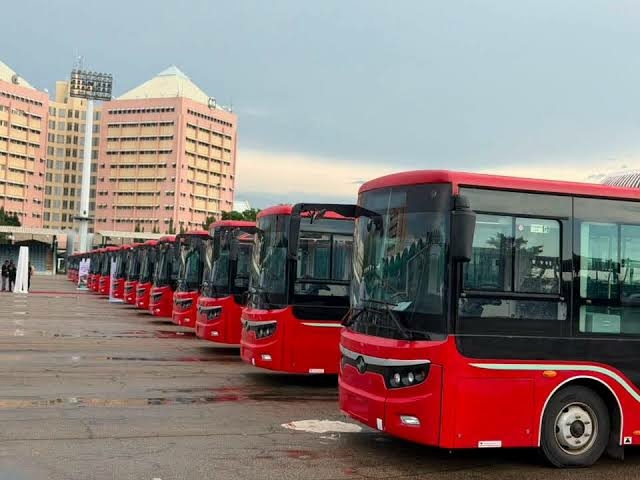
The federal government through the outgoing head of the Civil Service of the Federation (HCSF), Mrs Didi Esther Walson-Jack, has commissioned 100 Renewed Hope Mass Transit Electric Buses acquired for federal civil servants, describing the initiative as a practical demonstration of the government’s commitment to workers’ welfare and productivity.
Walson-Jack, who spoke yesterday at the ceremony at Eagle Square, Abuja, said the 37 buses presented at the event constituted the first batch of the 100 electric buses procured under the Renewed Hope Infrastructure Development Fund.
She described the event as particularly significant to her, saying it was her “parting gift” to federal civil servants as her tenure as head of the Civil Service of the Federation would end within 24 hours.
“It is with so much joy in my heart that I welcome you to this epoch-making commissioning of 100 Renewed Hope Mass Transit Electric Buses for federal civil servants.
“What we have here is 37 buses, being the first instalment of the 100 Electric Buses,” she said.
According to her, she could not have asked for a more fitting way to end her tenure than receiving and handing over an intervention that would continue to serve civil servants after her departure from office.
“I could not have asked for a more fitting note on which to close this chapter of service than receiving and handing over the keys to something that will keep moving, keep working, long after I have gone home,” she said.
The HoCSF said transportation was more than simply moving people from one location to another, stressing that the daily commute had significant implications for the finances, safety, punctuality and productivity of civil servants.
She said the initiative would ease the financial burden of transportation, reduce commuting risks and enable workers to arrive at their places of work in better physical and emotional condition.
“An intervention that makes transportation safer, more reliable, and more affordable is, therefore, not a peripheral welfare gesture; it is an investment in a more productive Civil Service,” she said.
Walson-Jack said the buses represented a visible assurance that the government understood the daily realities of its workforce and was prepared to respond to them.
She linked the initiative to other welfare measures of the President Bola Ahmed Tinubu administration, including the upward review of the national minimum wage, wage award following the removal of fuel subsidy, digitalisation and ease-of-service reforms, as well as renewed attention to pensions, promotions, employee compensation and health insurance.
She said the measures demonstrated that government reforms should be felt by workers and not merely announced.
“The Renewed Hope Agenda lives not only in policy documents, but in interventions that Civil Servants can see, board, and feel the benefit of every day,” she said.
The HCSF expressed appreciation to President Tinubu for his support for the welfare of civil servants and the transformation of the Federal Civil Service.
She said a strong and efficient Civil Service depended on a workforce that was properly supported, motivated and equipped to deliver quality services to Nigerians.
Walson-Jack also commended the Minister of State for Industry, Trade and Investment, Senator John Owan Enoh, for his support and for personally undertaking the symbolic handover of the buses.
She acknowledged the contributions of the Permanent Secretary, Ministry of Petroleum Resources, Mrs Patience Oyekunle; Permanent Secretary, Service Welfare Office, Dr Garba Abdul Sule; Permanent Secretary, Federal Ministry of Industry, Trade and Investment, Dr Chris Isokpunwu; and their respective teams.
She also commended the Chairman of the Nigeria Revenue Service, Dr Zacch Adedeji, for his support towards the realisation of the project, as well as the Director-General of the National Automotive Design and Development Council, Otunba Oluwemimo Joseph Osanipin, and his team.
Walson-Jack emphasised the need for a sustainable operational framework to guide the deployment of the buses, saying routes and schedules must be transparent, equitable and responsive to areas of greatest need.
She further called for effective arrangements for maintenance, qualified drivers, passenger safety, cleanliness and monitoring.
According to her, operations would commence with a pilot phase on selected routes, while full deployment would follow after the necessary logistics had been concluded.
She added that the buses would also be deployed, where appropriate, to Federal Secretariats across the states.
“A Special Purpose Vehicle has been established to ensure their proper management, maintenance and long-term sustainability,” she said.
The HCSF urged civil servants to regard the buses as valuable public assets and protect them from abuse.
“They are yours to use, but also yours to protect,” she said.
Walson-Jack also urged beneficiaries to reciprocate the government’s investment by improving their punctuality, productivity and dedication to duty.
She said reducing the financial, physical and emotional burden of commuting would enable civil servants to arrive at work with greater capacity to perform their responsibilities.
“That is the entire logic of what we launch today: productivity, dignity and safety, delivered on four wheels,” she said.
The HCSF, who is due to leave office on Thursday, urged those responsible for managing the buses to ensure that they remained functional, sustainable and beneficial to civil servants for many years.
“I may leave office tomorrow, but these buses and the reform journey of the Federal Civil Service must keep moving. There should be no breakdown on either route!” she said.
She expressed appreciation to President Tinubu, the Ministry of Industry, Trade and Investment, the National Automotive Design and Development Council, the Service Welfare Office and all those who contributed to the delivery of the initiative.
She thereafter formally commissioned the Renewed Hope Mass Transit Electric Buses for the Federal Civil Service, dedicating the intervention to the welfare of federal workers and improved service delivery to Nigerians.
Source: Leadership
0
2
Kaothaj_
24 days ago

Depot price hits N1,735/Litre in Port Harcourt l12 depots increase prices — Report
Dangote Refinery determines market pace —Experts
By Udeme Akpan, Ediri Ejor & Jackson-Kalio Tokoni
Despite drop in price of crude in the global oil market, operators in Nigeria’s downstream sector have increased the prices of Premium Motor Spirit, PMS, also known as petrol, by an average of N1,212 per litre from N1,158 per litre, an increase of 4.7 per cent which has triggered fresh worries in the polity.
The price of Brent used in benchmarking other crudes dropped to $88.42 per barrel from $88.60 per barrel yesterday.
Also, the price of crude from the Organization of Petroleum Exporting Countries, OPEC, called the OPEC Basket, including Nigeria’s Bonny Light dropped to $90.28 per barrel from more than $94. Per barrel.
Checks by Vanguard indicated that MRS, NNPC and Ardova increased retail prices to N1,205 from N1,125 per litre yesterday.
Also, Mobil increased its retail price to N1,215 per litre from N1,209 per litre, while BOVAS increased to N1,217 per litre from N1,210 per litre.
12 depots increase prices —Report
Meanwhile, 12 petroleum products depots recorded the highest petrol prices across Lagos, Port Harcourt, Calabar and Warri as of mid-day yesterday, with prices reaching as high as N1,735 per litre.
The latest mid-day price report showed that the highest petrol prices were concentrated in Port Harcourt, where several depots quoted between N1,668 and N1,735 per litre, significantly above prevailing prices in Lagos.
The Prudent Depot in Port Harcourt recorded the highest petrol price at N1,735 per litre, followed by Zamson at N1,730, while Rain Oil and NEPAS quoted N1,730 and N1,732 per litre, respectively.
Other high-priced depots included GulfTreasure at N1,680; Duport N1,668; IbaChem N1,668, Ibeto at N1,668; Integrated N1,670; Menj N1,670; TMDK N1,670; and T.Time N1,668.
The report also showed that petrol prices in Lagos were generally lower, although several major depots increased their prices during the period.
In Lagos, MRS posted the highest current petrol price at N1,207 per litre, rising by N15 from N1,192.
Pinnacle followed at N1,203 per litre, representing a N17 increase from N1,186, while NIPCO also quoted N1,203, up N13 from N1,190.
BONO and Pivot increased their prices to N1,203 per litre from N1,195, while African Terminal and Integrated moved from N1,195 to N1,202 per litre.
Dangote Refinery quoted PMS at N1,200 per litre, although no previous price was provided in the report for comparison.
The Port Harcourt market, however, recorded some price declines in Automotive Gas Oil (AGO), also known as diesel with Pivot reporting the largest drop, from N1,750 to N1,670 per litre.
The price disparity between the coastal markets highlights the continuing variation in depot prices across Nigeria, with logistics, location, supply availability and market conditions influencing the cost of products.
The latest figures also indicate that while petrol prices in Lagos remained largely within the N1,200–N1,207 per litre range, prices in Port Harcourt, particularly at some depots, were more than N500 per litre higher.
The development could have implications for the downstream market, particularly for marketers and retailers sourcing products from higher-priced depots, as depot costs remain a major determinant of pump prices.
Dangote Refinery determines pace of the market
—Experts
An Energy analyst who pleaded to be anonymous, said the global oil market had been very unstable but not necessarily high in recent times to justify high prices of petroleum products.
He said it could be directly linked to the huge capacity and dominance of the Dangote Petroleum Refinery in the domestic market.
The analyst said: “The 700,000 barrels per day capacity refinery is huge and currently controls about 80 per cent of domestic supplies. This explains why the market responds. The actions of the refinery would continue to influence other players in the market.”
However, the domestic market recorded some changes when Dangote Refinery raised petrol price by ₦15/litre amid crude oil decline.
The Refinery raised its gantry price of petrol, by ₦15 per litre, from ₦1,185 to ₦1,200, effective yesterday.
Similarly, an operator with the Major Energies Marketers Association of Nigeria, MEMAN, who pleaded anonymity, said petrol pump prices were expected to decline gradually as marketers continue to recover losses incurred during the period of price volatility.
“The price is expected to go down slowly because marketers are trying to recover their losses. Marketers have recorded very significant losses over the last 18 months due to the price fluctuations,” he said.
According to the operator, losses occur across the supply chain whenever petrol prices decline, prompting marketers to adjust pump prices gradually to recover part of their losses.
“Losses occur throughout the supply chain every time prices fall. Marketers therefore reduce prices as gradually as possible in order to recover as much as they can,” he explained.
He added that when prices increase, marketers immediately reflect the new cost in their Enterprise Resource Planning, ERP, systems, which adjusts the value of their existing stock before sales commence.
However, the process is reversed when prices fall.
“This is standard practice in every trading business. What Dangote Refinery can do is try as much as possible to keep costs low, but it is not going to absorb your losses, neither will Dangote subsidise them,” he said.
Also, Former Managing Director and Chief Executive Officer of 11 Plc, Adetunji Oyebanji, urged governments to cushion the impact of rising petrol prices through targeted interventions in transportation, healthcare and education, rather than returning to fuel subsidy.
He said government could subsidise public transport systems, such as the Bus Rapid Transit, BRT, to reduce fares and ease pressure on households.
“Rather than looking for solutions such as subsidising fuel, they should do things like subsidising transportation like the BRT and reduce the cost, and also government hospitals or schools and other things that can make life easier for people,” he said.
While warning that returning to petrol subsidy would place a huge burden on government finances, he said: “You can imagine what would have been the case if we were still paying ₦300 per litre for fuel and the product is now ₦1,200. Government would have been absorbing that.’’
He also called for greater accountability from federal and state governments as increased revenues translate into higher allocations.
“More money is coming to their hands and they should channel it to make life easier for the poor people and common man. This money they are distributing to the governors should be felt by every Nigerian,” he said.
He also advocated wider direct cash transfers and lower government charges for public services to reduce the cost burden on citizens.
Oyebanji noted that the recent rise in crude oil prices, amid uncertainty around the Gulf, was affecting fuel prices globally, not just in Nigeria.
Dangote Petroleum Refinery expresses concern over fuel importation
Meanwhile, the management of Dangote Petroleum Refinery and Petrochemicals, DPRP, has expressed concern over the continued issuance of petroleum product import licences, despite the refinery’s proven capacity to meet and exceed Nigeria’s domestic Premium Motor Spirit (PMS) requirements.
The refinery noted that while it remained fully committed to supporting Nigeria’s energy security and ensuring uninterrupted fuel availability across the country, the volume of imported PMS entering the market has created uncertainty in domestic demand planning and inventory management.
According to market data available to the refinery, imported PMS accounted for approximately 43 per cent of the fuel supplied into the Nigerian market in July, a development that raises questions about the necessity of continued large-scale imports when substantial local refining capacity exists.
Since commencing operations, Dangote Refinery has consistently maintained sufficient inventory levels and reserved product volumes to guarantee steady supply to the Nigerian market.
‘’This commitment has required significant investment in storage, logistics, and working capital, all aimed at protecting Nigerians from supply disruptions and market volatility.
‘’However, the refinery stated that the absence of transparency regarding the actual volume of imported products expected into the country makes effective production and inventory planning increasingly challenging.
‘’Maintaining large stock positions without clear visibility into import volumes imposes substantial carrying costs on the refinery and ultimately undermines efficient market operations.
“As a responsible energy provider, we have always endeavoured to keep adequate reserves to satisfy local demand at all times. However, in an environment where significant volumes of imported PMS continue to enter the market through licences issued by the regulator, and where there is limited visibility on future import volumes, it becomes commercially unsustainable to continue holding excess inventory indefinitely,’’ the Refinery said in a statement issued last night.
It explained that, under these circumstances, any surplus products not immediately absorbed by the domestic market must be exported to regional and international markets. ‘’Consequently, DPRP’s export volumes have increased in recent months, not because local demand cannot be met, but because excess inventory generated by market uncertainty must be evacuated to avoid unnecessary storage and financing costs,’’ it stated further.
Dangote Refinery emphasised that its growing exports should not be interpreted as a lack of commitment to the Nigerian market but noted that exports were a prudent operational response to the realities of a market where imported products continue to compete with locally refined fuel despite the availability of sufficient domestic refining capacity.
The company reiterated that it remained ready, willing and able to meet and surpass Nigeria’s petroleum product requirements and invest heavily in ensuring reliable supply across the country.
Source: Vanguard
0
5