

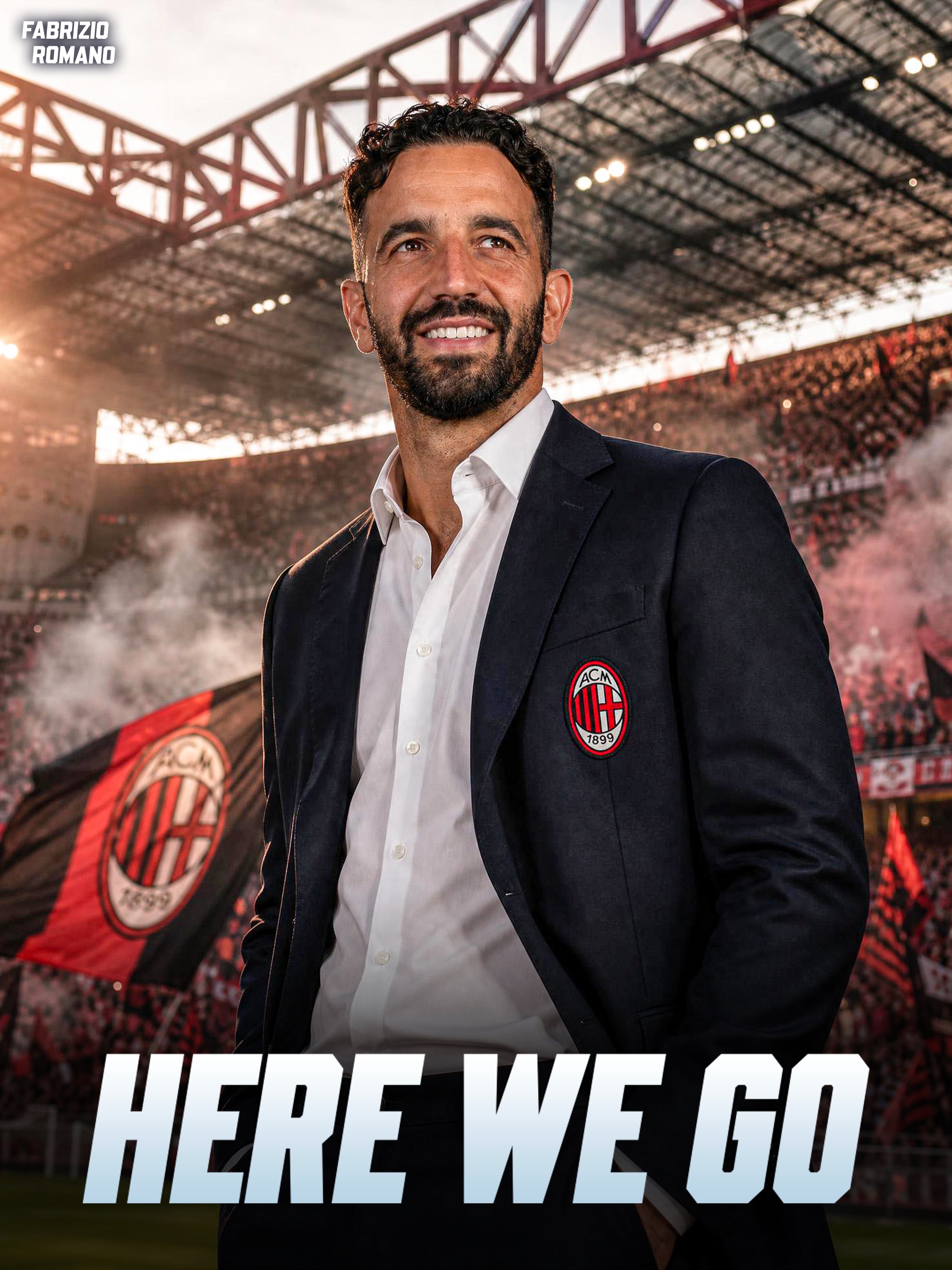
Reports linking Rúben Amorim with AC Milan have sparked debate across the football world.
The Portuguese coach remains one of Europe's most highly regarded young managers, but any move to the San Siro would inevitably be viewed through the lens of his challenging spell at Manchester United.
Amorim arrived at Old Trafford with a reputation for innovative tactics, strong player development, and an attractive style of football. However, translating that success to one of the world's biggest clubs proved difficult. Expectations were immediate, scrutiny was relentless, and results often failed to match the optimism that surrounded his appointment.
One of the biggest challenges Amorim faced at Manchester United was implementing his preferred tactical system. His football philosophy is built around a structured back-three formation, aggressive pressing, and clearly defined positional roles. While the approach brought success elsewhere, many analysts argued that United's squad was not ideally suited to the demands of the system, making the transition far more complicated than anticipated.
The pressure of managing Manchester United also cannot be underestimated. Every result, tactical decision, and player selection became a major talking point. In such an environment, managers are rarely afforded the luxury of time, and the pressure to deliver immediate success often conflicts with the need to build a long-term project.
Despite those difficulties, Amorim's reputation remains largely intact. His achievements before arriving in England demonstrated his ability to build competitive teams, improve young players, and establish a clear football identity. Those qualities are likely among the reasons why clubs such as AC Milan would view him as an attractive candidate.
For Milan, the appeal is obvious. The club has invested heavily in developing a younger, more balanced squad, which could be better suited to Amorim's methods. The Rossoneri are also seeking to re-establish themselves among Europe's elite, and a coach with a modern tactical vision could help accelerate that process.
If Amorim does make the move to Milan, his success will depend on whether he can apply the lessons learned from Manchester United while adapting to the unique demands of Italian football. The challenges will be significant, but so too is the opportunity.
Football history is full of managers who struggled at one club before thriving at another. For Rúben Amorim, AC Milan could represent the perfect chance to prove that his difficult experience at Manchester United was merely a setback rather than a defining chapter of his career.
0
9