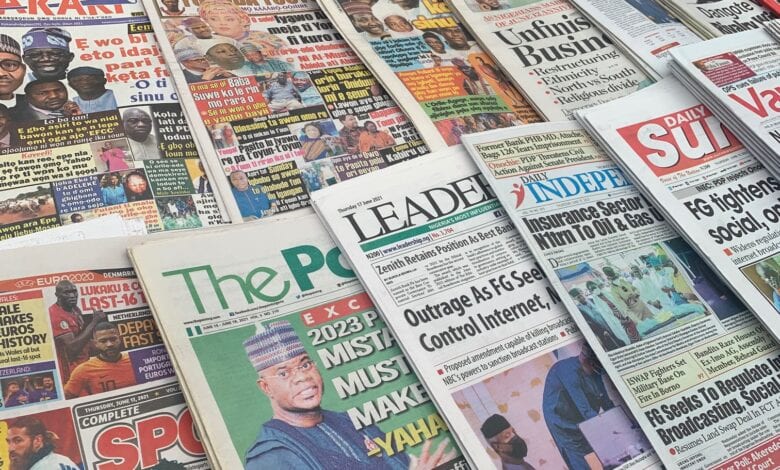
Breaking news and other interesting news from Nigerian media or social media outlets
10 members • 15 followers
Sommytex
a year ago
The United States government has expressed concerns over reports of threats, harassment, surveillance, and coercion by Nigerian authorities against activists and journalists, with specific reference to activist and journalist Omoyele Sowore.
The concerns were highlighted in the Country Reports on Human Rights Practices for 2024, released by the Department of State’s Bureau of Democracy, Human Rights and Labour.
According to the report, in August 2024, the Nigerian Immigration Service announced that citizens in the diaspora suspected of supporting nationwide protests had been placed on a watchlist and would face detention if they attempted to return to the country.
The service also disclosed that it had frozen the bank accounts of some foreign residents suspected of involvement.
Omoyele Sowore, a prominent activist and publisher, was cited in the report as a target of these measures. Sowore revealed that he was warned of possible arrest if he re-entered Nigeria.
Despite the warnings, he returned in September 2024. Upon arrival at the airport, he was questioned by security officials before eventually being allowed into the country.
His case, the report noted, underscores the risks faced by outspoken activists and journalists in Nigeria, who continue to operate under an atmosphere of intimidation.
The U.S. government emphasised that measures like placing individuals on watchlists, freezing assets, and threatening arrests undermine democratic principles and erode public trust in governance.
The report further noted that these actions raise serious concerns about freedom of expression, association, and the safety of journalists and human rights defenders in Nigeria.
The report said, "In August, the Nigerian Immigration Service stated it put citizens in the diaspora suspected of supporting the nationwide protests on a watchlist and stated they would be detained upon arrival if they attempted to return to the country. The service also stated it had frozen the bank accounts of suspect foreign residents.
"Activist and journalist Omoyele Sowore also reported being warned he would be arrested upon arrival if he returned to the country; he was questioned at the airport when he returned in September and granted entry.”
Freedom of the Press
The United States government also expressed concern over press freedom and freedom of expression in Nigeria, noting that while the constitution and law guarantee these rights, they are often restricted in practice.
According to the report, individuals critical of the government have at times faced threats, intimidation, arrest, detention, and even violence. Authorities were also accused of misusing broad “cyberbullying” charges to arrest internet users who posted derogatory comments about public figures.
The US highlighted that following the August #EndBadGovernance protests, security forces raided civil society organisations, including the governance and human rights group Socio-Economic Rights and Accountability Project (SERAP) and the National Labor Congress (NLC).
However, observers described these actions as attempts to silence dissent and intimidate civic groups.
The report also noted that blasphemy remained criminalised across the country under state criminal and penal codes, with penalties ranging from two to five years’ imprisonment or fines.
It noted that although the constitution and law provided for freedom of expression, including for members of the press and other media, in some cases the government restricted these rights.
"There were reported cases in which the government restricted the ability of individuals to criticise the government. Critics of the government reported at times being subjected to threats, intimidation, arrest, detention, and violence,” the report said.
“The government used broad ‘cyberbullying’ charges to arrest internet users who posted derogatory statements concerning public figures.”
"Following the August #EndBadGovernance protests, security services raided civil society organisations, such as the governance and human rights focused NGO Socio-Economic Rights and Accountability Project and the National Labor Congress (NLC), which observers regarded as an attempt to intimidate these organisations,” the report said.
'Blasphemy, or intentionally insulting religion to cause offence, was criminalised throughout the country through state criminal and penal codes. Penalties included imprisonment for two to five years or fines," it added.
0
4