
Breaking news and other interesting news from Nigerian media or social media outlets
10 members • 15 followers

Kaothaj_
2 months ago
By Deborah Bodunde
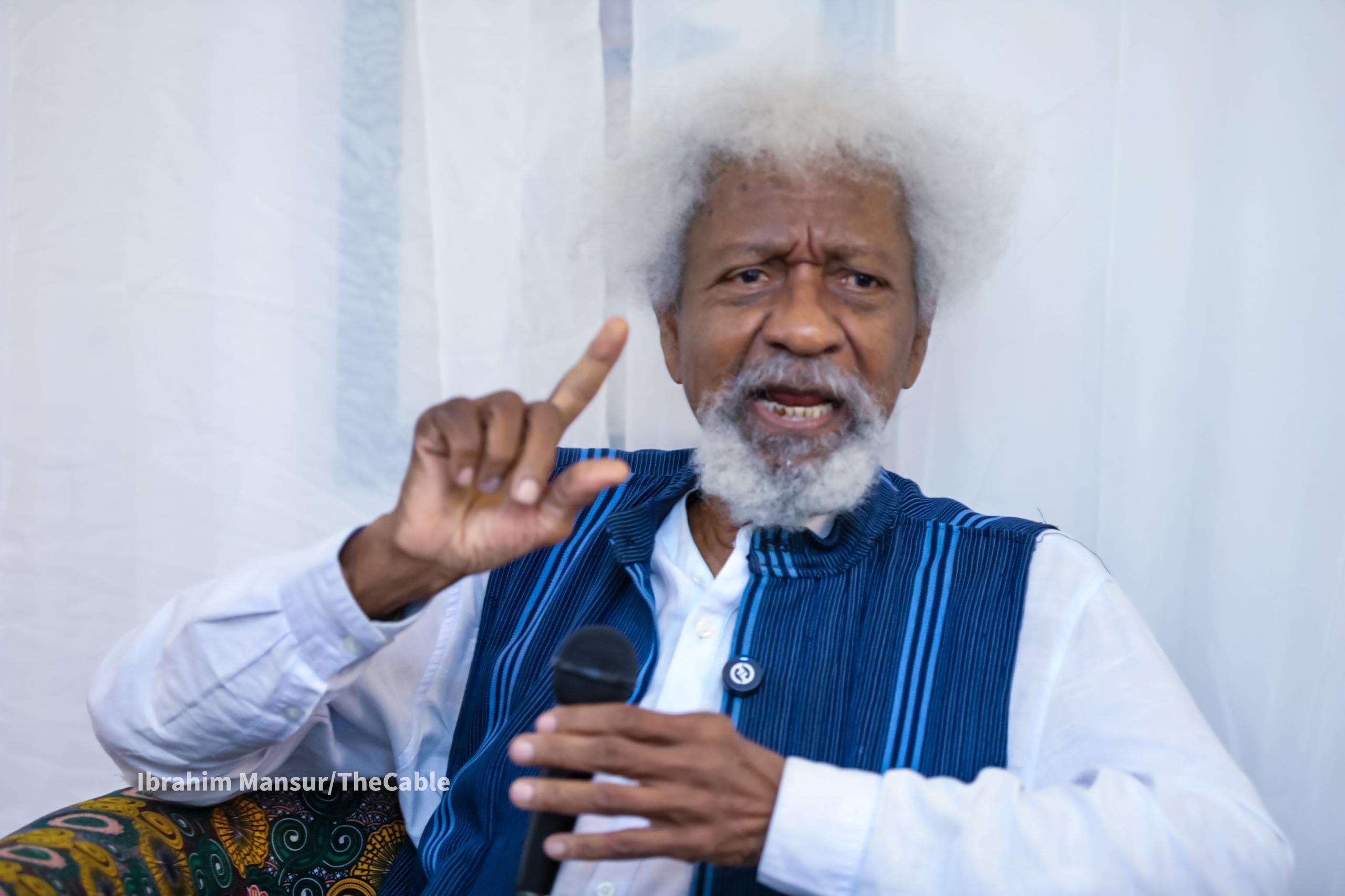
Wole Soyinka, Nobel laureate, has asked President Bola Tinubu to revisit the case files of unresolved assassinations and extrajudicial killings in the country.
Soyinka spoke on Friday at the 28th Wole Soyinka Lecture Series organised by the National Association of Seadogs (Pirates Confraternity) in Port Harcourt, Rivers state.
The event, themed “Reclaiming the Nigerian State through Accountability, Justice and Civic Courage”, also featured the NANS Martyrs Day.
The lecture was chaired by Timi Alaibe, former managing director of the Niger Delta Development Commission (NDDC).
Soyinka said the government must identify and prosecute perpetrators of criminal acts, irrespective of where such crimes occurred or the identity of those involved.
He cited the killing of Deborah Samuel, a student of the Shehu Shagari College of Education in Sokoto, who was killed by a mob over an allegation of blasphemy.
The playwright also referenced the killing of Mene Ogidi, a 28-year-old man who was shot by a police officer in Delta state.
Soyinka criticised what he described as selective justice, arguing that the different responses to both cases raised questions about the consistency of Nigeria’s justice system.
He said while the police officer involved in Ogidi’s killing was swiftly arrested, the perpetrators of Deborah’s killing had yet to face justice.
The Nobel laureate said he was disturbed by a video showing one of Deborah’s alleged killers displaying a matchstick said to have been used in setting her ablaze.
He said the failure to hold those responsible accountable represented a broader failure by the justice system and society.
“It’s dedicated to individuals, the youths, like Deborah, who was killed, who was butchered by her own classmate, hunted through the city, necklaced and set on fire,” Soyinka said.
“But that is not the crime. That really is not the crime. The crime is the silence of the rest of us, that such a thing is possible, and that the killers of that girl can actually go on television, hold up a match, and say this is the match with which I set her on fire. And there, the system of justice fails us completely.”
Soyinka said citizens must not remain silent in the face of injustice, warning that public indifference contributes to the erosion of human dignity.
He said the lecture was dedicated to Nigerians who had lost their lives as a result of institutional failures, unlawful killings and acts of violence.
The playwright referenced the Apo six, the 18 persons killed in Ughelli, Delta state, and other victims of extrajudicial killings.
He urged Nigerians to monitor the prosecution of the police officer arrested over Ogidi’s death and ensure that the judicial process was not compromised.
“Watch with me so that we can force the government to bring up all the files,” Soyinka said.
“When there was a government retreat, you remember? The incoming president said, ‘I want all the files of all the unsolved assassinations, killings, extrajudicial killings.’ What has happened to those files?
“I want you to join me in asking President Tinubu to say, ‘We want you to dig up those files. We want to know what happened, why it happened, who is of value as a human being, and who is there for casual disposition.’”
Soyinka said the government must end what he described as the “casual butchery” of citizens and ensure that the law was applied without discrimination.
He added that the lecture was a call for citizens to demand accountability and defend the value of human life.
‘JUSTICE REQUIRES EQUAL APPLICATION TO ALL CITIZENS’
In his keynote address, Osita Chidoka, former minister of aviation, said justice for many Nigerians begins before a case reaches the courtroom.
Chidoka said justice is influenced by how police officers determine whether complaints are believed or ignored.
He said about 64 percent of inmates in correctional facilities were awaiting trial, adding that more than 50,000 Nigerians remained in detention without being convicted of any crime.
“Each of these 50,000 is a life in suspension, a job lost, a family destabilised, someone’s health failing,” Chidoka said.
“When the state causes that delay, and the citizens pay for it in lost liberty, the delay is not inefficiency. It is a form of violence carried out by the state itself.”
The former minister said justice requires the equal application of laws regardless of a citizen’s identity, political affiliation or social status.
He added that prosecutions must be guided by evidence and that persons in detention should have access to legal representation.
“A citizen who defeats the government in court must not face a second battle to compel obedience. Justice is also tested by how society treats those it dislikes,” Chidoka said.
“The law is not established when it protects only our friends. Justice must defend the accused, the unpopular, the political opponent, and the minority, because citizenship does not depend on agreement. Where justice is negotiable, citizenship becomes hierarchical.”
Source: TheCable
0
0