Breaking news and other interesting news from Nigerian media or social media outlets
10 members • 15 followers

abdulsalam
a year ago
reacting to the rising World Bank commitments to Nigeria, said loans from multilateral institutions such as the World Bank are largely concessionary, with interest rates typically below market levels and longer repayment tenors.
He noted that the critical question is not whether Nigeria should be borrowing, but whether the loans are structured and deployed effectively. “If it’s concessionary and tied to viable projects with medium-term revenue prospects, I don’t think it’s a bad idea,” Abimbola explained. “Borrowing isn’t bad; what matters is utilisation.”
He stressed that the economic impact of such loans depends on how well they are channelled into projects that can generate sustainable growth, strengthen revenue, and improve public services over time.
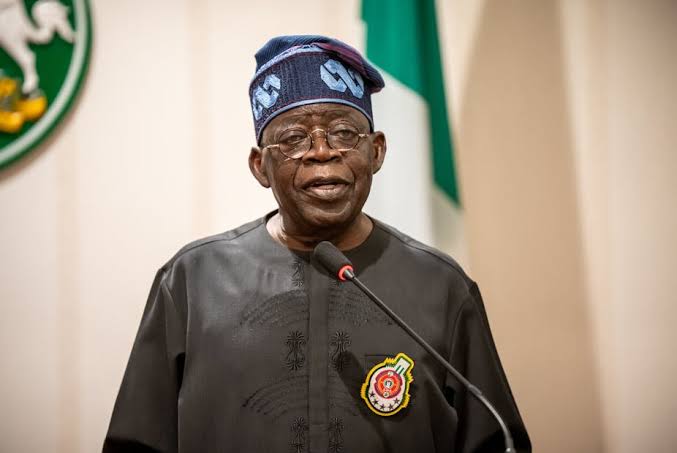
Development economist and CEO of CSA Advisory, Dr Aliyu Ilias, has expressed strong reservations over Nigeria’s rising debt profile in light of fresh World Bank commitments. He recalled that when former President Muhammadu Buhari left office for President Bola Tinubu, the nation’s debt stock stood at about N87tn, but has since risen to around N149tn, with fears it could approach N180tn.
While acknowledging that borrowing is not inherently bad for an economy, he questioned the rationale for taking on more debt at a time when the government claims to have higher revenues.
Ilias pointed out that following the removal of fuel subsidy, Tinubu had announced increased revenue inflows. He added that both the Federal Inland Revenue Service and the Nigeria Customs Service had declared revenue surpluses, further suggesting the government should be able to fund projects without resorting to heavy borrowing.
According to him, the impact of the current borrowing spree is being felt in reduced public service delivery, particularly in capital expenditure, as debt servicing now consumes a significant portion of available revenue. He warned that this crowding-out effect limits job creation, fuels inflation, and worsens Nigeria’s foreign exchange imbalance, with the naira trading at historically weak levels.
He argued that given the claimed revenue surpluses, the Tinubu administration should not have needed to borrow within its first two years in office, let alone at the scale currently being witnessed.
Economist and CEO of the Centre for the Promotion of Private Enterprise, Dr Muda Yusuf, said the rising World Bank commitments to Nigeria should be examined within the context of the country’s Medium-Term Expenditure Framework and annual budgets, which already provide for both domestic and foreign borrowing.
He noted that deficit financing is a common feature of budgets worldwide and is not inherently wrong, as it allows governments to make critical investments without waiting to generate all the required revenue upfront. However, he stressed that borrowing should always be backed by sound economic reasoning and clear development priorities.
Yusuf emphasised that the key issue is debt sustainability, which depends primarily on the country’s revenue capacity to service its obligations. Without a strong cash flow to meet repayment schedules, he warned, Nigeria risks falling into a vicious cycle of borrowing to service existing loans, which would perpetuate fiscal vulnerability. He said it is essential that projects funded by loans directly support the economy’s capacity to repay.
According to him, Nigeria should be cautious with foreign loans due to the exchange rate risks they pose, noting that domestic debt is generally easier to manage. Excessive foreign borrowing, he warned, could put pressure on the country’s reserves and further weaken the exchange rate. He stressed that a disciplined approach to debt sustainability will be crucial for Nigeria to avoid long-term fiscal distress.
Meanwhile, data from the Debt Management Office showed that Nigeria’s total debt to the World Bank rose to $18.23bn as of March 31, 2025. This marks a $420m increase in just three months since December 2024, when Nigeria’s total exposure to the World Bank stood at $17.81bn.
The DMO data showed that borrowings from the International Development Association, the concessional financing arm of the World Bank, rose from $16.56bn in December 2024 to $16.99bn in March 2025.
At the same time, loans from the International Bank for Reconstruction and Development — the non-concessional lending window of the World Bank — remained unchanged at $1.24bn. In total, the World Bank Group now accounts for $18.23bn, or about 39.7 per cent of Nigeria’s total external debt stock, which stood at $45.98bn as of March 2025.
This reflects a marginal increase in the World Bank’s share of the debt portfolio, up from 38.9 per cent recorded in December 2024 and 36.4 per cent at the end of 2023. Further analysis indicates that the World Bank now constitutes 81.2 per cent of Nigeria’s total multilateral debt, which reached $22.43bn in Q1 2025.
This represents a rise from the 79.8 per cent share recorded at the end of 2024 and underlines the central role the institution continues to play in Nigeria’s financing framework.
0
1