
Breaking news and other interesting news from Nigerian media or social media outlets
10 members • 15 followers

Kaothaj_
2 months ago
By Jerrywright Ukwu
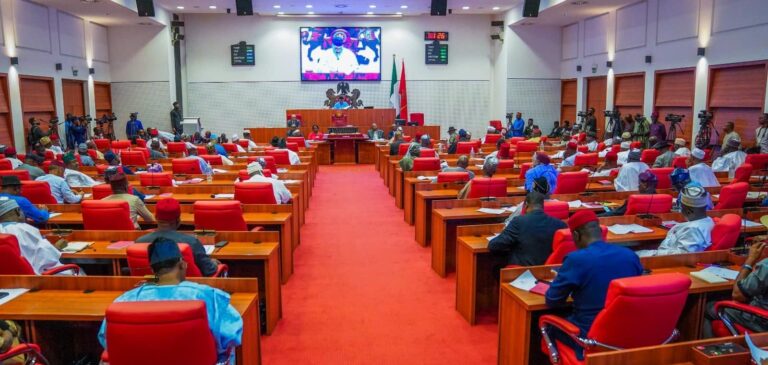
The senate has clarified that the ongoing amendment to the Federal Road Safety Commission (FRSC) (Establishment) Act, 2007, does not seek to ban street preaching.
In a statement issued on Monday, the media office of Opeyemi Bamidele, the senate leader, said the restriction on preaching and hawking in commercial vehicles had been part of the law since 2007.
According to the statement, the public concerns over the purported proscription of preaching and hawking in commercial vehicles stemmed from a misunderstanding of the amendment bill.
The senate leader’s media office said section 10(4) of the FRSC (Establishment) Act, 2007, and Regulation 220 of the National Road Traffic Regulations (NRTR) 2012 already classify preaching and hawking in commercial vehicles as offences.
It added that the provision, which was originally listed as Item 36 in the second schedule to the Act, has merely been renumbered as Item 49 under the proposed amendment.
The media office said the bill was intended to enhance the safety of commuters and other road users, not to restrict religious activities in public spaces.
“The Bill, therefore, does not outlaw preaching on the streets as some interests have claimed in different fora. It is about the safety of commuters and other road users and not intended to undermine any religious activity in the public space,” the statement reads.
It also dismissed claims that Bamidele sponsored the amendment bill, noting that the legislation originated in the house of representatives and was transmitted to the senate for concurrence in line with the provisions of the 1999 Constitution.
“The Bill is not an initiative of Leader of the Senate, Senator Opeyemi Bamidele, CON. Rather, it is a concurrence bill first amended by the House of Representatives,” the media office stated.
“As required by the 1999 Constitution, the Bill requires the concurrence of the Senate before it can become effective.”
It added that the amendment process was still ongoing and urged stakeholders to channel their concerns through the appropriate legislative institutions before its conclusion.
Source: TheCable
0
1