Breaking news and other interesting news from Nigerian media or social media outlets
10 members • 15 followers

Kaothaj_
2 months ago
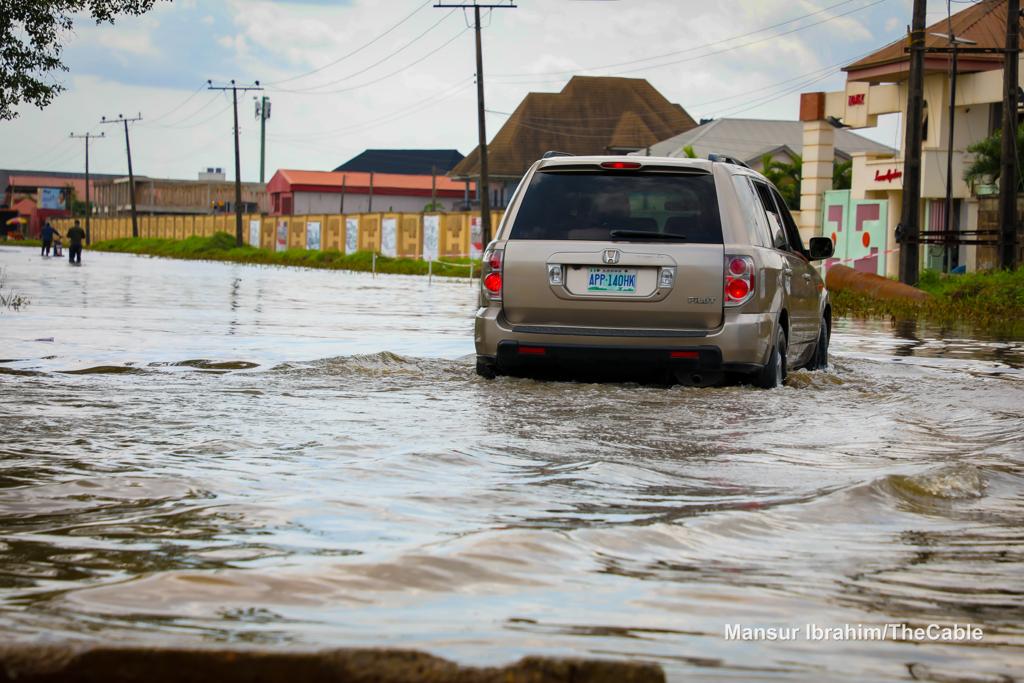
Flooding in Lagos
Floodwaters have swept through several West African countries almost simultaneously in recent weeks, killing dozens of people and displacing thousands.
In Ghana, at least 13 people died after days of heavy rainfall triggered severe flooding in Accra, the country’s capital, submerging homes, roads and vehicles while leaving hundreds stranded.
Côte d’Ivoire has also recorded at least 59 flood-related deaths this year, while parts of Togo and the Benin Republic have experienced widespread flooding following persistent rainfall.
Nigeria has not been spared as several parts of the country, including Lagos, Abia, Akwa Ibom, Delta and Cross River states, have been inundated by floodwaters.
The near-simultaneous flooding has raised a question as to why so many West African countries are getting flooded at the same time.
WHY COASTAL WEST-AFRICAN COUNTRIES ARE GETTING FLOODED

Babajide Shari, a lecturer in the Department of Meteorology and Climate Change at Nigeria Maritime University, Delta state, said the widespread rainfall across West Africa is largely being driven by the seasonal northward movement of the Intertropical Convergence Zone (ITCZ) — a belt where moisture-laden air from the Atlantic Ocean converges with hot, dry continental air.
He explained that the movement of the ITCZ is closely linked to the West African monsoon, a natural weather system that develops when the African landmass heats up faster than the Atlantic Ocean during the rainy season.
“When the land gets heated up compared to the ocean, the breeze coming from the ocean tries to fill the dry air over the land, creating what is called the Intertropical Convergence Zone,” Shari told TheCable.
According to him, the ITCZ migrates northwards between June and September, synchronising the rainy season across much of West Africa and triggering widespread thunderstorms in countries including Nigeria, Ghana, Sierra Leone, Liberia and Côte d’Ivoire.
Shari said the West African monsoon is a natural atmospheric phenomenon rather than a human-induced event, but it is capable of producing prolonged and intense rainfall lasting several days.
“When you see rainfall falling for many days, it’s as a result of this kind of monsoon,” he said, adding that the system can also bring hailstorms in some areas, saturate soils and increase surface runoff, thereby raising the risk of flooding.
But climate experts say the atmosphere explains only why rain falls, not why cities flood.
Across West Africa, decades of rapid urbanisation have transformed wetlands and floodplains into housing estates, roads and commercial developments.
Concrete surfaces now cover areas that once absorbed rainwater, while blocked drainage channels, refuse dumped in canals and construction on natural waterways have significantly reduced cities’ ability to cope with heavy rainfall.
As a result, even moderate rainfall can now trigger devastating floods in many urban centres.
Advertiseme
Shari said rapid urbanisation has significantly increased flood risks as natural vegetation that once absorbed rainwater continues to give way to roads, buildings and paved surfaces.
“No single flood can be attributed to climate change alone,” he said.
“Climate change increases the likelihood of more intense rainfall because a warmer atmosphere can hold more moisture, but flooding is usually the result of multiple interacting factors.”
LAGOS FLOODS DESPITE RECEIVING LOW RAINFALL
Lagos offers perhaps the clearest example that flooding is no longer determined solely by how much rain falls.
The Nigerian Meteorological Agency (NiMet) predicted an above-normal, longer-than-normal rainy season for Lagos in 2026, with an average total rainfall amount estimated to range 1,650mm and 3,030mm.

A historical weather analysis carried out by TheCable using the Open-Meteo Weather API shows that Lagos has recorded 586.4 millimetres of rainfall between January 1 and July 3, 2026.
The figure is 12.8 percent lower than the 2010–2025 average of 672.2 mm recorded over the same period and 8.1 percent below rainfall received during the corresponding months in 2025.
The data also shows rainfall has been less concentrated than usual.
Average rainfall per rainy day stood at 3.96 mm this year (January to July 3), compared with the long-term average of 4.55 mm (2010 to 2025), while historical records indicate annual rainfall has been declining gradually over the past 15 years.

The findings indicate that although total rainfall has decreased, rainfall is occurring in more intense bursts. As a result, flooding has become more severe, compounded by factors such as infrastructure projects, unchecked urban development, and blocked drainage channels.
Over the years, wetlands that naturally stored excess rainwater have been reclaimed for residential and commercial developments, reducing the city’s natural capacity to absorb runoff.
Rapid urbanisation has replaced permeable soil with asphalt and concrete, causing rainwater to flow almost immediately into drainage channels that are already overstretched.
Although climate change is expected to increase the frequency of extreme rainfall events, flood disasters will become even more severe in rapidly growing coastal cities where infrastructure has failed to keep pace with urban expansion.
Shari noted that although the cumulative rainfall this year may so far be lower than in previous years, much of it has occurred over shorter periods and at much higher intensity.
The meteorologist noted that many people mistakenly assume seasonal rainfall totals determine flooding, whereas the intensity, duration and location of rainfall are often far more important.
“The severity of flooding depends on how the rain falls, where it falls and over what period of time, as well as environmental and infrastructure issues,” he said.
“A month’s worth of rainfall can fall within just one hour. When rainfall intensity exceeds the capacity of the soil, rivers or drainage systems to absorb and convey water, flooding becomes inevitable.”
The meteorologist said rapid urbanisation has significantly increased flood risks as natural vegetation that once absorbed rainwater continues to give way to roads, buildings and paved surfaces.
He added that blocked or undersized drainage systems, rivers filled with sediment and widespread construction on natural floodplains have further reduced the country’s capacity to manage stormwater.
“Even moderate rainfall can now trigger significant flooding because our exposure and vulnerability have increased,” he said.
“Don’t blame the coastal highway alone.”
The recent flooding has also renewed public debate over whether the Lagos-Calabar Coastal Highway contributed to flooding in parts of Lagos.
Babajide Sanwo-Olu, governor of Lagos, and David Umahi, minister of works, had earlier dismissed the claims, noting that the affected communities were already swampy before road construction began.
However, Babajide Alo, emeritus professor of chemistry and former deputy vice-chancellor (academics and research) at the University of Lagos (UNILAG), told TheCable that the Lagos-Calabar Coastal Highway project underwent a properly conducted environmental impact assessment (EIA), contrary to suggestions that none was carried out.
“I read the environmental impact assessment myself when it was displayed for public review. It contains mitigation measures and monitoring plans supervised by the Federal Ministry of Environment,” he said.
According to him, some of the flooding challenges being experienced may be because construction is still ongoing and not all the mitigation measures contained in the EIA have been fully implemented.
“This is the first rainy season since the road was constructed. I will not support the idea that the Lagos-Calabar coastal highway is causing the flooding,” he said.
“If the mitigation measures recommended in the EIA are fully implemented, these problems will disappear. But if they are not implemented, then the problem will persist.”
The situation is worsened by drains clogged with refuse and sediment, while high water levels in the Lagos Lagoon and the Atlantic Ocean often prevent stormwater from emptying efficiently during heavy rainfall.
The professor noted that poor waste management has also exacerbated flooding in Lagos, even when rainfall is not exceptionally heavy.
According to him, floodwater often remains on roads and in communities because canals, drains and rivulets that should channel stormwater into the lagoon are blocked with refuse.
Alo also urged residents to stop dumping refuse into drainage channels, noting that the practice contributes significantly to flooding in residential areas.
“Even though the amount of rainfall may not be unusually high, the little that falls is unable to drain because the canals, drains and rivulets that should carry the water into the lagoon are blocked by waste,” he said.
“People need to understand that the canals in front of their houses are not dump sites. The more they throw waste into gutters, the more their homes will be flooded.”
THE NEED TO BUILD RESILIENT HOUSES
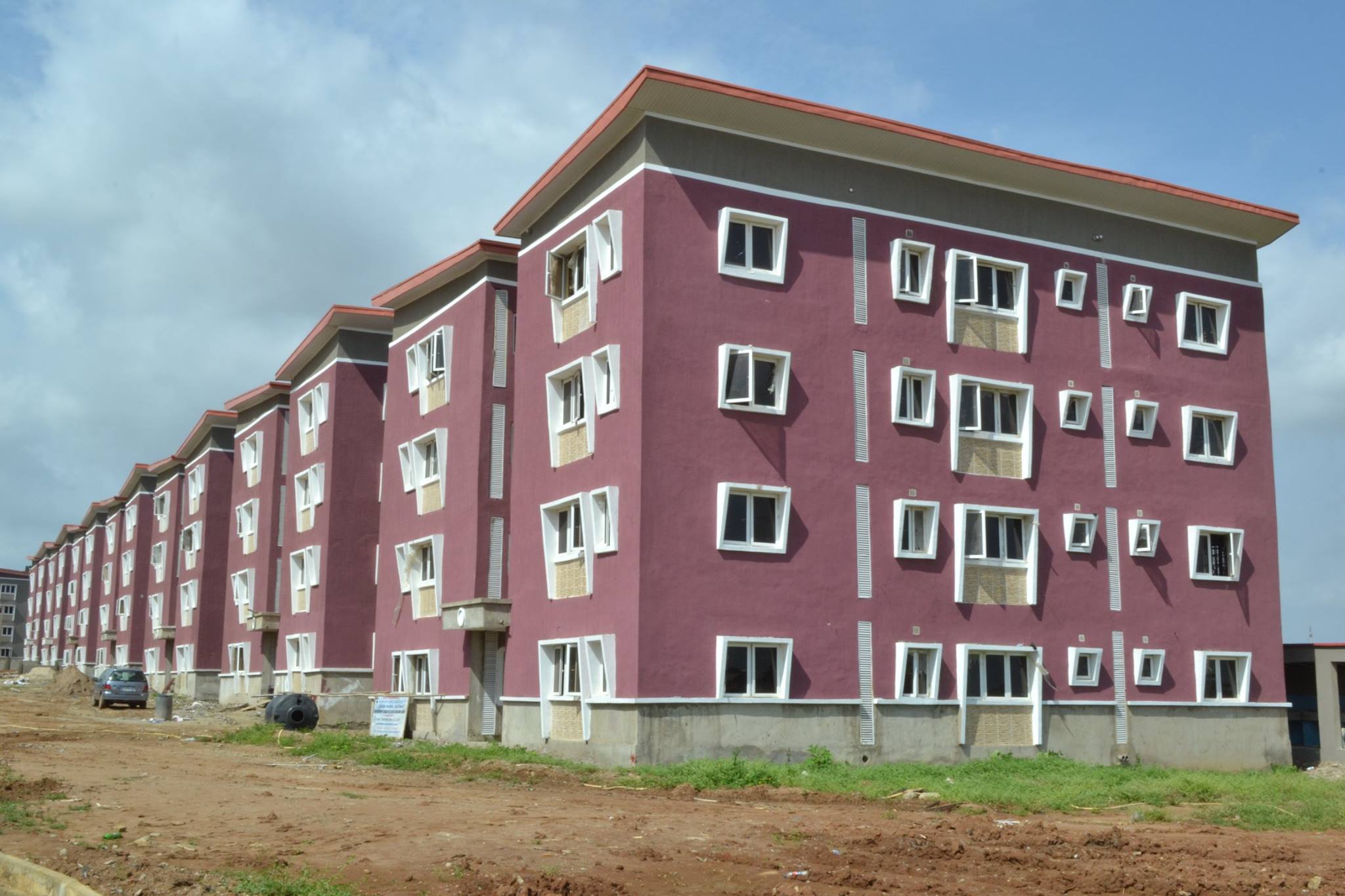 A Lagos housing project
As climate change intensifies across Africa, the need to build resilient houses has become increasingly urgent.
In rapidly growing coastal cities such as Lagos, Accra and Abidjan, the combination of disappearing wetlands, blocked drainage channels, unchecked urban expansion and ageing infrastructure has left millions more vulnerable to floods.
As world leaders prepare for the 31st Conference of the Parties (COP31), scheduled for November in Turkey, building climate-resilient cities and housing has emerged as a key priority, reflecting the growing need for urban infrastructure that can withstand the impacts of climate change.
Babatunde Ahonsi, the United Nations resident coordinator in Turkey, said at a regional forum that urban resilience is “one of the most cost-effective climate investments globally”.
The changing climate is affecting countries across both the global north and south in different ways, but with increasing severity. This has heightened the need for climate-resilient housing designed to withstand floods, heatwaves, storms and other extreme weather events.
Shari noted that African countries must rethink housing designs and urban planning to reflect the realities of a changing climate.
He said buildings should be designed using available meteorological forecasts and climate projections so they can withstand the more frequent floods, extreme rainfall and heat associated with climate change.
“We can no longer build for yesterday’s climate. We must build for the climate of today and the future,” he said.
With more rainfall forecast across Nigeria and much of Africa, governments must prioritise better urban planning, restore and protect natural drainage systems, and build infrastructure that can withstand a changing climate. Otherwise, even average rainfall could continue to cause devastating floods across the region.
Source: TheCable
0
0