Breaking news and other interesting news from Nigerian media or social media outlets
10 members • 15 followers

Kaothaj_
2 months ago
By Busola Aro
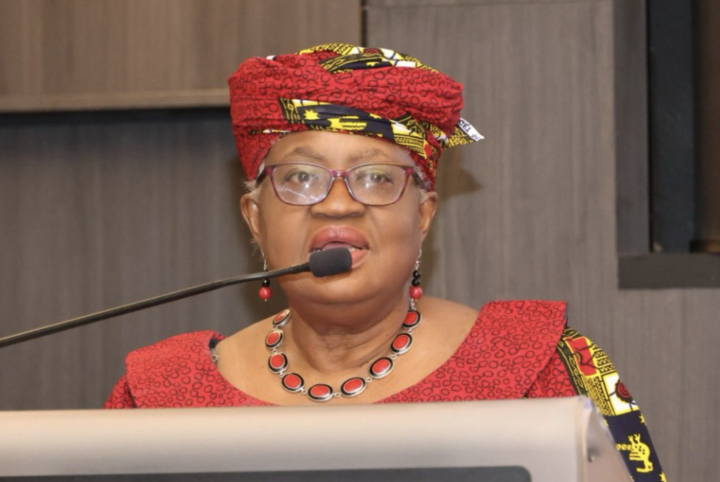
Ngozi Okonjo-Iweala
Ngozi Okonjo-Iweala, director-general (DG) of the World Trade Organisation (WTO), says geopolitical tensions and the reconfiguration of global supply chains present a rare opportunity for Nigeria and Africa to industrialise, attract investment and move up global value chains, but only if governments implement the reforms needed to make the continent competitive.
Okonjo-Iweala spoke on Wednesday during a fireside chat with Olayemi Cardoso, governor of the Central Bank of Nigeria (CBN), at the seventh Africa Emerging Markets Forum in Abuja.
She said while the world is experiencing an era of trade fragmentation and geopolitical uncertainty, countries should focus on the opportunities emerging from the crisis rather than becoming discouraged by it.
“We are in a very difficult era multilaterally, but the way I look at the world is to always look at what are the opportunities within crises,” Okonjo-Iweala said.
“If you don’t think that way, you get paralysed, you become despondent, and you think everything is going wrong.
“When you really look at what is happening within this crisis, you can see opportunities for a country like Nigeria and Africa as a whole.”
The DG said multinational companies are increasingly seeking to diversify production and sourcing networks after vulnerabilities exposed by the COVID-19 pandemic and rising geopolitical tensions.
She said Africa must position itself to benefit from the shift instead of allowing investment to flow mainly to Asia and Latin America.
“Those leading important global supply chains in different sectors from automobiles to pharmaceuticals, furniture and many others, are looking to diversify, and that is where we in Africa can do better to attract these supply chains,” she said.
“It will not fall on our lap. We have competition in Latin America and Asia.”
The WTO chief said West Africa has the mineral resources needed for renewable energy technologies and electric vehicle batteries, urging countries to collaborate on regional value chains instead of competing individually.
“I see chances for critical mineral supply chains linked to renewable energy because we have some of the critical minerals,” she said.
“I don’t think it should just be a country-by-country affair. I think we need to think of subregional supply chains that take us from processing all the way to EV batteries or something along that line.”
However, she questioned whether Nigeria was prepared to undertake the governance, infrastructure and regulatory reforms required to attract long-term investment.
“Are we willing to do what it takes, the right leadership, governance, structure, infrastructure, to make this work?” she asked.
“Are we going to do away with those administrative obstacles when businesses want to invest and they have to run from one office to the other?
“Are we going to do our usual thing and manage it… or are we going to be excellent and attract some of those opportunities?”
The war between the United States, Israel and Iran has disrupted the global supply of crude oil and refined petroleum products due to the blockage on the Strait of Hormuz.
On July 9, Wall Street Journal (WSJ) reported that Dangote refinery significantly benefited from the United States-Iran crisis, as the Nigerian refiner was one of the most sought-after suppliers by countries seeking petroleum products that does not need to pass through the embattled Strait of HormuzMS IMPACT NIGERIANS’
Okonjo-Iweala also urged the federal government to ensure that ongoing economic reforms produce tangible benefits for Nigerians through job creation and stronger growth in the real economy.
Advertisement
While commending reforms undertaken by the CBN, she said macroeconomic stability alone would not sustain public support unless ordinary citizens begin to feel the impact.
“My challenge is how to get this into the real economy because until Nigerians can begin to see the benefits of the reforms, it will not be easy to get public support,” she said.
“I would want you to work with the other members of the economic team to push this excellence into the real economy so that we can create opportunities and jobs for young people.”
The director general also called for greater implementation of the African Continental Free Trade Area (AfCFTA), describing it as one of Africa’s strongest tools for expanding intra-African trade and reducing dependence on external markets.
“Why can’t we move from 20 percent trade among ourselves?” she said.
“The EU is at 60 percent. I’m not saying we’ll get there, but even if we could double over the next five or six years, let’s trade among ourselves.”
She explained that Africa’s youthful population and expanding consumer market could become major economic advantages if governments invest in skills and employment.
“We will have 800 million Africans who will be middle class by 2050,” Okonjo-Uweala said.
“One in four people of working age in the world will be African, so we have a lot going for us.
“But it won’t happen unless we drive it.”
On recent US tariff measures affecting Nigerian exports, the WTO chief said the country should focus less on the tariff rate and more on expanding non-oil exports.
“I’m not so worried about this 12.5 percent because what are we exporting?” she said.
“We have to start exporting more things.
“We need to expand the sources of growth in the economy. We need to expand the sources of trade. We need to add value to our products, and we need to trade more.”
The DG also urged Nigeria to mobilise more domestic capital instead of relying heavily on external financing, arguing that global investment flows are becoming more constrained.
“The world is no longer going to be the way it was,” she said.
“We can’t expect the same flows of resources, whether it’s aid. Investment flows will not be coming in the way they did unless we change certain things.”
Okonjo-Uweala said that domestic investors must have confidence in the economy before foreign investors can be expected to commit capital, adding that there are resources to be mobilised.
Source: TheCable
0
0