Breaking news and other interesting news from Nigerian media or social media outlets
10 members • 15 followers

Kaothaj_
7 months ago
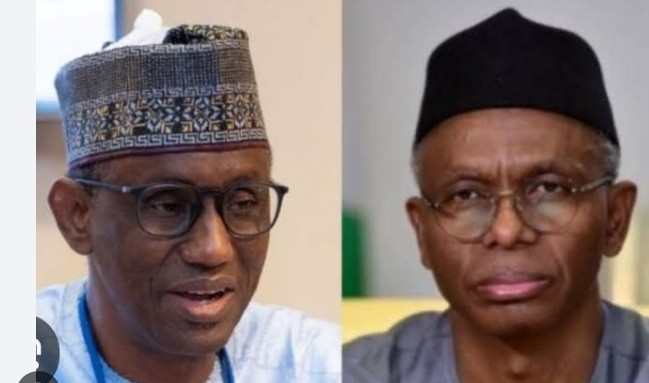
A dramatic confrontation is unfolding within Nigeria’s political establishment after former Kaduna State governor Nasir El-Rufai publicly claimed that he and associates had access to tapped phone conversations involving the National Security Adviser, Nuhu Ribadu.
The statement, made during a televised interview, triggered swift reaction from presidential spokesperson Bayo Onanuga, who called for a thorough investigation and warned that no individual is above the law.
According to Angle 360 findings, the controversy goes far beyond political theatrics. It touches on the legality of surveillance operations, the integrity of Nigeria’s intelligence architecture, and the possibility of parallel interception networks operating outside lawful oversight.
The Core Allegation and Its Legal Weight
El-Rufai asserted that he became aware of directives allegedly issued against him after an associate intercepted communications linked to the NSA. When pressed about the legality of such action, he acknowledged that tapping phones without authorisation is technically unlawful. He then alleged that government agencies frequently engage in similar practices without judicial approval.
This admission introduces a critical legal dilemma. Under Nigerian law, interception of private communications requires strict authorisation under national security and telecommunications regulations. Unauthorised surveillance constitutes a criminal offence. If El-Rufai’s statement is factual, it implies the existence of a non state interception capability. If exaggerated, it raises concerns about reckless public declarations capable of undermining institutional credibility.
Either scenario demands scrutiny.
Presidency’s Response and Political Undertones
Onanuga’s response was immediate and firm. He characterised the claim as a confession of illegal wiretapping and urged security agencies to investigate whether the former governor possesses unlawful surveillance infrastructure. His remarks signal that the presidency views the allegation not merely as political rhetoric but as a potential national security breach.
Angle 360 analysis suggests the episode reflects deeper fractures within political power structures. Public disputes between senior political actors often mask broader realignments and struggles over influence. The escalation of accusations into the realm of intelligence operations is particularly sensitive because it risks exposing vulnerabilities in the state’s security framework.
Surveillance Claims and National Security Implications
If senior political figures can access or claim access to intercepted conversations of a sitting National Security Adviser, it suggests one of three troubling possibilities.
First, that unofficial interception capabilities exist outside lawful command structures.
Second, that sensitive intelligence operations are being politicised.
Third, that allegations are being deployed strategically to destabilise opponents.
Each possibility carries consequences. Parallel surveillance systems would represent a severe breach of state monopoly over intelligence gathering. Politicised intelligence would weaken public trust in security institutions. Fabricated claims would damage democratic accountability and public discourse.
Nigeria’s intelligence agencies operate under legal frameworks designed to balance national security with civil liberties. The present controversy tests whether those safeguards are functioning effectively.
The ICPC and DSS Dimension
El-Rufai further alleged that the Independent Corrupt Practices and Other Related Offences Commission has increasingly become aligned with the NSA’s influence and that the Department of State Services was involved in actions targeting him. He contrasted this with what he described as professionalism by the Economic and Financial Crimes Commission, stating he would honour its invitation.
These remarks extend the dispute beyond a single wiretap claim into allegations of institutional misuse. Angle 360 notes that public accusations involving anti corruption agencies and intelligence bodies require measured verification. Without evidence, such claims risk eroding institutional credibility. With evidence, they demand urgent accountability.
The Dadiyata Question Resurfaces
During the interview, El-Rufai also addressed the disappearance of social commentator Abubakar Idris, known as Dadiyata, who was abducted in 2019 and has not been located. He denied involvement and suggested that the activist was primarily critical of political actors outside Kaduna State.
The resurfacing of this unresolved case underscores the broader trust deficit between political elites and segments of the public. Unresolved high profile disappearances amplify scepticism whenever allegations of surveillance or state overreach emerge.
The Larger Governance Question
Angle 360 assessment indicates that this controversy cannot be dismissed as routine political sparring. It raises foundational governance questions. Who authorises surveillance in Nigeria. What oversight mechanisms prevent abuse. How transparent are accountability structures when powerful actors clash.
Unchecked allegations can destabilise institutions. Uninvestigated confessions can erode rule of law. Silence from oversight bodies can deepen suspicion.
The presidency’s call for investigation therefore becomes a necessary first step. However, the credibility of any probe will depend on independence, transparency, and adherence to constitutional procedure.
Nigeria’s democracy depends not only on elections but on institutional discipline. Surveillance powers are among the most sensitive tools of state authority. They must never become instruments of personal rivalry or political leverage.
Until clarity emerges, the wiretap controversy remains both a legal puzzle and a political signal.
0
0