
Nigerian Universities
A terminal for university students across all disciplines in Nigeria to chat, debate, pass information, network, learn, and grow.
41 members • 130 followers
Kaothaj_
19 days ago
By admin
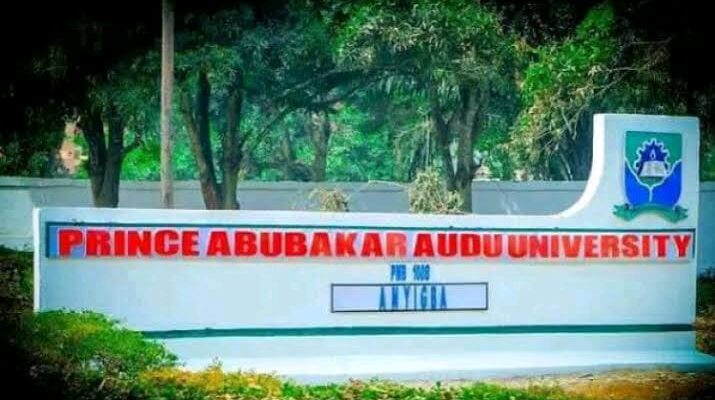
The Senate of Prince Abubakar Audu University (PAAU), Anyigba, has approved the expulsion of six 100-Level students found guilty of gross examination misconduct after they paid a lecturer to let them re-write an exam at his private residence. In a separate action, the Senate also approved the withdrawal of nine other students over poor academic performance and failure to register for two consecutive semesters.
The decisions were taken at the University’s 167th Regular Meeting of Senate, held at the University Auditorium.
How the Malpractice Was Uncovered
On 1 July 2026, University Management moved on credible intelligence that a lecturer was coordinating students to re-write an examination at his home. Security operatives arrested Dr Maji Okpanachi of the Department of Plant Science and Biotechnology, along with a number of students, at his residence near the Police Area Command Office on Idah Road, Anyigba. Exhibits were recovered from the scene.
The case was referred to the University’s Examination Misconduct Committee, which corroborated the security report through confessional statements from both the lecturer and the students, as well as other records. The committee found that the students had re-written BOT102 (Introduction to Plant Science) days after the original exam, each paying Dr Okpanachi N10,000 for the arrangement.
Senate approved the expulsion of the following students of the Department of Plant Science and Biotechnology:
Itodo Ojonugwa Jeremiah – 26PL1071
Olloh Kizito Ojoajogwu – 26PL1033
Okpanachi Favour – 26PL1065
Abdulkadiri Senusi – 26PL1031
Umar Imran – 26PL1038
Lawrence Salami – 26PL1124
Dr Okpanachi has been referred to the Senior Staff Disciplinary Committee for further disciplinary action under the University’s established rules. A ninth case, involving Jude Ojoajogwu Itodo (26PL1068), was referred back to the Examination Misconduct Committee for further investigation.
In a related but unconnected matter, Senate approved the withdrawal of nine students on academic grounds.
Withdrawn for failing to register for two consecutive semesters:
Suleiman Salamatu – 22SC1059, Social Studies Education
Abdullahi Hossana – 21BF1003, Banking and Finance
Anaja Victor Anome – 21BF1043, Banking and Finance
Emmanuel Arome – 21BF1075, Banking and Finance
Odutola Nancy Oluwanifemi – 21BF1138, Banking and Finance
Olarewaju Segun Abayomi – 21BF1147, Banking and Finance
Withdrawn for poor academic performance:
7. Adam Safiyat – 24MC1065, Communication and Media Studies
8. Musa Favour – 24MC1086, Communication and Media Studies
9. Umolo John Philip – 24MC1192, Communication and Media Studies
Reacting to the decisions, Vice-Chancellor and Chairman of Senate, Prof. Salisu Ogbo Usman, reaffirmed the University’s commitment to academic excellence, discipline, integrity and quality assurance, stressing that PAAU would not tolerate any act that compromises the credibility of its academic and examination processes.
He commended the committees involved for what he described as thorough and painstaking investigations, saying the outcome underscored the University’s resolve to strengthen accountability and protect the integrity of its academic system. Prof. Usman also urged students to remain focused on their studies, maintain high standards of conduct, and comply fully with the University’s academic and examination regulations.
The affected students have been directed to surrender all University property in their possession, including identity cards and other official items, before exiting the institution.
Source: KogiReports
0
3
Kaothaj_
a month ago
By AriseNews
SOJA demands separate investigations into the sexual misconduct allegation against a UNIZIK lecturer and the reported mob assault.
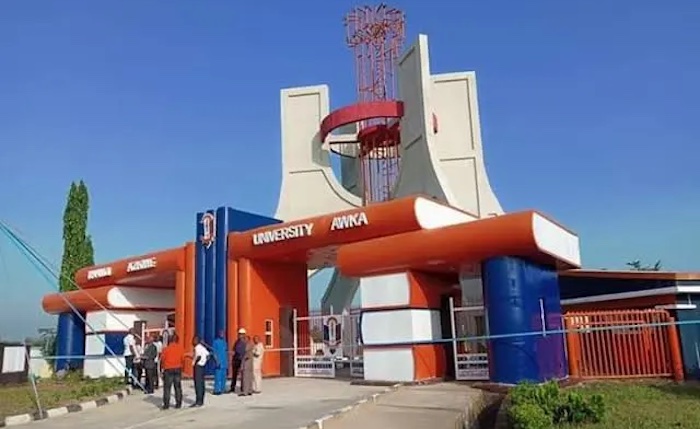
A human-rights and justice advocacy organisation, Speak Out for Justice Advocacy Ltd/GTE (SOJA), has demanded an impartial, two-track investigation into the controversial incident involving a lecturer of Nnamdi Azikiwe University (UNIZIK), Awka, warning that the alleged sexual misconduct and the subsequent mob assault must be treated as separate but equally serious matters.
SOJA, in a statement signed by its Founder and Executive Director, Hameed Jimoh, condemned the reported stripping, physical assault and public humiliation of the lecturer, describing the incident as a disturbing descent into “jungle justice” that must not be allowed to replace due process.
The organisation said the alleged sexual misconduct must be thoroughly investigated and, if established by evidence, prosecuted in accordance with the law, but stressed that no allegation—even one involving sexual misconduct—gives students or members of the public the authority to physically punish an accused person.
“An allegation is not a conviction. A suspicion is not a judgment. A viral video is not a court of law,” SOJA said.
The statement followed the circulation of video footage purportedly showing a group of young men, reportedly students, assaulting the lecturer, forcibly removing his clothing and leaving him exposed while further physical aggression was allegedly inflicted on him.
SOJA said reports that UNIZIK had condemned the incident as a mob assault and commenced an investigation made the matter particularly disturbing because of the university’s responsibility to uphold discipline, human dignity and the rule of law.
The rights organisation insisted that the lecturer’s fundamental rights remain protected regardless of the allegation against him.
It cited Section 34 of the 1999 Constitution, as amended, which guarantees the right to the dignity of the human person and prohibits torture and inhuman or degrading treatment or punishment.
It also invoked Article 5 of the African Charter on Human and Peoples’ Rights, which protects the dignity of the human person and prohibits degrading treatment.
SOJA argued that these protections do not depend on whether a person is popular, innocent or accused of wrongdoing.
“The protection of dignity is deliberately framed in universal terms,” the organisation said, stressing that even a person eventually found guilty of an offence remains a human being entitled to lawful treatment.
‘Even if allegation is true, mob justice remains wrong’
The group was emphatic that its condemnation of the alleged assault should not be interpreted as a defence of sexual misconduct or sexual harassment.
It said that if investigation ultimately establishes that the lecturer committed sexual misconduct, sexual harassment, abuse of academic authority or any criminal offence, he should face the full consequences prescribed by law and applicable university regulations.
But, it added, punishment must come through competent institutions rather than a mob.
“The seriousness of an alleged offence cannot justify the abandonment of the rule of law,” SOJA stated.
The organisation consequently called for those who allegedly participated in the assault to be identified and subjected to appropriate university disciplinary procedures and, where applicable, criminal investigation.
SOJA’s central demand is for authorities to conduct two distinct but connected investigations.
The first, it said, should establish exactly what happened between the female student and the lecturer before the confrontation and determine whether there is evidence of sexual misconduct, sexual harassment, assault or another offence.
The second should identify those who allegedly participated in the lecturer’s physical assault, stripping and humiliation and determine whether their actions constitute criminal offences or breaches of university regulations.
“Neither question should be allowed to swallow the other,” SOJA warned.
It said an investigation into the alleged sexual misconduct must not be used to excuse the mob assault, just as investigation of the alleged assault must not be used to suppress or trivialise the female student’s complaint.
“The complainant deserves protection. The accused deserves due process. The truth deserves an impartial investigation. And society deserves justice,” the organisation said.
SOJA also called for the immediate preservation of all evidence connected to the incident, including original video recordings circulating online, CCTV footage, mobile-phone recordings, photographs, medical records, eyewitness statements, identities of persons present at the scene and relevant university security records.
It urged authorities to go beyond treating the incident as a collective disturbance and identify individual participants in the alleged assault.
The organisation further appealed to the university and relevant authorities to ensure that the female student who made the allegation is protected from intimidation, retaliation, ridicule and harassment.
At the same time, it cautioned against treating the allegation itself as proof of guilt.
“The fact that an allegation requires investigation does not make the complainant a liar. Equally, the fact that a complaint has been made does not automatically establish the guilt of the person complained against,” SOJA said.
SOJA said the incident also exposed the need for universities to establish reporting mechanisms that students can trust.
It argued that where students believe complaints of sexual misconduct will result in victim-blaming, institutional cover-up, intimidation or retaliation, they may resort to dangerous informal methods of confrontation.
The organisation urged universities to ensure that sexual-misconduct complaints are handled promptly, confidentially, independently and fairly.
It also called on students to reject mob action, urging anyone who witnesses sexual harassment or assault to raise the alarm, get the alleged victim to safety, contact university security, report to the appropriate authorities, preserve evidence and seek medical or legal assistance where necessary.
“But do not become a mob,” SOJA warned.
“Do not beat the suspect. Do not strip the suspect. Do not humiliate the suspect. Do not torture the suspect. Do not become the very thing you claim to oppose.”
SOJA called on UNIZIK Management, the Anambra State Government, the Nigeria Police Force, the National Universities Commission and the National Human Rights Commission to ensure that the entire incident is investigated comprehensively, impartially and transparently.
It said Nigeria’s obligations under international and regional human-rights instruments, including the International Covenant on Civil and Political Rights, International Covenant on Economic, Social and Cultural Rights, Convention on the Elimination of All Forms of Discrimination against Women and African Charter on Human and Peoples’ Rights, reinforce the need for effective protection against violence, degrading treatment and denial of justice.
The organisation urged Nigerians not to treat a viral video as a complete account of an incident, noting that footage may establish what happened within the recorded period without necessarily revealing events that preceded it.
However, it maintained that any apparent assault and degrading treatment visible in the footage warrants immediate investigation and accountability.
It however warned that the fight against sexual harassment and sexual violence must not itself become a justification for abandoning the rule of law.
“No allegation of sexual misconduct justifies mob violence,” it declared.
“No lecturer is above the law. No student is above the law. No human being should be stripped, beaten or humiliated by a mob.
“No victim should be silenced. No accused person should be convicted by the crowd. No university should permit jungle justice within its environment.”
Source: Arise News
0
2
Kaothaj_
a month ago
By AriseNews
WAEC records a 61.54 per cent pass rate and withholds 167,486 results over alleged examination malpractice in 2026.

The West African Examinations Council (WAEC) on Wednesday, announced the results of the 2026 Computer-Based West African Senior School Certificate Examination (CB-WASSCE) for school candidates, with 1,200,514 candidates, representing 61.54 per cent obtaining credits in at least five subjects, including English Language and Mathematics.
Briefing journalists in Lagos, the Head of the Nigeria National Office (HNO), Dr. Amos Josiah Dangut, stated the figure represents a 1.42 percentage-point decline compared to the 2025 performance.
He disclosed that 1,950,726 candidates sat the examination out of the 1,959,668 who registered from 24,207 schools across Nigeria, as well as selected schools in Benin Republic, Côte d’Ivoire and Equatorial Guinea operating the Nigerian curriculum.
The analysis of candidates’ performance showed that 1,687,378 candidates, representing 86.50 per cent, obtained credit passes in at least five subjects, with or without English Language and Mathematics.
According to Dangut, 1,834,695 candidates, representing 94.05 per cent, have had their results fully processed and released, while the results of 116,031 candidates (5.95 per cent) are still being processed due to issues that are being resolved.
He assured affected candidates that efforts were underway to conclude the process within a few days.
The HNO also disclosed that the results of 167,486 candidates, representing 8.59 per cent of those who sat the examination, had been withheld over alleged involvement in examination malpractice.
He noted that the figure is lower than the 9.7 per cent recorded in 2025, indicating a reduction in malpractice cases.
He attributed the improvement to the council’s sustained anti-malpractice measures, including the expansion of computer-based examinations, serialisation of question papers and the introduction of the Digital Examiner Marking System (DEMS), which has accelerated result processing and enhanced service delivery.
“The council has consistently devised means of combating examination malpractice. The adoption of computer-based examinations and other innovations has significantly strengthened the integrity of the examination process,” he stated.
Dangut whose tenure as Head of the Nigeria National Office ends with the release of the 2026 results described the council’s transition to computer-based examinations as a landmark achievement, saying WAEC had become the first examining body in Africa and among the first globally to conduct achievement tests using the computer-based mode.
He noted that for the second consecutive year, school candidates were allowed to choose between computer-based testing and the traditional pen-and-paper format.
The WAEC boss however stated that the conduct of the examination was not without challenges, citing logistics, late registration by schools, inflation-driven operational costs and the activities of rogue websites promoting fake examination materials.
He condemned the activities of fraudulent online operators who exploit students and parents by peddling fake examination questions and spreading misinformation in the council’s name.
According to him, “the council, working with security agencies, arrested some of the perpetrators, while supervisors and invigilators found aiding examination malpractice would face sanctions through the Nigeria Examinations Committee (NRC) and relevant state ministries of education.”
Dangut also revealed that 1,213 candidates with special needs registered for the examination and were adequately catered for.
They included visually impaired, hearing-impaired, physically challenged and other candidates with disabilities, whose results have been released alongside those of other candidates.
As part of efforts to improve access to results, he announced that WAEC had discontinued the issuance of printed smart identity cards containing result checker PINs.
Instead, candidates can now generate their result-checking e-PINs directly through the council’s digital platform using their National Identification Number (NIN), while digital certificates will be available within 48 hours of result release. Hard-copy certificates, he added, will be ready within 90 days.
He called on governments and school proprietors to invest in digital infrastructure by equipping schools with functional computer laboratories and reliable power supply to support computer-based learning and assessment.
“Strengthening school infrastructure will not only facilitate a seamless transition to digital examinations but also improve teaching and learning outcomes in line with global best practices.
Dangut also urged candidates sponsored by states indebted to the council to prevail on their governments to settle outstanding obligations to enable the release of their results.
Source: Arise News
0
1
Kaothaj_
2 months ago
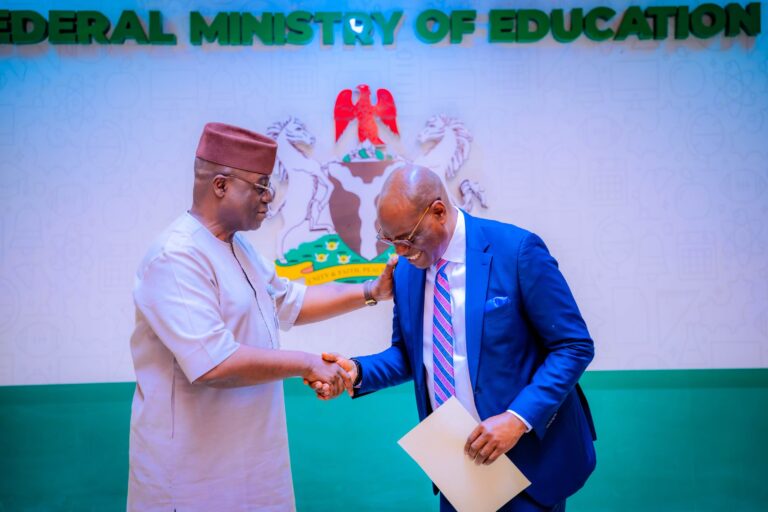
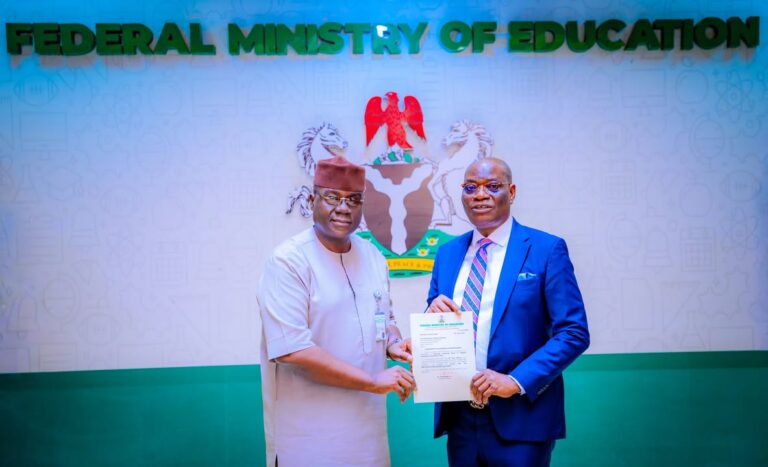
Oluwatoyin Ogundipe (R) in a blue suit
Oluwatoyin Ogundipe, former vice-chancellor of the University of Lagos (UNILAG), has officially assumed office as chairman of the governing board of the National Universities Commission (NUC).
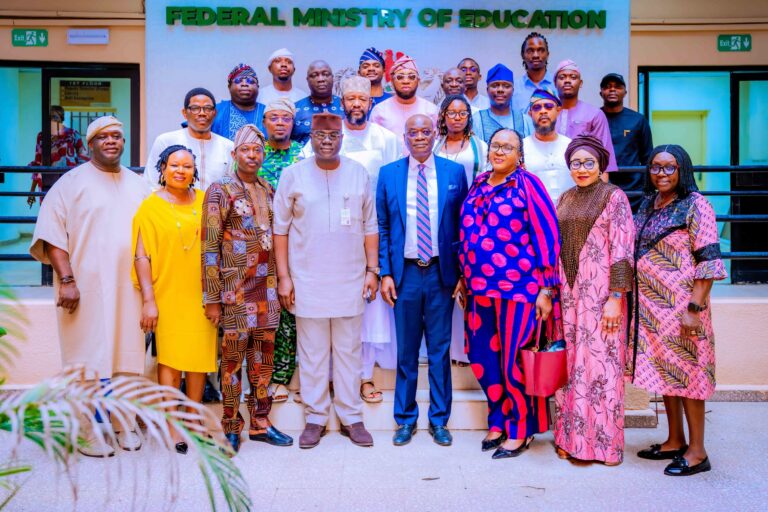
Ogundipe was formally inaugurated on Friday at the national headquarters of the federal ministry of education in Abuja, where he was presented with his letter of appointment.
President Bola Tinubu had, on June 22, appointed Ogundipe to succeed Olufemi Aina, who resigned from the position less than a year after his appointment.
Announcing the appointment at the time, Bayo Onanuga, special adviser to the president on information and strategy, said Ogundipe would oversee the regulatory body of the Nigerian university system with a focus on funding, global competitiveness and academic stability.
“The appointment is aimed at advancing quality, access, and integrity in the education sector,” Onanuga had said.
In a Facebook post after his inauguration, Ogundipe expressed gratitude to Tinubu for the appointment and pledged to work towards strengthening Nigeria’s university system.
“Today, with deep gratitude and a sober sense of duty, I was formally inaugurated as Chairman of the Governing Board of the National Universities Commission,” he wrote.
“I want to thank the President for this honour and the opportunity to serve once again. I do not take this for granted in any way. I also acknowledge Emeritus Professor Aina, whose service laid the ground we will build upon in this commission.”
Ogundipe said his vision is to ensure that Nigerian university degrees are globally competitive.
“As I step into this new role, my conviction is simple: a Nigerian degree should be able to stand anywhere in the world without apology,” he said.
The former UNILAG vice-chancellor said his experience in academia had shown him the impact of adequate investment in research, innovation and entrepreneurship, adding that such standards should become the norm across Nigerian universities.
“That is the work ahead. Genuinely global standards. Access for every young Nigerian who has earned a place and integrity in every certificate this system issues,” he said.
“But to the Nigerian student, let me say this plainly: you are the reason. Not the rankings, not the buildings, you. A better system for you, a better future for all of Nigeria. The dawn is here. Let us build.”
Source: TheCable
0
1
Kaothaj_
2 months ago
By Promise Eze

Hakeem Fawehinmi, vice chancellor of University of Abuja
Hakeem Fawehinmi assumed office as vice-chancellor of the University of Abuja (UniAbuja) on February 10. Before his appointment, he served as vice-chancellor of the Nigerian British University.
Leading one of Nigeria’s foremost public universities comes with significant challenges. In an exclusive interview with TheCable’s PROMISE EZE, Fawehinmi speaks about how he is addressing the institution’s pressing issues, his views on the growing use of artificial intelligence in higher education, and the controversy surrounding allegations that the university diverted the Nigerian Education Loan Fund (NELFUND) disbursements meant for students.
TheCable: It has been about six months since you assumed office as UniAbuja vice-chancellor. Looking back on your time in office so far, what has surprised you most about leading the university, and what vision are you hoping to achieve during your tenure?

Fawehinmi: What has surprised me most is the abundance of talent within the university community — among both our academic and non-teaching staff, as well as our students. There is enormous potential here, and if these talents are fully harnessed, the university should have progressed much further than it has. That came as a surprise to me. However, I am confident that we will get there.
Our vision is to develop the University of Abuja — now Yakubu Gowon University — into a world-class 21st-century institution where staff and students are given equal opportunities to maximise their potential. We aim to achieve this through standardised teaching, streamlined admissions, quality service delivery and strengthened research, all in the spirit of global competitiveness.
TheCable: The university recently launched what has been described as Nigeria’s first AI-powered academic research ecosystem. While many see this as a major innovation, others worry that AI could encourage plagiarism or weaken students’ critical thinking skills. How do you intend to maximise AI’s benefits while preventing its misuse?
Fawehinmi: We are focused on the positive aspects of artificial intelligence. AI is here to stay, and we cannot ignore it. People will continue to use tools like ChatGPT and other AI platforms to solve various problems.
However, there are aspects of learning and human judgement that AI cannot replace, regardless of the discipline. AI can serve as a valuable research assistant. For example, one of our researchers developed an innovation that supports thesis writing and bibliography preparation for academic research.
Our goal is to maximise these benefits while minimising the risks. Every academic submission from our institution is subjected to plagiarism checks and other quality assurance measures. This ensures that there is no room for plagiarism in our system and that the research outputs, monographs and other scholarly works produced by the university meet the required standards. Our plagiarism detection systems are designed to identify inappropriate use of AI-generated content.
TheCable: Are you not concerned that students may become overly dependent on AI for assignments, thereby affecting their ability to think independently?
 Hakeem Fawehinmi, Abuja VC, with TheCable’s Promise Eze
Fawehinmi: We make it very clear to our students that they are not expected to rely on AI for their academic work. During examinations, they do not have access to electronic devices or AI tools. What we assess is the knowledge they have genuinely acquired, and that is what our examinations are designed to measure.
If students use AI as a tool to gather information or support their learning outside the examination hall, that is their choice. What matters to us is that they acquire the knowledge, competence and skills required to justify the certificates we award.
TheCable: I believe you are familiar with the TETFund’s Terra platform, which connects tertiary institutions with educational resources and services, making it easier for students and researchers to collaborate. Have students at the university been onboarded onto the platform?
Fawehinmi: We still need to intensify awareness about the platform. Although the university is aware of Terra and some members of our staff and students have already begun using it, we have not yet deployed it to its full potential.
We intend to work closely with TETFund to sensitise the university community and encourage wider adoption so that students and researchers can fully benefit from everything the platform offers.
TheCable: Some students have expressed concerns about inadequate hostel accommodation, insecurity around the campus and water shortages. How is the university addressing these challenges?
 Students battling accommodation and water shortages in one of the hostels at the campus
Fawehinmi: We are taking deliberate steps to address the accommodation challenge. It is true that there is an acute shortage of hostel spaces. We have close to 40,000 students, but we are unable to accommodate up to 10,000 of them on campus.
Fortunately, TETFund has been very supportive as an intervention agency. Through its annual intervention and special high-impact intervention programme, TETFund has commenced the construction of two new student hostels. These projects will significantly increase our accommodation capacity and provide housing for many students who currently live off campus.
On security, we have put several measures in place. We are also working with TETFund on a project to strengthen the security of our perimeter fence through modern surveillance systems. Beyond that, we maintain close collaboration with the police, paramilitary organisations and military formations within and around the university community.
Although we have not experienced any major security incidents such as kidnapping for ransom, we have recorded a few cases of burglary and occasional breaches of our perimeter fence by illegal settlers. We have responded proactively to these incidents.
Advertisement
We have also drawn the attention of Nyesom Wike, minister of the Federal Capital Territory (FCT), who is the chief security officer of the FCT, to the university’s security needs. As the only conventional federal university in the FCT, with a student population of nearly 40,000, we require additional government support.
In addition to external security support, we have strengthened our internal security architecture. Our security personnel patrol the campus around the clock, and these efforts have yielded positive results. While isolated incidents still occur, we remain vigilant and continuously improve our security measures.
TheCable: Students have also raised concerns about transportation, particularly the availability of buses between the university’s campuses. How are you addressing this?
 Students walking within the campus
Fawehinmi: We have a fleet of buses that shuttle between the mini-campus in Gwagwalada and the main campus. One of the services is provided free of charge as part of our staff welfare prgramme, while students pay only a modest fare for the others.
These shuttle services operate regularly, and where necessary, they complement the existing public transport system. We have put most of our buses back on the road, and they now cover the major routes used by students to travel between the campuses and their faculties.
Since I assumed office, we have not received any significant complaints about transportation. The buses and vehicles we introduced have substantially improved mobility for both staff and students.
TheCable: Earlier this year, the university came under scrutiny over allegations relating to NELFUND disbursements. Both the university and NELFUND denied the claims. How did you navigate that controversy, and what did it reveal about your approach to leadership and crisis management?
 Some graduating students of the institution
Fawehinmi: The allegations were completely false. It was fake news, and it was unfortunate that such an unverified report was published. There was absolutely no truth to it, which is why NELFUND itself publicly debunked the claims, alongside the university council. Everyone was surprised by the source of the story.
We responded professionally by immediately issuing clarifications and presenting the facts. We also took steps to trace the origin of the false report and are still pursuing the matter with the media organisation responsible for publishing it.
The university does not withhold students’ funds. Whenever NELFUND disbursements are received, we ensure they are processed and paid to beneficiaries without delay. I have consistently insisted that students should receive their funds as quickly as possible.
When students experienced delays due to incomplete banking details, we invited them to provide the necessary information so payments could be made promptly. In some cases, where students faced imminent examinations, the university paid their fees upfront after confirming that they were NELFUND beneficiaries, with the understanding that the funds would be recovered once NELFUND released the disbursement.
We did everything within our power to ensure that eligible students received their benefits as quickly as possible. The allegations were baseless, and I believe we handled the situation responsibly and professionally.
TheCable: The university was recently renamed Yakubu Gowon University. Is the change now official?
Fawehinmi: Yes, the University of Abuja has been renamed Yakubu Gowon University, and the decision is official. However, we are still awaiting the formal gazetting of the Act by the appropriate arm of government. Until that process is completed, the new name cannot be used for legal or formal transactions because it could be challenged without the statutory backing of a gazetted Act of parliament.
For now, we refer to the institution as the University of Abuja, now Yakubu Gowon University, in recognition of the change and in honour of Yakubu Gowon, our national hero. Once the Act is gazetted, all our official and legal correspondence will bear the name Yakubu Gowon University.
TheCable: How has the university benefited from TETFund interventions, and in what areas do you believe greater investment is still needed?

Fawehinmi: I must commend the management and staff of TETFund for the remarkable work they are doing. During my first six months as the university’s eighth vice-chancellor, the institution has benefited immensely from TETFund’s interventions under the leadership of Sonny Echono, executive secretary of TETFund.
We have received annual interventions, special high-impact interventions and zonal interventions, all of which have significantly improved the university. One of the strengths of TETFund’s approach is that its interventions are tailored to the specific needs of beneficiary institutions.
The university has benefited in areas such as entrepreneurship development, library and ICT infrastructure, and career counselling services. These investments have strengthened our capacity to deliver quality teaching, learning and research.
However, I believe TETFund should pay closer attention to the performance of some of its contractors. While the interventions themselves are commendable, some contractors fail to adhere to agreed timelines and project specifications. This affects the timely delivery of projects and, ultimately, the impact of the interventions. Greater oversight of contractors would further enhance TETFund’s excellent work.
TheCable: Looking ahead, what would you like this university to be known for, both nationally and internationally?
Fawehinmi: I want the university to be known as a university of excellence and a true university of the federation.
By excellence, I mean outstanding teaching, impactful research and the production of graduates who are globally competitive and equipped for the labour market. By a university of the federation, I mean an institution that truly reflects Nigeria’s diversity, where people from every state, ethnic group and religion come together in an atmosphere of unity and mutual respect.
That is the kind of institution we are committed to building.
TheCable: Finally, when your tenure comes to an end, what legacy would you like to leave behind?
Fawehinmi: I want to leave behind a university where every young person who passes through its corridors is equipped to succeed and contribute meaningfully to society. I want this institution to become a hub for innovation and groundbreaking research that addresses national and global challenges.
I also hope to leave a university where service delivery is fully digitised, ICT is integrated into administration, teaching and research, and where we undertake cutting-edge research that earns us recognition among the leading universities in the region and across the world.
Source: TheCable
0
1
Kaothaj_
2 months ago
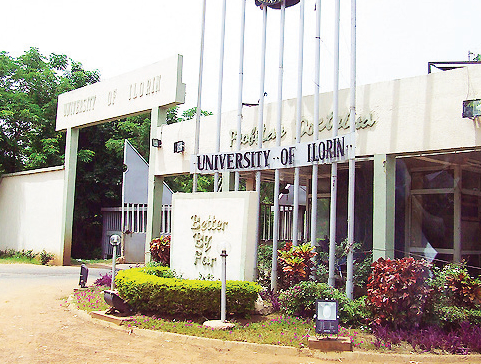
No fewer than 44 medical graduates of the University of Ilorin (UNILORIN), Kwara state, have remained uninducted for nearly a year after completing their studies due to the institution’s approved induction quota, raising fresh concerns over the fate of hundreds of students still undergoing medical training.
The affected graduates spent eight years at the university alongside their peers following disruptions caused by the COVID-19 pandemic and a series of strikes by the Academic Staff Union of Universities (ASUU).
After weathering the storm, they sat for their final MBBS examinations in August 2025, with induction expected to follow.
However, while 150 of their colleagues were inducted in November 2025, the remaining 44 were left behind and have remained at home ever since without a definite timeline for their induction.
HOW THE QUOTA CRISIS STARTED
In a post on their X pages in February, the affected graduates expressed frustration over the prolonged delay in their induction.
“We were promised induction within six to eight weeks after the first batch. That timeline has passed, yet there is still no date, no clear plan, and no official update,” they wrote.
“Our colleagues have started house jobs, while we remain stagnant despite meeting all academic requirements.”
Responding to the concerns in a statement issued in February by Kunle Akogun, the university’s director of corporate affairs, the institution dismissed reports that the 44 medical graduands would be merged with the 2026 graduating set for induction.
Explaining the circumstances surrounding the delayed induction, Biodun Alabi, provost of the College of Health Sciences, said 194 students sat for the final MBBS examinations in August 2025, with 175 passing outright while 19 had resit examinations.
He said although the university invited the Medical and Dental Council of Nigeria (MDCN) for the induction, the council insisted it could only induct 150 students in line with the institution’s approved quota.
According to him, the university ranked the successful candidates, leading to the induction of the first 150 students in November 2025, while the remaining 25 successful candidates and the 19 who later passed their resit examinations were left out.
“We were assured that the remaining 25 that passed and the other 19 that had resit exams would be inducted at a later date,” he said.
Alabi added that the university had continued to engage the MDCN to facilitate the induction of the remaining 44 graduands.
He also said Wahab Egbewole, the university’s vice-chancellor, had directed staff members to begin the process of inviting the MDCN to re-accredit its medicine and surgery programme in a bid to increase its approved quota from 150 students.
However, as of the time of filing this report, there was no indication that the reaccreditation process had commenced.
One of the affected graduates told TheCable on Friday that no definite date had been communicated for their induction.
BROADER IMPLICATIONS
TheCable understands that there are currently 205 MBBS students in the university’s 600 level, with their final professional MBBS examinations scheduled for September/October this year.
However, even if all the students pass the examinations, the university cannot induct all of them without first clearing the backlog of the 44 medical graduates from the 2025 set.
There is also no definite timeline for the induction of the affected graduands, raising fears that the current final-year students could face a similar delay.
More worrisome is that even if the remaining 44 graduates are inducted in the coming weeks, only about 150 of the current final-year students would be eligible for induction under the existing quota unless the MDCN approves an increase in the university’s induction capacity.
This would leave about 55 students from the current final-year class facing the same predicament as the 44 graduates still awaiting induction, with the backlog likely to spill into subsequent graduating classes if the quota issue remains unresolved.
A source familiar with the matter alleged that the crisis stemmed from what he described as years of non-compliance with MDCN’s approved induction quota.
“For several years, the College of Health Sciences, University of Ilorin, has been committing infractions against the MDCN’s regulations regarding the induction quota,” the source told TheCable.
“Consequently, the MDCN, exercising its full regulatory oversight and legal authority, has sanctioned the college. This is the root cause of our present situation.
“The inevitable question is: who is to blame? It is the school. Successive administrations had years to rectify this problem but failed to do so, leading to the crisis we are witnessing under the current administration.”
PROPOSED INDEXING ARRANGEMENT
TheCable gathered that, in a bid to resolve the lingering quota crisis, the university management is negotiating what sources described as an “institutional pardon” from the MDCN.
Sources said the university is also considering an indexing arrangement that would commence with the current 600-level MBBS students.
Under the proposed arrangement, the 500-level professional MB examination results of the current 600-level students would be used to determine indexing, with only the first 150 students to be indexed for induction.
The remaining 56 students would be indexed into the current 500-level class and given priority in the next indexing exercise.
Thereafter, the remaining 94 available slots would be filled using the 400-level professional MB examination results of the current 500-level class, with the same process continuing for subsequent sets.
If implemented, the arrangement could take about nine induction cycles before the backlog created by the quota limitation is completely cleared, sources said.
There were also reports that the university might suspend fresh admissions into its MBBS programme for the next few years.
However, the university management dismissed the claim in a recent statement, insisting that it would admit students into the programme for the 2026/2027 academic session.
‘NO STUDENT WILL BE DISADVANTAGED’
Speaking to TheCable, Akogun, the university’s spokesperson, said the institution was making “every necessary effort” to ensure the induction of the affected graduates in the shortest possible time.
He said the university was actively engaging the MDCN and other relevant authorities to facilitate the process.
“Affected graduates are encouraged to remain patient and can expect further updates,” Akogun said.
On concerns over the fate of students still in the programme, the spokesperson said the university would take “all appropriate steps” to ensure that no student is disadvantaged.
“The academic progress and welfare of our students remain our priority, and we will continue to take proactive steps to sustain their academic strides,” he said.
Akogun added that the university would continue to engage the MDCN constructively to ensure all issues are resolved amicably.
He, however, did not provide a timeline for the induction of the 44 graduates or respond directly to reports of a proposed indexing arrangement for the current final-year students.
Also, efforts to get an official response from the MDCN were unsuccessful.
Source: TheCable
0
4
Kaothaj_
2 months ago

Three students of the Federal University of Lafia (FULafia) have been abducted by unidentified gunmen from their off-campus hostel.
The Nasarawa state police command confirmed the abduction of the students in a statement via X on Wednesday.
The student were said to have been taken from their residence located along Awe road, near the university’s temporary campus in Akunza, Lafia.
Ramhan Nansel, the police spokesperson in the state, said the command received a distress call from the chief security officer (CSO) of the varsity on Tuesday night.
Nansel noted that the gunmen broke down the door of the students’ home to force their way inside.
The police stated that immediately after the report, Shetima Jauro Mohammed, the state commissioner, ordered the deployment of tactical teams, patrol operatives to the scene.
The force added that after coordinated search-and-rescue operation within the surrounding forest, one of the abducted students was rescued, while two others remain in captivity.
“Efforts have since been intensified to ensure the safe rescue of the remaining two victims still in captivity and the arrest of the perpetrators,” the statement reads.
Nansel added that Mohammed directed all operational and intelligence assets of the command to sustain the ongoing operation until the remaining victims are rescued unharmed.
The commissioner also assured the public that efforts will be made to ensure that the perpetrators are arrested.
He urged the residents to remain calm, vigilant, and continue to support the police by providing timely and credible information.
Source: TheCable
0
3
Kaothaj_
2 months ago
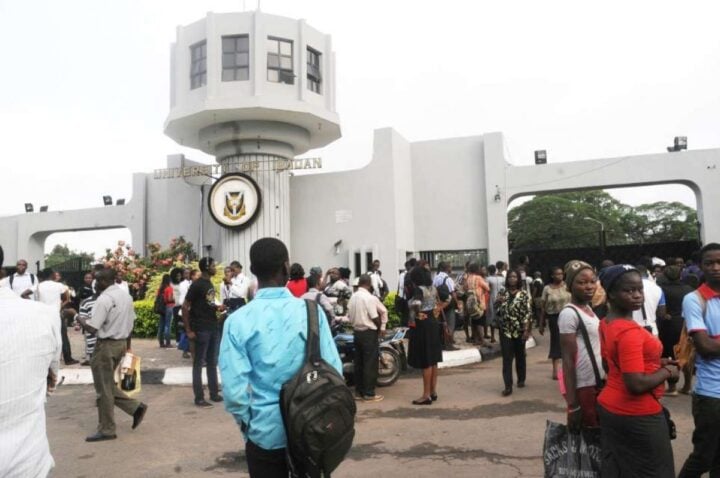
The students’ union government of the University of Ibadan (UI) says Abolarin Tomisin, a 300-level female student of the faculty of law, who was abducted, has been safely released.
In a statement issued on Monday, Temidayo Adeboye, SUG president, said the announcement followed official confirmation from relevant authorities and representatives of the concerned organisation.
Adeboye explained that the released individuals are currently undergoing the necessary post-release procedures and will return to their respective destinations as arrangements are concluded.
“We have been assured that our student will safely return to the university community soon,” Adeboye said.
“The students’ union sincerely appreciates the security agencies, university management, the leadership of the Scripture Union, and everyone whose dedication contributed to this successful outcome.
“We also thank members of the university community for their prayers, patience, solidarity, and unwavering support throughout this period. Your compassion and unity have been truly encouraging.
“As we celebrate this welcome news, we remain grateful to God and pray for the complete healing, restoration, and well-being of everyone affected.”
In June, the union said the student was abducted while returning from a religious conference in Imo state.
Adeboye said the victim was abducted alongside seven others.
He said Tomisin was travelling with Uwem Cosmos, national general director of the Scripture Union Student Fellowship, and other participants returning from the Scripture Union national conference held at the Camp of Faith in Okigwe, Imo state.
He added that Tomisin is the national secretary of the Scripture Union Student Fellowship and vice-president of the UI chapter.
Advertisement
According to him, Tomisin was the only UI student among those declared missing, contrary to claims circulating on social media.
Source : TheCable
0
8
Kaothaj_
3 months ago

The Oyo police command has arrested 11 students of Ladoke Akintola University of Technology (LAUTECH), Ogbomoso, suspected to be members of the Eiye confraternity.
In a statement on Friday, Olayinka Ayanlade, Oyo police spokesperson, said the arrest followed credible intelligence received by the command.
The police spokesperson said a thorough search conducted on the suspects and their hideout led to the recovery of several guns and ammunition, believed to have been intended for use in violent activities.
“Exhibits recovered include four locally fabricated cut-to-size pistols; eleven live cartridges; one expended cartridge; two cult axes; one cutlass; one dagger knife; and one red cult hooded cap,” Ayanlade said.
“Acting on credible intelligence received by the command, operatives of the command’s violent crime response unit were deployed after it was established that members of the dreaded Eiye confraternity had converged at their hideout within the Under-G, Yuako, and Adenike areas, where they were allegedly perfecting plans to launch coordinated attacks within the student community capable of causing widespread unrest.
“On arrival at the identified locations, the operatives swiftly intervened and successfully foiled the planned attacks before they could be executed, leading to the arrest of 11 male suspects.”
He said the suspects were taken into custody, where they voluntarily confessed to being members of the cult group, while the preliminary investigation further revealed their alleged involvement in various cult-related criminal activities, including murder.
Ayanlade said further investigation established that all 11 suspects were students of LAUTECH.
Source: TheCable
0
2
Kaothaj_
3 months ago
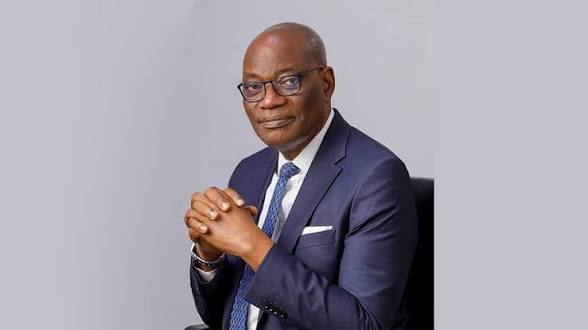
President Bola Ahmed Tinubu has appointed Professor Oluwatoyin Temitayo Ogundipe as the new Chairman of the Governing Board of the National Universities Commission (NUC).
The announcement was contained in a statement issued on Monday by the Special Adviser to the President on Information and Strategy, Bayo Onanuga.
Ogundipe succeeds Emeritus Professor Olufemi Raphael Aina, who reportedly resigned from the position after serving less than a year following his appointment in July and inauguration in November 2025.
The new NUC chairman, aged 66, brings extensive academic and administrative experience to the commission. He previously served as Vice-Chancellor of the University of Lagos between 2017 and 2022 and is currently the Pro-Chancellor of Redeemer’s University, Ede, Osun State.
A professor of Botany, Ogundipe specialises in molecular plant taxonomy, biosystematics, ethnobotany, cytogenetics, forensic botany and ecological conservation. He obtained his PhD in Botany from Obafemi Awolowo University and holds an MBA from the University of Lagos.
He has also held several leadership positions, including President of the Botanical Society of Nigeria and Chairman of the Lagos State Science, Research and Innovation Council (LASRIC), and is a fellow of several professional bodies locally and internationally.
In his new role, Ogundipe is expected to oversee the regulatory framework of Nigeria’s university system, with emphasis on funding, academic stability and global competitiveness.
President Tinubu said he expects the new NUC leadership to provide visionary direction in line with the Renewed Hope Agenda aimed at improving access, quality and integrity in the education sector.
Source: VeryNigerian
1
1
Kaothaj_
3 months ago

The News Agency of Nigeria reports that the new vice-chancellor served as Rivers State commissioner for health during the administration of former Governor Nyesom Wike.
The Governing Council of the University of Port Harcourt (UNIPORT) has approved the appointment of Princewill Chike as the institution’s 10th vice-chancellor.
Mr Chike, a professor, is expected to assume office on 13 July following the expiration of the tenure of the incumbent Vice-Chancellor, Owunari Georgewill, on the same date.
The university’s spokesperson, Sam Kpenu, disclosed this in a statement issued on Friday in Port Harcourt.
Mr Kpenu said that Mr Chike’s appointment was approved by the university’s 17th Governing Council following the successful conclusion of the selection process.
He added that the process was conducted in strict compliance with the provisions of the Universities (Miscellaneous Provisions) Act and the University of Port Harcourt Act.
He said, “The process involved the constitution of a Search Team and a Joint Council-Senate Selection Board, which carried out the exercise in accordance with extant laws and regulations.”
Mr Kpenu explained that the committees conducted the selection process in line with procedures governing the appointment of vice-chancellors in Nigerian universities.
The Pro-Chancellor and Chairman of the Governing Council, Mao Ohuabunwa, congratulated Mr Chike on his appointment and expressed confidence in his ability to provide visionary leadership for the continued growth and development of the university.
He said, “Prof Chike possesses the capacity to advance the university’s vision and sustain its tradition of excellence.”
The News Agency of Nigeria reports that Mr Chike served as Rivers State commissioner for health during the administration of former Governor Nyesom Wike.
Source: Premium Times
0
5
Kaothaj_
4 months ago
By Imoleayo Oyedeyi
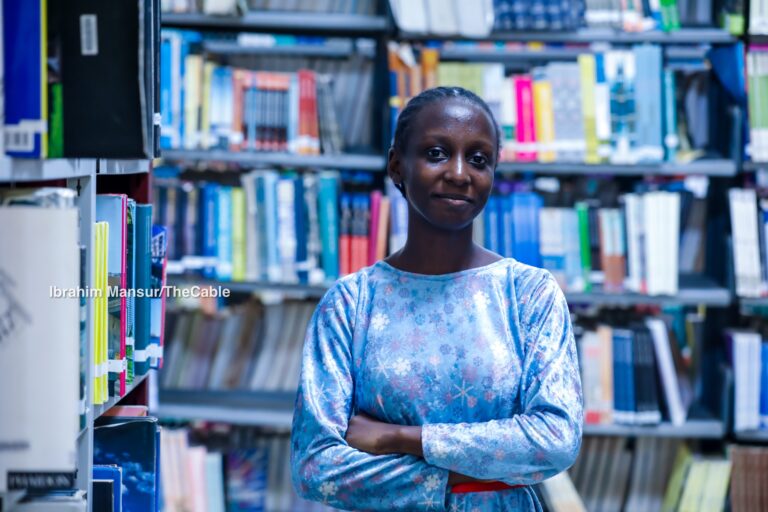
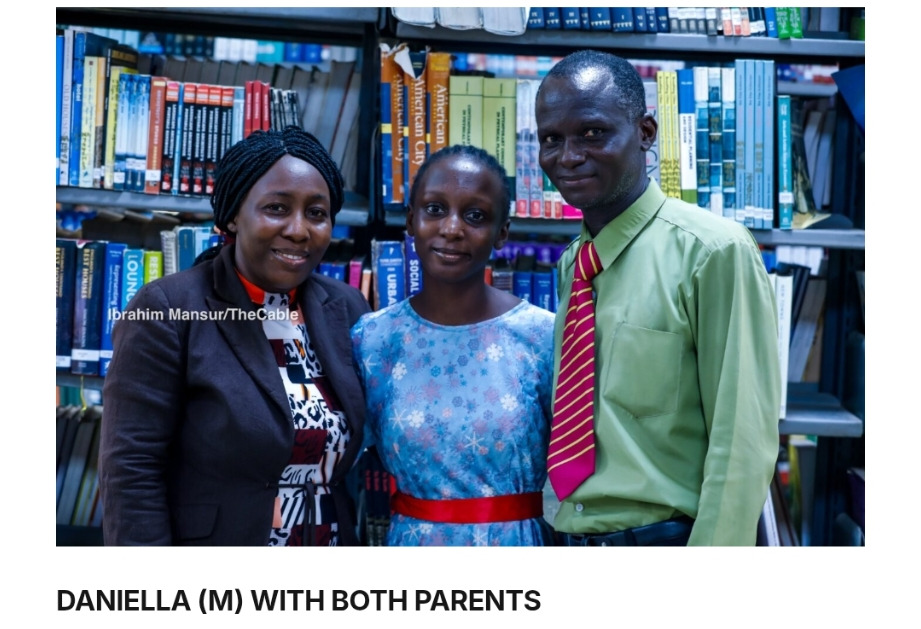
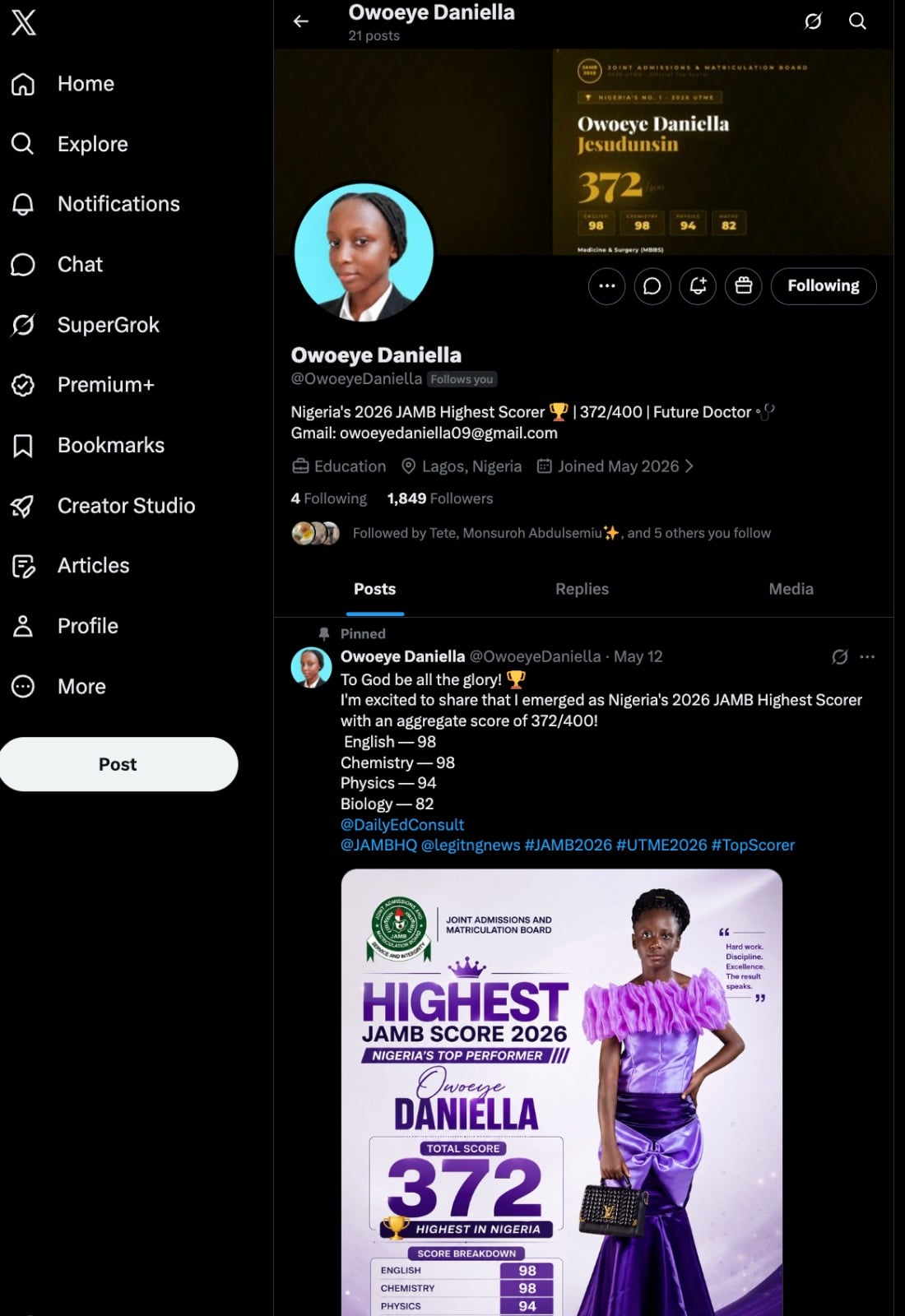
On Monday, the Joint Admissions and Matriculation Board (JAMB) declared Daniella Owoeye the highest scorer in the 2026 Unified Tertiary Matriculation Examination (UTME). The teenager topped the chart of the ten highest scorers with 372 marks. But from the depth of her preparation, the achievement is undoubtedly well deserved.
In this interview with TheCable’s IMOLEAYO OYEDEYI, the teenager takes a deep dive into the rigorous preparation and demanding journey that led to her UTME success. She says the biggest factor for her was not just parental support, but a mindset shift, because “big schools don’t define success”.
TheCable: So many people don’t know much about you yet. Tell us about yourself.
Owoeye: I am Owoeye Daniella Jesudunsin. I am 16 years old. For my primary education, I attended Royal Standard International School. And for my junior secondary school, I attended Universal Success Academy. For my senior secondary school, I attended EFVP Wisdom Strength Model School.
TheCable: At any point during your primary or secondary school education, did you have a double promotion?
Owoeye: Yes, I did. But my parents are not the type who usually want extra promotion and all of that. They believe I should follow the due process from one class to the other, so I wouldn’t miss out on any necessary knowledge I need to acquire. But there was a time I was double-promoted from primary 4 to primary 6 in my primary school.
At that point, they felt that since oftentimes the primary 5 curriculum and syllabus were kind of related to that of primary 6, because they were both preparatory classes for junior secondary school level one. They said that since the primary 5 topics were also covered in my primary 6, they allowed that.
TheCable: Did you hold any leadership positions in school?
Owoeye: In my junior secondary school, in JSS3, I was the head girl. I held the same position in SS3.
TheCable: On Monday, you came into the limelight shortly after JAMB announced you as the highest scorer in this year’s UTME. Can you tell us how you felt when you received the news?
Owoeye: When I heard about my success, I was very happy, and it was actually a moment to be proud of. I felt grateful to God. My joy knew no bounds. I didn’t even know how to express myself at that moment. I was kind of emotional and all of that. So, I was very happy and thankful to God.
TheCable: Was it something you had been expecting?
Owoeye: I would say that after checking my UTME results, I was expecting to be among the top ten, or at least the top three.
I was at home alone when I got the news. I wasn’t even with my dad. My parents called and notified me, but someone had already sent the news to me while I was doing something else and wasn’t online to read it. But immediately after they notified me, I followed up from there.
I watched the clip, and from there, I started receiving messages congratulating me and all of that.
It was very exciting. When I received the calls, I observed my parents from afar, and they were looking proud of their daughter and all of that. But the messages and the calls were just too much. It was kind of overwhelming. It was from one call to another, and it was just so much.
TheCable: We noticed that social media accounts in your name appeared on Twitter and Facebook that same Monday. Were you the one who created those accounts?
Owoeye: Yes, I created the accounts. I intend to post educational videos, news, and all of that because I’ve heard a lot of people asking me how I went about doing this. So, I intend to post how I achieved my score, and I also intend to post educational videos advising my fellow students. That was why I created the account.
Actually, my parents were in support of that, and they were even the ones who advised me.
Although I had it in mind, they even spoke up and said I should also create something like that. So, I decided to just create it since I already had it in mind.
TheCable: Have you received any commendation letter or contact from JAMB?
Owoeye: No, not at all. They haven’t.
TheCable: What about from Ekiti state, since the government celebrated you on their Twitter page on Tuesday?
Owoeye: No, we haven’t received anything.
TheCable: Talking about the UTME, you scored 372, with 98 in both English and Chemistry. What role did your parents play in this achievement? I read they are specialists in these subjects.
Owoeye: My parents usually speak English to us at home. They barely spoke Yoruba. It was not until I got to JSS3 that I started learning how to speak Yoruba. So, they spoke English purely, and it helped me become fluent in speaking the language.
Also, I would say my parents have been supportive, and they have always provided everything that we needed since we were in primary school up to this level.
And for UTME specifically, I would say my parents gave me their full support. They provided the past questions, the textbooks, everything I needed, and they even prayed for me. So, they gave me moral support.
TheCable: What would you say were the major factors that contributed to your outstanding performance in those two subjects?
Owoeye: Well, some people say that because my dad works at the library and he is in art, people feel like I took the English aspect from him.
And because my mom has a PhD in industrial chemistry, people also feel like I got the chemistry aspect from her. And truly, it played a role because there were times when I needed clarification on a few questions while preparing, and I met my mom, who explained them to me. It was really helpful, and the same goes for my dad. So, it was really helpful to me.
TheCable: How did you prepare for the UTME?
Owoeye: Actually, regarding my mode of preparation, I think only a few students can do that. I wasn’t fortunate enough to attend these big, prestigious schools because that doesn’t define success. I knew that I needed to work harder and not just work harder, but work even smarter and strategically.
So, I started early and set a goal. This reminds me of a scripture written in the book of Habakkuk that says we should write our goals and vision clearly. So, I keyed into that. I wrote down my goal. I wrote “370 plus”, and then I worked towards it.
Growing up, I have learnt that we are meant to intensify our actions rather than increase our goals. In the past, I used to set so many goals and all of that. But I learned that increasing the goals is not the key, but increasing my efforts and actions are. So, I keyed into that and started pushing and doing all that I needed to do.
Also, I set a timetable. The timetable I used while preparing was different from the one I used for my revision. I used one month, April, for my revision.
So, I set alarms on my phone. I saw that as my own school bell to notify me each time. I would say from the time I woke up till about 11:30 in the morning, I read. That was my morning session. Then I took a few breaks.
My breaks were not for social media because I learned that, after mentally taxing work, social media was not the right option to cool it down, since I knew my brain needed proper rest. So, I just rested during the break. I walked around and all of that.
Also, during my afternoon session, I studied from around 12:30 to about 3:30. I took a break again, and then from 4:30 till the period for my online tutorial, I read again. The tutorial started at 7:15 p.m., so I stopped all that I was reading by 7 pm. That was my routine.
I also didn’t rely on my tutorials alone. I made other efforts. My parents provided all my subject combinations, JAMB Series Remix and Prep 50, and hard copies of past questions.
TheCable: What about the JAMB syllabus?
Owoeye: My preparation was topic-by-topic based. I used the JAMB syllabus, and I feel that’s where many students are missing it and getting it wrong. They try to cover a lot of textbooks, and some of them do not take the JAMB syllabus seriously.
Instead of downloading the soft copy, I printed everything for physics, chemistry, biology, and English. Each time I finished a topic, I ticked it off and treated it based on what JAMB highlighted.
I also used past questions to generate notes aside from my online tutorials. I did this consistently. I consulted AI to summarise the notes for the parts that seemed bulky, and it was really helpful.
I had the notes where I jotted my errors, my mistakes, and all of that. I did past questions and CBT practices every day. So, I used QuizBoots.
I joined a group that conducted 100-question quizzes every day. They started with chemistry. That lasted for not less than two months. Then, for the remaining subjects, it came up later on, but not less than one month later. It lasted for nothing less than one month. It was 100 questions daily.
Aside from that, I was revising my notes and reading. I also did the Test Readers Weekly Mock Challenge on Saturdays. I did that, and I also had a particular time I set for my own personal mock challenge aside from that one. So, I did a lot of that.
I watched videos. Although my online tutorial notes were self-explanatory and well-explained, and the tutors made the classes lively and superbly structured, I didn’t stop there. I searched for videos online on YouTube and watched a lot of them.
I want to thank my parents for that because they made internet data and everything available. So, I searched for a lot of videos and tried to understand concepts. I wasn’t the type who just saw questions and crammed them like that because I knew that method wouldn’t even work for me at all.
So, I studied concepts regardless of the time it took me to understand them. After understanding the concepts, I recorded them and explained them to myself as if I were teaching. I even used layman’s language and added real-life situations and fictitious ideas to make it practical and help me remember everything I did.
I used a lot of materials. I joined some groups that helped me with quizzes on WhatsApp and Telegram. I think that’s all I remember for now.
TheCable: On average, how many hours did you study in a day?
Owoeye: It’s over eight hours. I didn’t really calculate it, but I read from 8 am to 11:30 am, then from about 12:30 pm to 3:30 pm, and then from about 5 pm to 7 pm. So, I think that should be about nine hours or so. I didn’t calculate it.
I was focused on just trying to solve a lot. My online tutorial also lasted for about four hours. That’s from 7:15 to 12:30 pm or so. So, I just revised a lot after my classes in the morning and went through my notes.
There were times when I tried to solve past questions after that. Then I sleep, and I usually wake up at 6 am.
TheCable: Did you spend just one month preparing for the examination?
Owoeye: No, I started very early last year. I wrote the 2025 UTME, but we had glitches at my centre. The system shut down. The changeover wasn’t working.
The generator went off, and it just wasted a lot of time. But I didn’t request a resit because I was scared that the same thing might repeat itself.
I scored 293. So, having learned from that, I decided to start as early as possible. I started bit by bit until I started moving deeper and deeper and deeper.
TheCable: Why didn’t you use the 293 score to seek admission?
Owoeye: I actually used it. My WAEC result was good, so it boosted it. I settled for a less competitive school, but they pegged their cut-off mark at a very high score, such that only a few people were able to get admission.
I don’t want to mention the name of the school. So, I realised that some candidates were getting admission through connections and buying slots. But my parents kicked against all those things. Even if they had the money, they would not opt for that.
We didn’t bother because my parents couldn’t afford the private institutions that were available. That was why I started preparing for another UTME.
TheCable: This year, you chose the University of Lagos and medicine. What informed those decisions?
Owoeye: I have had this passion to study medicine and surgery since I was young. There’s this TV channel I usually watch, especially on Sundays. They usually showed programmes about support for the sick and people who needed surgery. It actually motivated me.
So, there was a time I sat down and asked myself, why not study medicine and surgery and help these people? Because it was so painful, and I felt their pain. So, ever since then, I’ve been passion-driven to study medicine and surgery.
Apart from that, I also enjoy everything about medicine and surgery. I chose UNILAG because it’s one of the best schools that offer medical courses in Nigeria.
TheCable: What would be your final message to prospective UTME candidates and students generally?
Owoeye: Firstly, to prospective UTME candidates, I would tell them to believe in themselves. Because I feel one thing that is limiting so many UTME candidates is mindset shifts. Some of them feel that because they didn’t attend big schools and all of that, they won’t get big scores.
I want to advise them that if they believe it is impossible, then it will definitely be impossible for them. While others who believe that it is possible will make it possible for themselves. So, they should change their mindset. They should believe that it will be possible.
And not only that, they should work towards it with consistency and commitment, and they should put their preparation into God’s hands. I’ve always been saying that it is one thing to read a lot and work smart strategically, and it is another thing to encounter similar questions to what one has read.
I prayed to God to help me not to read amiss and to direct my steps. The prayer came to pass because I saw the questions there, and I was even smiling because they were very simple questions. They were very familiar questions. I even saw some questions that were kind of repeated. There were some questions with similar concepts that I studied; they just twisted them a bit. So I applied that, and it was so helpful.
I would expect them to be consistent. They should push harder. They should not let anything distract them. They should not let low self-esteem set in. They should believe in themselves. They should hopefully trust the process, commit their preparation to God’s hands, and search for the right materials. I pray God will help them also.
TheCable: What would you like to say to your parents?
Owoeye: I want to say that I love them so much. They are the best gifts that God gave to me. I want to say that they have been supportive. I want to appreciate them.
I also want to say thank you to them for believing in me. I want to give credit to my parents for that. They have been very supportive and very helpful.
Source: The Cable
0
2
Kaothaj_
4 months ago
The Lagos State Government has rejected the cut-off marks announced by the Joint Admissions and Matriculation Board (JAMB) for the 2026/2027 academic session, insisting that state-owned tertiary institutions will maintain a minimum admission benchmark of 185.
Commissioner for Tertiary Education, Tolani Sule, disclosed this during the ministerial press briefing marking the seventh anniversary of Governor Babajide Olusola Sanwo-Olu’s administration in Alausa, Ikeja.
Sule described JAMB’s approved cut-off marks of 150 for universities and 100 for polytechnics as too low, stressing that Lagos State would not compromise academic standards in its institutions.
According to him, the state government remains committed to positioning Lagos as a leading centre for tertiary education, innovation and workforce development in West Africa.
The commissioner said the administration had recorded significant achievements in infrastructure development, digital innovation, research advancement, scholarship expansion and institutional stability across state-owned tertiary institutions.
He noted that sustained investment in education was aimed at producing globally competitive graduates and addressing manpower shortages in critical sectors such as healthcare, technology and public service.
Sule said the government had expanded access to higher education through the establishment of new institutions, construction of hostels and lecture theatres, upgrade of laboratories, digitisation of learning systems and improved welfare packages for academic and non-academic staff.
He also disclosed that the state government, in collaboration with the Ministry of Health, was advancing legislation for the establishment of a University of Medicine and Health Sciences.
According to him, the proposed institution is expected to boost the training of doctors, nurses and allied health professionals while helping to reduce the migration of medical personnel abroad.
The commissioner further revealed that the ministry was partnering with the National Drug Law Enforcement Agency to tackle illicit drug use among students in state-owned tertiary institutions.
Source: TheNation
0
49